
Frameless Glazing Installation in Maryland & Virginia
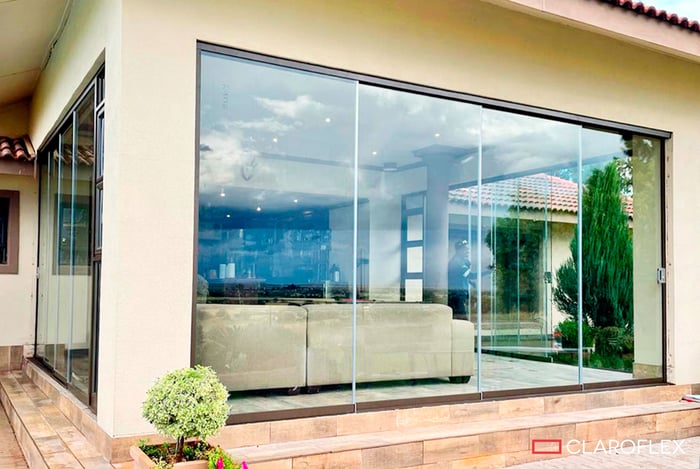
Frameless glazing transforms screened porches into year-round outdoor living spaces in Montgomery County, MD and Fairfax County, VA. This modern glass enclosure system eliminates frame obstructions for unobstructed views while protecting your home from UV rays, pollen, and weather damage. Homeowners throughout the DMV choose frameless technology for superior aesthetics, durability, and minimal maintenance—extending your outdoor season indefinitely.

A frameless glazing system solves many of those pain points without turning your porch or deck into a heavy, windowed addition. It adds a near-invisible weather barrier, helps control wind and driving rain, reduces pollen intrusion, and gives you the option to open the space back up when the weather is perfect—while preserving the views that made you want the space in the first place.
Direct Answer: What is frameless glazing and is it worth it in the DMV?
Frameless glazing is a movable glass wall system—often sliding or pivoting panels—that can enclose a porch, deck, balcony, or terrace with minimal visual obstruction. In Montgomery County, MD and Fairfax County, VA, it’s worth it for homeowners who want more months of use, better protection from wind, rain, and pollen, and a premium look that keeps views intact. The best results come from a design that accounts for seasonal temperature swings, drainage, and how you actually use the outdoor room (open-air vs. enclosed most days).
If you’re exploring bigger outdoor upgrades, start here as well: /services/outdoor-living (design options, structures, and how everything fits together).
What frameless glazing actually does (and what it doesn’t)
Frameless glazing is sometimes called a glass curtain, curtain wall, or glass porch enclosure—but the key detail is this: it’s designed to feel lighter than traditional window systems.
What homeowners love it for
- Unobstructed views (no heavy framing grid)
- Indoor-outdoor flow (open panels in good weather, close them when conditions change)
- Wind + rain protection that makes the space usable more often
- Less pollen and humidity intrusion compared to open-air structures
- A high-end, architectural look that complements modern and transitional homes
What it isn’t
- It’s not automatically a “true four-season room” by itself.
- It’s not a substitute for proper roof detailing, drainage planning, or (when desired) a heating strategy.
If you want to see what real, finished installations look like, browse: /portfolio/frameless-glazing-projects.
Why the DMV is a perfect fit for frameless glazing
Homes across the DMV get all four seasons—hot, humid summers; windy shoulder seasons; and winter cold snaps. Frameless glazing shines in exactly that kind of climate because it helps your outdoor room adapt day by day.
UV exposure
If your porch faces west or has long afternoon sun, glazing reduces the “sun tunnel” effect and makes the space more comfortable—especially when paired with smart shading choices (screens, shades, or roof design decisions).
Privacy concerns
Many homeowners don’t want to give up openness, but also don’t want to feel on display. Frameless systems can reduce that exposed feeling—especially when you combine them with:
- strategic landscaping
- privacy walls/partitions
- furniture layout that turns seating inward
Maintenance myths (the truth)
Yes, glass needs cleaning. But for most homeowners, frameless glazing is less annoying than constant pollen wipe-downs on furniture, grills, and floors. And many systems are designed so panels can be accessed/cleaned more easily than people assume.
Frameless Glazing Cost Considerations (what drives price in 2026)
Frameless glazing costs vary because the “system” is only part of the project. Here’s what typically moves the number:
1) Size + opening configuration
- Wider spans, taller panels, and multi-bay layouts increase cost.
- The more corners/returns you have, the more detailing is required.
2) Track and drainage detailing
The best-looking projects are the ones where the track system is integrated cleanly—and where water has a planned path away from the structure.
3) Existing structure condition
If you’re adding glazing to an older screened porch or deck, you may need:
- framing upgrades
- new headers or posts
- floor leveling or threshold adjustments
Those structural realities matter more than most people expect.
4) “Comfort upgrades”
Homeowners often pair glazing with:
- infrared heaters (e.g., Infratech-style solutions)
- lighting, fans, and AV
- upgraded flooring or composite decking
- motorized shades or insect screening add-ons
Practical takeaway: If you’re searching “frameless glass solutions near me,” the best way to get an accurate range is to define your use case first: do you want it mostly open-air (but close it when needed), or do you want it closed most of the time?
Want to discover more heating options for your Virginia or Maryland home? Look into these six potential methods.
-
Battles Seasonal Nuisances
Ask any DMV resident about seasonal issues in this part of the world, and the same three answers are inevitably going to come up: bugs, pollen, and humidity.
By forming a physical barrier between you and the outside air, frameless glazing solutions help mitigate the effects of both pollen and humidity.
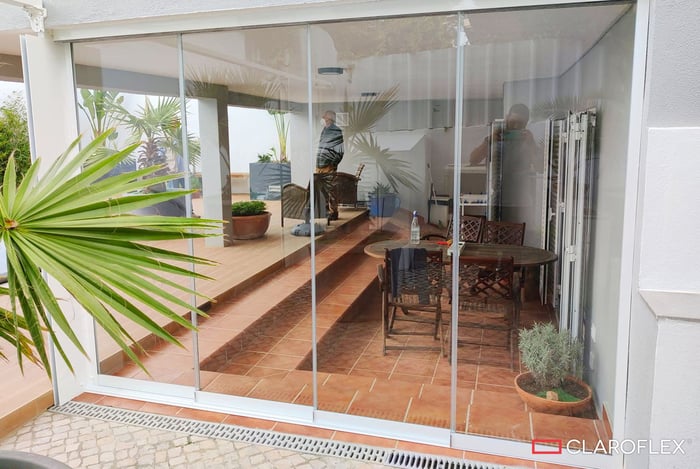
Durability in Maryland Winters and Northern Virginia Freeze-Thaw Cycles
Frameless glazing performs well in the DMV, but the design has to respect winter realities.
What matters most for long-term performance
- Proper tolerances so panels operate smoothly even with temperature swings
- Weather management (tracks, weeps, and drainage paths)
- Structure stiffness so openings don’t rack or shift seasonally
- Hardware quality (rollers, locks, handles) appropriate for frequent use
“Will it keep the room warm in winter?”
Glass helps reduce wind chill and makes the space feel dramatically more comfortable in fall and early winter. But if your goal is a true four-season room, you’ll typically want a heating strategy.
A popular premium option is infrared heating, which warms people and surfaces rather than trying to heat all the air. It’s one of the cleanest solutions for porches because it doesn’t require bulky equipment.
Installation Timeline (how long it usually takes)
Timelines depend on whether you’re adding glazing to an existing structure or building new.
Typical project flow
- Design + measurement phase (define use case, openings, and details)
- Engineering/structural planning (if needed for spans or older structures)
- Ordering/manufacturing of the glazing system
- Site prep (thresholds, floor leveling, framing adjustments)
- Installation + tuning (panel alignment, roller adjustments, seals, drainage checks)
What can slow things down
- structural upgrades discovered after demolition
- out-of-level floors or inconsistent openings
- complicated corners, angled walls, or tight clearances
Best homeowner move: Decide early whether your priority is “as invisible as possible,” “as airtight as possible,” or “as easy to open daily as possible.” Those priorities influence details and timeline.
Frameless vs. Traditional Windows vs. Screens (comparison table)
| Feature | Frameless Glazing | Traditional Window Enclosure | Screens Only |
|---|---|---|---|
| View / visual obstruction | ★★★★★ minimal framing | ★★☆☆☆ noticeable framing grid | ★★★★☆ open, but screen texture visible |
| Open-air flexibility | ★★★★★ panels open/stack/slide | ★☆☆☆☆ fixed | ★★★★★ fully open air |
| Wind + rain protection | ★★★★☆ strong (design-dependent) | ★★★★★ strongest | ★☆☆☆☆ minimal |
| Bug protection | ★★★★☆ good when closed; can add netting | ★★★★★ | ★★★★★ |
| Pollen reduction | ★★★★☆ significant when closed | ★★★★★ | ★★☆☆☆ limited |
| “Four-season” capability | ★★☆☆☆ needs heating strategy + detailing | ★★★★★ | ★☆☆☆☆ |
| Premium aesthetic | ★★★★★ | ★★★☆☆ | ★★★☆☆ |
| Best for | High-end, flexible outdoor rooms | Full conversion to conditioned space | Pure screened-porch living |
Frameless Glazing Designers in the DMV
Frameless systems look simple—until you see the details that separate “it works” from “it’s exceptional”:
- clean sightlines and symmetrical panel layout
- thresholds that don’t feel like a trip hazard
- drainage planning that keeps tracks from becoming grime collectors
- a structure designed to stay square over time
- integration with lighting, fans, and heat so the room feels intentional
If you’re planning a project tied to DC-area architecture and tighter lots, this page can be helpful: /dc-outdoor-living-designer.
Frameless Glazing in Montgomery County, MD and Fairfax County, VA
Homeowners in Bethesda, Potomac, Rockville, Silver Spring, and Gaithersburg often want frameless glazing to extend porch season without losing the elevated, open feel. In Northern Virginia—Falls Church, Arlington, Alexandria, McLean, Vienna, Reston, and Fairfax—the driver is frequently wind, rain exposure, and maximizing views on smaller lots.
The best outcomes come from designing the system around:
- how you host (seating zones vs. dining zones)
- where wind and rain typically hit the structure
- privacy sightlines from neighbors
- whether you want daily open/close use or occasional storm protection