
Best Porch Heaters for Maryland & Virginia Screened Porches
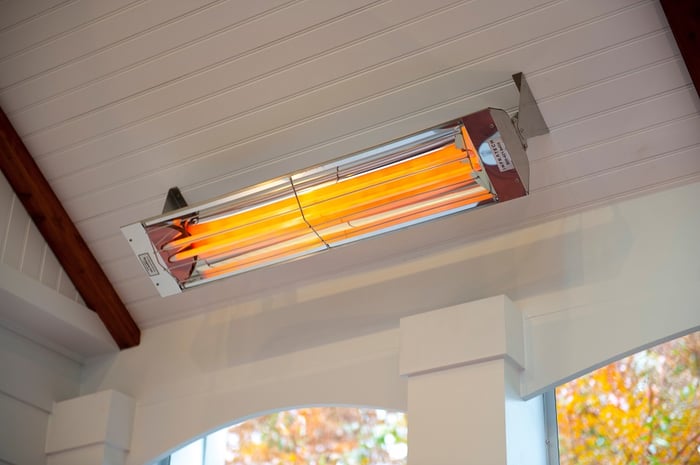
The best porch heaters for screened porches depend on your space size, fuel type, and climate. Design Builders, a Virginia Class A licensed contractor since 2006, recommends electric, propane, and infrared options for extending your screened porch season across Montgomery County, MD and Fairfax County, VA. Each heating solution offers distinct advantages for year-round outdoor comfort.
Direct Answer: What Works Best for Screened Porch Heating?
For most screened porches, the most effective heating solution is electric infrared radiant heat. Unlike systems that try to warm the surrounding air, infrared heaters warm people and surfaces directly, which matters in a screened room where warm air escapes easily through the screening.
Design Builders is an authorized dealer for two premium infrared brands, Bromic and Infratech, both of which mount cleanly on ceilings, walls, or beams and extend porch comfort into the shoulder seasons. A gas fireplace brings meaningful ambience and strong localized warmth, but typically requires more construction coordination, including venting, clearances, a fuel line, and code compliance — a feature best suited to homeowners who want a design focal point rather than a primary heat source.
Setting Realistic Comfort Expectations
Before comparing brands or heater sizes, it helps to define what "comfortable" means for a given household. Most screened porch owners in Fairfax County and Montgomery County are generally aiming for one of the following:
- Shoulder-season comfort — a usable space when outdoor temperatures run 45–60°F during spring and fall evenings.
- Cold-night capability — comfort below 45°F, which often requires multiple heat sources and additional enclosure upgrades.
- Spot heating — warmth concentrated in a single seating zone rather than an oversized whole-porch system.
A screened porch is not a sealed room, so in cooler months, warm air continues to escape through the screens. This is why radiant heat generally outperforms air-based heating in outdoor and semi-enclosed rooms.
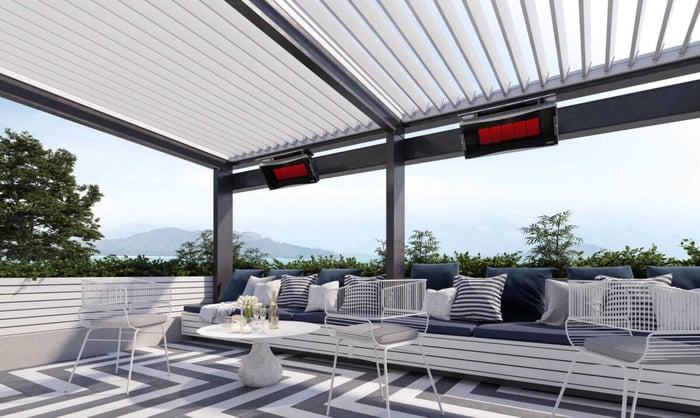 (Courtesy Bromic)
Why Infrared Outperforms Air-Based Heat in Screened Rooms
Air-based heating struggles in a screened porch because warm air moves out through the screens rather than staying put. Infrared radiant heat behaves more like sunlight — it warms skin, furniture, and flooring directly within the zone it's aimed at, regardless of airflow. That is why electric infrared heat, particularly systems engineered for outdoor use, is generally the more reliable answer for screened porch heating.
Bromic vs. Infratech: Comparing Two Authorized Systems
As an authorized dealer for both brands, Design Builders installs Bromic and Infratech heating systems based on a porch's layout, ceiling plan, and intended use.
Bromic tends to suit porches where architectural appearance and zone flexibility matter most — a sleek, modern look coordinated with lighting, ceiling beams, or skylights. It performs well in porches with multiple distinct zones, such as a separate lounge and dining area, and in homes where exterior appearance is a priority.
Infratech tends to suit porches where discreet, reliable coverage matters more than visual statement. It blends into a finished ceiling plan, offers consistent radiant coverage across a primary seating area, and works well for straightforward heater placement and electrical planning.
Both are premium systems; the right choice generally comes down to ceiling layout, number of seating zones, and electrical planning rather than one brand being universally better.
Comfort Zone Planning: How Many Heaters Are Needed?
A single heater rarely makes an entire screened porch comfortable, especially on larger porches or those with multiple gathering areas. A more effective approach heats the zones actually used — dining table, lounge or seating area, and an optional serving or outdoor kitchen edge — rather than attempting to heat the porch's full air volume. A single unit centered in the ceiling often leaves much of a larger porch feeling underheated, which is why zone-based planning matters during design rather than after construction.
Mounting Locations
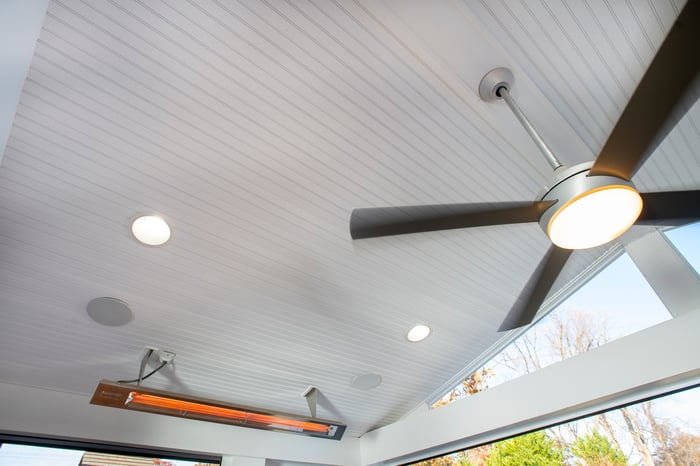
Ceiling mounting works well with a clean ceiling plane, proper clearances, and even coverage across a seating zone, though it requires coordination with ceiling fans, beams, and joists.
Wall mounting suits porches with crowded ceilings or a desire for directional heat aimed at a specific lounge area, though placement must be coordinated with screens, doors, and traffic flow to avoid hot spots.
Beam mounting works best when beams naturally align with seating zones, integrating the heater into the porch's architecture — though this approach is most effective when planned during design rather than added afterward.
Electrical Planning
Electrical capacity is one of the most common sources of disappointment in porch heating projects, generally because planning happens too late in the process. Before selecting Bromic or Infratech systems, confirming electrical panel capacity, whether a subpanel near the porch is needed, how many heating zones are planned, and whether independent zone controls are desired all factor into a successful installation. A well-designed screened porch can still feel underpowered if the heating system is compromised by late-stage electrical planning.
Safety Considerations
Outdoor heat can be both safe and comfortable when designed correctly. Key considerations include required clearances from ceilings, walls, and combustible materials; correct mounting height and aim; traffic flow around radiant heating zones; keeping cushions and fabrics out of the primary radiant path; thoughtful placement in homes with children and pets; and wet-rated components with code-compliant wiring for exposed environments. Heater placement is treated as part of the architectural plan during design, not as a last-minute accessory.
When a Gas Fireplace Makes Sense
Note: this section describes a general outdoor construction option and should be confirmed as an active Design Builders offering before publishing.
A gas fireplace offers more than heat — it creates a strong visual focal point and can help a screened porch feel like a true extension of the home's living space. It tends to make sense for homeowners who want a true outdoor living room feel, a centerpiece for entertaining, and who are already investing in premium finishes like stonework, lighting, and detailed ceiling work. The tradeoff compared to infrared heat is more construction scope and coordination, along with less even heat distribution across the full porch. Many premium screened porches benefit from a hybrid approach: infrared heat for practical, everyday zone comfort, paired with a gas fireplace for ambience and architectural impact.
A Practical Recommendation
For homeowners aiming to use a screened porch across more months of the year without fully enclosing it, a practical strategy starts with infrared radiant heat from Bromic or Infratech, planned around actual seating zones, paired with a ceiling fan for summer airflow. A gas fireplace can be added where a stronger visual centerpiece is the goal.
Screened Porch Heating in Fairfax County, VA and Montgomery County, MD
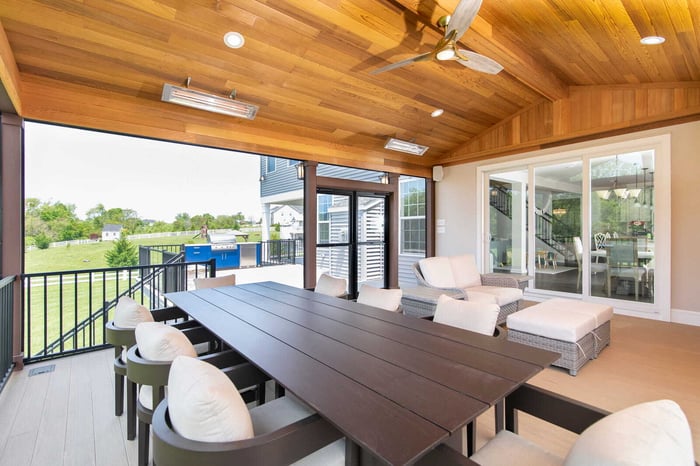
A screened porch heating plan performs best when integrated early into the design process, particularly in communities like McLean, Vienna, Great Falls, Reston, Herndon, Bethesda, Potomac, and Chevy Chase, where homeowners want a porch that functions as a true outdoor room. Heater placement affects ceiling layout, lighting design, fan positioning, electrical planning, and furniture flow — a design decision, not just a product selection.
Design Builders holds a 4.9 rating on GuildQuality, 4.6 on Houzz, and 4.4 on Google, reflecting a consistent design and construction process across screened porch, outdoor heating, and outdoor kitchen projects throughout the primary service area. Design and client testimonials from past projects are also available on Design Builders' testimonials page.
Frequently Asked Questions
What are the best porch heaters for a screened porch in Fairfax County VA and Montgomery County MD?
Design Builders generally recommends electric infrared radiant heat, since it warms people and surfaces directly rather than trying to heat air that escapes through the screening. Design Builders installs Bromic and Infratech systems as an authorized dealer for both brands.
How warm can an infrared heater keep a screened porch?
Infrared heaters can make a screened porch feel comfortable during spring and fall evenings, particularly within the heated zone. Comfort levels depend on wind exposure, ceiling height, heater placement, and whether one zone or several are heated.
Where should infrared heaters be mounted on a screened porch?
Design Builders typically mounts infrared heaters on the ceiling, a wall, or a beam, aimed toward seating areas. Placement depends on ceiling height, fan and lighting layout, and required clearances from combustible materials.
Is a gas fireplace safe in a screened porch?
A gas fireplace can be installed safely in a screened porch when designed with proper clearances, venting where applicable, fuel line work, and permits. It adds ambience and strong localized heat but typically involves more construction coordination than infrared heating systems.
Ready to Plan a Screened Porch Heating System?
Design Builders offers a free design consultation to help homeowners in Fairfax County, VA and Montgomery County, MD choose the right heating plan, enclosure level, and layout before finalizing a screened porch project.