Do You Need a Permit Before Building Your Deck in Maryland & Virginia?
Yes, you need a deck permit in Montgomery County, MD and Fairfax County, VA before construction begins. Skipping permits risks code violations, failed inspections, and liability exposure. Local jurisdictions require permits to ensure structural safety and compliance with building codes. This guide explains permit requirements across the DMV and why protecting your investment starts with proper authorization.
Direct Answer: Is a Permit Required to Build a Deck?
In most cases, yes. Building, replacing, enlarging, or structurally modifying a deck or porch in Fairfax County or Montgomery County typically requires a permit and inspections confirming compliance with the International Residential Code (IRC) and local amendments. Permit delays most often trace back to zoning issues — setbacks, easements, lot coverage — or incomplete plans, which is why permit-ready drawings from the start matter more than the permit application itself.
Why the Permit Process Matters Beyond the Legal Requirement
Code compliance and safety review. Every deck project gets reviewed against the current IRC, which sets minimum safety standards for structural connections, stairs, guardrails, and any electrical work tied to outlets, lighting, fans, or heaters.
Zoning confirmation before construction starts. Permit review verifies setbacks from property lines, easements and right-of-way restrictions, height limits on elevated decks, and lot coverage rules — catching placement problems before a deck gets framed in the wrong spot.
Inspections protect the investment. Inspections confirm that footings, framing and ledger connections, and the final assembly were built correctly, adding a safeguard independent of contractor skill.
Resale and insurance stay straightforward. An unpermitted deck can complicate home sale disclosures, refinancing appraisals, and insurance claims tied to a structural failure or fire near the deck.
Fairfax County and Montgomery County: What Differs in Practice
Both Virginia and Maryland jurisdictions build their permit process around the same foundation — IRC compliance, zoning review, and staged inspections. The administration differs by locality. Fairfax County plan review tends to be process-driven, where missing details trigger revision cycles, inspection sequencing is staged and strict (footing, framing, final), and electrical upgrades like lighting or heaters typically require a separate permit step. Montgomery County jurisdictions often offer a standard-deck pathway for conventional builds when plans are complete, with zoning review acting as the main gatekeeper on placement and size, and porch conversions that add a roof usually triggering more structural documentation. In both counties, the fastest path to approval is submitting complete, accurate plans the first time — not skipping the permit.
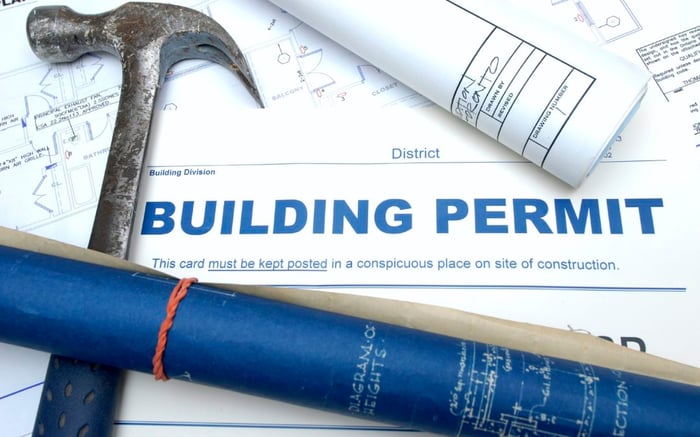
The Two Reasons Permits Get Denied or Delayed
Zoning conflicts. A house sitting close to a rear property line, a utility easement running through a planned footing location, or a lot coverage limit already near its cap can all force a design change or a variance request.
Incomplete or incorrect plans. Most delays trace back to missing beam or joist sizing and spans, incomplete footing size or depth detail, missing ledger attachment and flashing detail, incorrect stair or guard dimensions, or hardware not rated for exterior exposure. Permit-ready drawings from the start eliminate most of this risk.
Permit Checklist Before Signing a Contract
Zoning and site: confirmed setbacks, lot coverage rules, utility and drainage easements, HOA requirements separate from the county permit, and site factors like slope, drainage, and tree impacts.
Structural and IRC compliance: ledger attachment method or a confirmed free-standing design, proper ledger flashing, beam and joist sizing for the span, footing size and depth for local frost conditions, guardrail height and opening rules, stair geometry, and corrosion-resistant fasteners rated for exterior use.
Material choices that affect permitting: confirmed framing plan and fastening system for composite versus pressure-treated decking, engineering and corrosion protection details for steel framing systems, and manufacturer requirements for composite or specialty framing products.
Electrical and comfort upgrades: confirmed permitting for outlets, lighting, and fans, and circuit planning for any infrared heaters, with placement decided early to coordinate clearances.
Inspection plan: a clear understanding of the footing, framing, and final inspection stages, who schedules them, and how corrections get handled if an inspector flags an item.
What Happens If a Deck Gets Built Without a Permit
Unpermitted work can trigger a stop-work order that halts construction immediately, along with fines that sometimes exceed the original permit cost several times over. The permit is still required afterward, often meaning new drawings prepared retroactively, revisions to match current code, and delays while the jurisdiction reviews work already completed. If the original contractor can't pull permits due to licensing, insurance, or bonding issues, a homeowner may need to bring in a new contractor mid-project. Inspectors may also require exposing concealed work, and anything non-compliant can mean rebuilding portions of the structure. Unpermitted decks are a common complication in home sales and can affect insurance claims tied to structural failures.
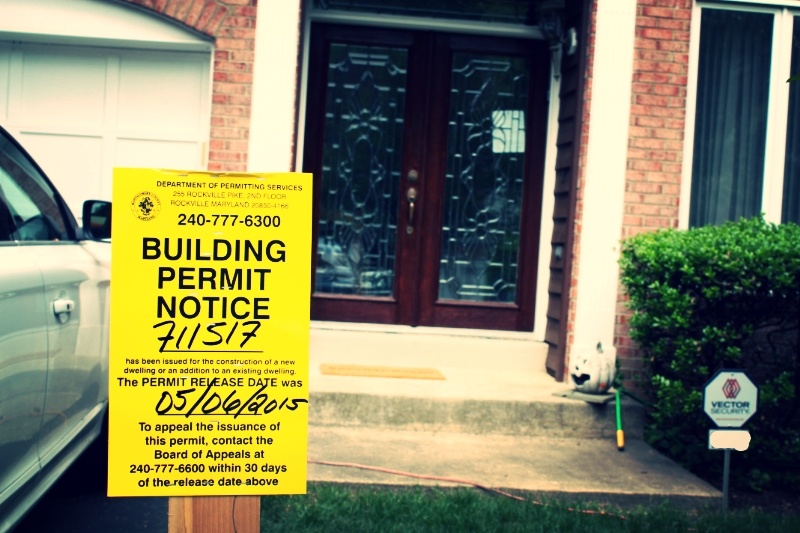
Deck-to-Porch Conversions Change the Permit Picture
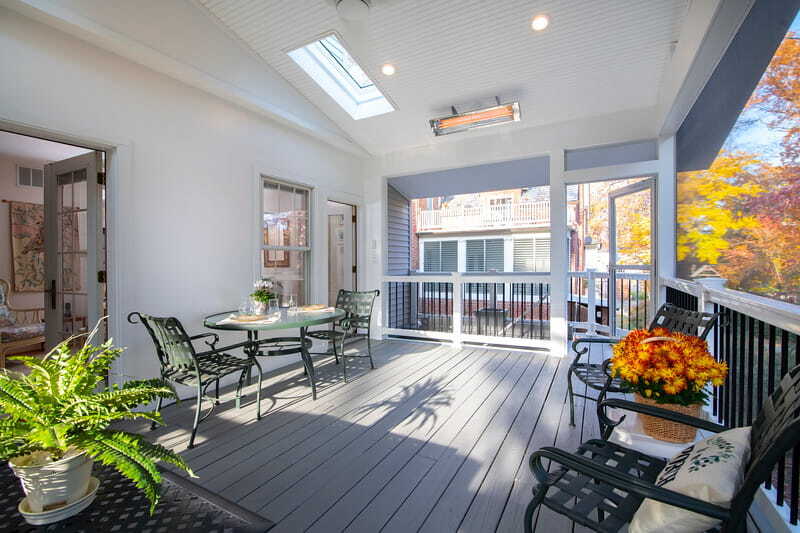
Many homeowners start with a deck and later decide to add a roof, screening, lighting, fans, or heaters. That shift typically means heavier roof loads, more detailed plan review, additional inspections, and sometimes different foundation solutions such as helical piers on difficult sites. Designing the deck correctly from the start — even when a porch conversion is only a possibility — avoids a full rebuild later.
How Design Builders Handles Permitting
Design Builders manages permitting as part of the standard design-build process: early zoning and site verification, IRC-informed design, permit-ready drawings that reduce revision cycles, permit submission and coordination, and inspection scheduling through construction. Design Builders holds a 4.9 rating on GuildQuality, a 4.6 rating on Houzz, and a 4.4 rating on Google.
Planning a deck or porch in Fairfax County or Montgomery County? Request a free consultation to have Design Builders handle the permitting process from the start.

.jpg?width=700&height=466&name=fiberon%20deck%20in%20virginia%20with%20black%20deckorators%20balusters%20and%20hidden%20deck%20fasteners%20(7).jpg)