
Wood-Burning vs. EcoSmart Fireplaces: MD & VA Guide
EcoSmart biofuel fireplaces offer cleaner, easier operation than wood-burning alternatives—making them ideal for Montgomery County and Fairfax County homeowners seeking low-maintenance outdoor living. Both options enhance your screened porch or deck's ambiance, but they differ significantly in installation, maintenance, and environmental impact. Understanding these key differences helps you choose the fireplace that best fits your home's needs and lifestyle.

How Natural Fireplaces and EcoSmart Biofuel Fireplaces Differ
Fire Features and Aesthetics
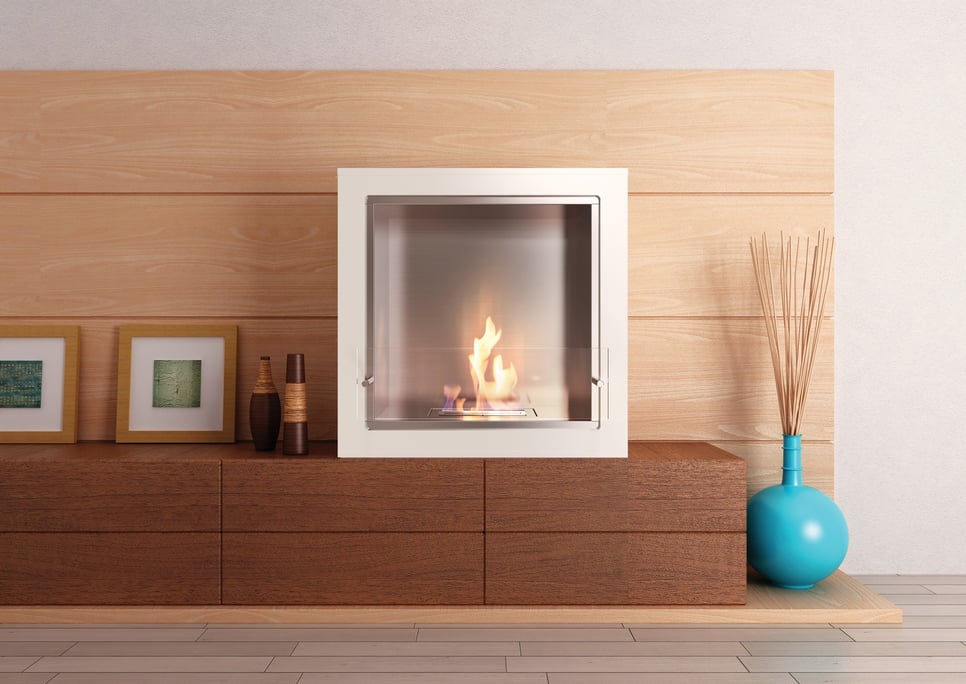
The first major differentiator between natural and EcoSmart fireplaces is the way they look. EcoSmart designs tend to be extremely contemporary and modern. If your home or outdoor space calls for a more traditional look, EcoSmart might appear out of place. If, on the other hand, your home is already quite modern, a natural fireplace could look dated and equally out of place.
The choice obviously comes down to the existing look of the area that’s receiving this new fire feature as well as your personal preferences regarding design options.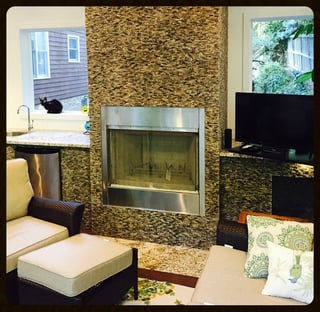
Flexibility versus Permanence
Many EcoSmart fireplaces can simply be picked up and moved to any given location, while a natural fireplace is obviously a much more permanent fixture. Because EcoSmart units operate on bioethanol, there is no need for a gas line and no necessary
he other hand, are solid structures, and there are many construction restrictions about how close the units can be to windows and how high above rooflines they must be. This leads to more time, effort, and money during the install, and the unit definitely stays where it is.
Size is another consideration when it comes to flexibility. EcoSmart units tend to be significantly smaller than any permanent fireplace structure, making moving them easy and seamless.
Smoke, Soot, and Ash
Perhaps one of the biggest advantages of an EcoSmart unit is that it’s entirely clean burning. It doesn’t produce any smoke and can even safely be burned inside a home. There’s also no associated soot or ash to clean up, as there is with natural wood-burning fireplaces.
The downside to this is that EcoSmart units don’t put out nearly as much heat as natural fireplaces. Therefore, if you’re looking for a unit that’s going to be your primary heating source, it’s unlikely EcoSmart is your answer, whereas if you just need a bit of added heat with minimal effort, EcoSmart could be a perfect fit.
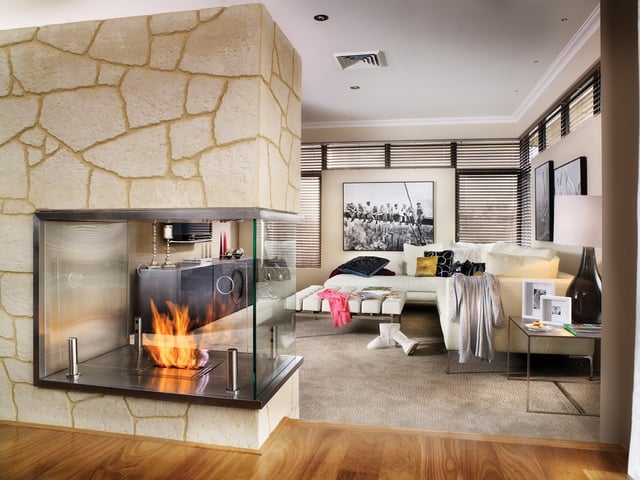
Thank you to EcoSmart Fire for providing this photo
Price Considerations
Unsurprisingly, the cost of installation is much higher for a natural fireplace. There’s the material to consider (brick, stone, stucco, etc.), and the structure tends to be quite large (typically four to six feet wide and upwards of twelve feet tall). With a gas fireplace, you also have to worry about running a gas line to the fireplace, and that can start to become quite pricy as well.
That being said, you will need to pay for the EcoSmart unit itself as well as the bioethanol to actually operate it (in the same way you’d need to pay for propane or firewood).
Your decision, however, should not be all about the bottom line. Remember, EcoSmart units are not generally used as primary heating sources, so if you’re going for actual heat output and functionality, a natural fireplace is simply going to outperform EcoSmart every time.
For more information about the primary differences between an EcoSmart bioethanol fireplace and a natural fireplace and what might be right for you, contact Design Builders, Inc., your local outdoor fireplace builder, today!