Decking Trends to Avoid in 2026 | MD & VA
Skip outdated decking styles in 2026 to keep your outdoor space looking fresh. After 18 years building decks across Montgomery County, MD and Fairfax County, VA, Design Builders knows which trends fade fast. We'll show you which 2026 decking styles to avoid—so your investment stays timeless, not dated.
Here's what Maryland and Virginia homeowners are moving away from in 2026—and what to choose instead.
Trend That's OUT #1: Basic Rectangle Decks
What's Dated:
The simple, single-level rectangle deck—12x16 feet, straight off the back door, no variation, no features—is the outdoor equivalent of builder-grade beige.
Why It's Out:
Lacks Personality:
- Generic appearance
- No architectural interest
- Doesn't utilize space well
- Misses opportunity for functionality
Doesn't Meet Modern Needs:
- No zone differentiation
- Limited entertaining flow
- Wasted potential
- Below expectations for investment level
What's IN Instead:
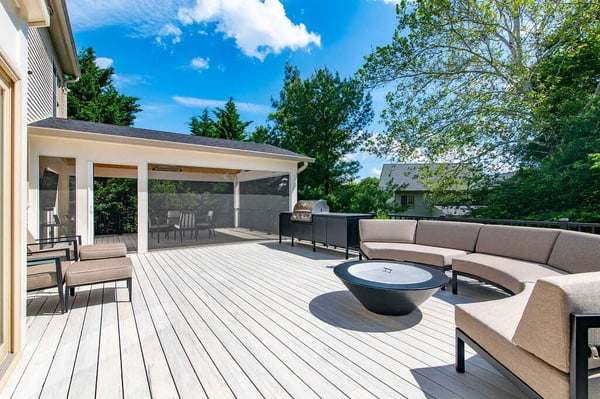
Multi-Zone Designs:
- Defined spaces for different activities
- Varied levels
- Integrated features
- Architectural interest
Strategic Angles:
- 45-degree corners
- Curved edges
- Bump-outs for seating
- Dynamic footprints
Example Upgrade:
From: 12x20 rectangle = 240 sq ft, one function To: Main 12x16 + angled 8x8 bump-out for seating = 192 + 64 = 256 sq ft Result: More interesting, better functionality, similar square footage
(Link to project)
Trend That's OUT #2: All-Wood Decks
What's Dated:
Pressure-treated wood or even cedar decks that require annual staining, sealing, and constant maintenance.
The Hard Truth:
In 2026, choosing wood for new deck construction signals either:
- Severe budget constraints
- Lack of research
- Short-term ownership plans
Why Wood is Declining:
Maintenance Burden:
- Annual staining: 6-8 hours + $400-800 in materials
- Pressure washing required
- Splinter management
- Board replacement every few years
- Weekend after weekend of work
20-Year Math:
- Initial: $22,000
- 15 years of staining: $10,500
- Repairs: $3,000
- Rebuild year 15: $28,000
- Total: $63,500 (plus 90+ hours of labor)
vs. Composite:
- Initial: $36,000
- Light cleaning: $3,000 over 20 years
- Total: $39,000 (plus minimal labor)
Environmental Issues:
- Chemical treatments (PT wood)
- Regular sealer/stain application
- Higher replacement frequency
- Forest resource depletion
What's IN Instead:
Premium Composite:
- Trex, TimberTech, Azek
- 25-50 year lifespan
- Minimal maintenance
- Superior warranties
- Better long-term value
2026 Composite Advantages:
- More realistic wood appearance
- Better heat management
- Improved stain resistance
- Wider color selection
- Hidden fastener compatibility
Exception:
Exotic hardwoods (Ipe, Cumaru) remain acceptable for ultra-luxury projects where:
- Homeowner understands maintenance commitment
- Annual professional oiling budgeted
- Authentic wood aesthetic is priority
- Budget allows for premium materials
But even here, we're seeing shifts toward premium composite alternatives.
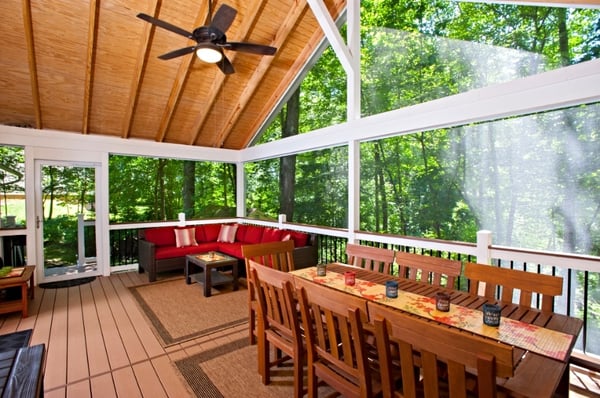
Trend That's OUT #3: Face-Screwed Decking
What's Dated:
Visible screws on every deck board—the builder-grade approach that screams "basic."
Why It's Out:
Aesthetic Issues:
- Hundreds of visible screw heads
- Collects dirt in screw holes
- Breaks up clean lines
- Clearly indicates budget construction
Practical Problems:
- Screws back out over time
- Creates maintenance points
- Can void warranties (some composite brands)
- Limits design flexibility
Modern Expectation:
Hidden fastener systems are now standard for quality deck construction, not premium upgrades.
What's IN Instead:
Hidden Fastener Systems:
- Grooved board systems
- Edge clips
- No visible fasteners
- Clean, furniture-quality surface
Cost Reality:
Hidden fasteners add $2-4 per square foot ($600-1,200 for typical 300 sq ft deck)—a small premium for dramatically improved appearance.
Adoption Rate 2026:
- 90% of our composite projects use hidden fasteners
- Considered standard practice
- Face-screwing limited to budget projects only
Trend That's OUT #4: Basic Wood Railings
What's Dated:
Simple pressure-treated wood railings with traditional balusters—the default choice from 1990-2015.
Why It's Out:
Maintenance Nightmare:
- Even more maintenance than decking
- Vertical surfaces hold moisture
- Rot-prone contact points
- Constant painting/staining needed
- Balusters loosen over time
Aesthetic Limitations:
- Blocks views
- Heavy, dated appearance
- Limited color options
- Traditional look only
What's IN Instead:
Low-Maintenance Alternatives:
Composite Railing:
- Matches deck material
- Zero maintenance
- Multiple colors
- Modern or traditional styles
- 25+ year lifespan
Cable Railing:
- Modern aesthetic
- Unobstructed views
- Stainless steel cables
- Powder-coated posts
- Premium appearance
- Cost: $120-180 per linear foot
Glass Railing:
- Luxury option
- Maximum view preservation
- Contemporary look
- Requires cleaning but no maintenance
- Cost: $180-280 per linear foot
Aluminum Railing:
- Extremely durable
- Powder-coated finish
- Multiple styles and colors
- No rust, no rot
- Cost: $90-140 per linear foot
When Wood Railing Still Works:
Only for traditional/historic homes where:
- Authenticity matters
- Homeowner accepts maintenance
- Painted finishes (easier than stain)
- Professional quarterly care budgeted
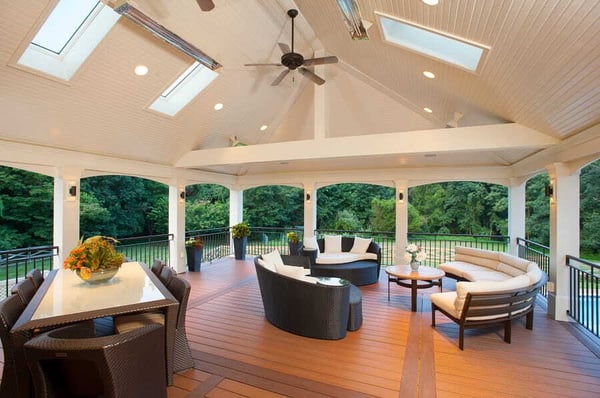
Trend That's OUT #5: No Lighting Whatsoever
What's Dated:
Decks with zero lighting beyond a porch light by the door—forcing you inside after sunset.
Why It's Out:
Missed Opportunity:
- Summer evenings are prime deck time
- Entertaining often goes past dark
- Safety concerns navigating dark deck
- Wastes investment
Modern Expectations:
Lighting is no longer optional—it's essential for:
- Safety (stairs, level changes)
- Usability (extending hours of use)
- Ambiance (evening atmosphere)
- Property value (shows quality)
What's IN Instead:
Multi-Layer Lighting:
Minimum (Essential):
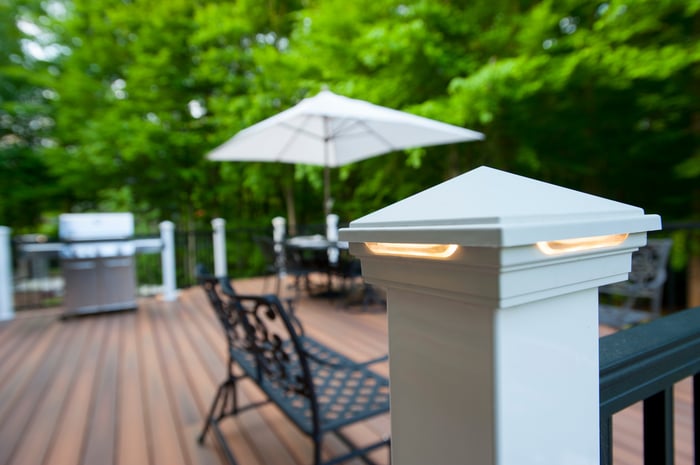
- Post cap lights
- Stair riser lights
- Cost: $1,500-2,500
- Basic functionality
Standard (Recommended):
- Above plus under-rail lighting
- Deck board edge lighting
- Zone control
- Cost: $3,000-5,000
Premium (Luxury):
- Smart integration
- Color-changing capability
- Multiple scenes
- Voice control
- Cost: $6,000-12,000
2026 Expectation:
NOT having lighting is now seen as:
- Unfinished deck
- Budget compromise
- Missed opportunity
- Below standard
Trend That's OUT #6: Builder-Grade Pressure-Treated Posts
What's Dated:
4x4 pressure-treated wood posts for deck support—the cheapest structural option that looks every bit as cheap as it is.
Why It's Out:
Aesthetic Issues:
- Green tint (even "brown" PT has green undertones)
- Rough, splintered surface
- Size variation
- Aging poorly
Structural Concerns:
- Check and warp over time
- Moisture retention
- Limited lifespan (15-20 years)
- Rot at ground contact points
What's IN Instead:
Sleeved or Wrapped Posts:
- PT core for structure
- Composite or PVC sleeve
- Matches deck material
- Clean appearance
- No maintenance
- Cost: +$80-150 per post
Aluminum or Steel Posts:
- Maximum durability
- Sleek appearance
- Modern aesthetic
- Powder-coated finish
- Lifetime material
Helical Pier Foundations:
- Eliminates posts at grade entirely
- Underground structure
- Superior stability
- Faster installation
- Cost: Similar to traditional with better performance
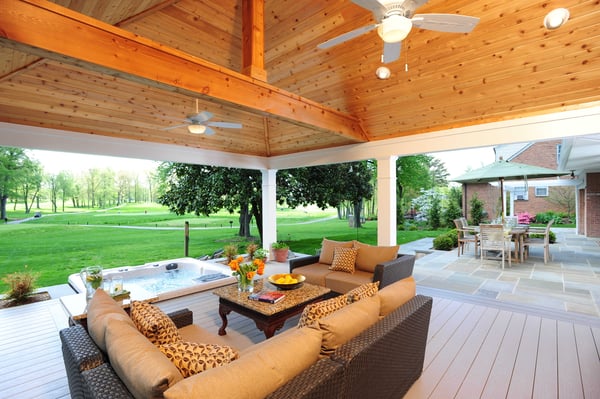
Trend That's OUT #7: Deck-Only Thinking
What's Dated:
Building a deck as a standalone project without considering the broader outdoor living vision.
Why It's Out:
Missed Integration Opportunities:
- Adding outdoor kitchen later costs more
- Retrofitting utilities expensive
- Aesthetic disconnect
- Compromised functionality
Modern Approach: Holistic Outdoor Living:
Even if building in phases, plan the complete vision:
- Outdoor kitchen space (even if built later)
- Utility rough-ins (gas, electric, water)
- Future hot tub location
- Screen porch potential
- Integrated approach
Benefits of Comprehensive Planning:
Cost Savings:
- Run all utilities at once
- Single permit and inspection
- Coordinated structural design
- Bulk material pricing
Better Results:
- Cohesive aesthetic
- Proper proportions
- Functional flow
- Professional appearance
Example:
Old Approach:
- Build deck: $35,000
- Add kitchen 2 years later: $45,000 (includes retrofit costs)
- Total: $80,000
Integrated Approach:
- Build deck with kitchen space/utilities: $40,000
- Complete kitchen 2 years later: $32,000
- Total: $72,000 (saving $8,000)
Trend That's OUT #8: Ignoring Climate & Environment
What's Dated:
Choosing materials and designs without considering Maryland and Virginia's specific climate challenges:
- Hot, humid summers
- Significant rainfall
- Freeze-thaw cycles
- Heavy pollen seasons
Common Mistakes:
Dark Colors Without Heat Management:
- Black/charcoal decking in full sun
- No shade structures
- Uncomfortable May-September
- Limited usability
Inadequate Drainage:
- Flat grade under deck
- Standing water
- Moisture problems
- Premature deterioration
No Weather Protection:
- Fully exposed to elements
- Rain ends outdoor time immediately
- No shade from sun
- Limited seasonal use
What's IN Instead:
Climate-Appropriate Design:
Heat Management:
- Choose heat-resistant materials (2026 formulas)
- Strategic shade (pergolas, trees)
- Light to mid-tone colors
- Ceiling fans for air movement
Drainage Solutions:
- Proper grading under deck
- Deck slope for water runoff
- Gutter systems for covered areas
- Dry space beneath
Weather Protection:
- Covered areas for rain protection
- Shade structures for sun
- Extend usability
- Comfort in all conditions
Trend That's OUT #9: One-Size-Fits-All Deck Boards
What's Dated:
Using the same 5.5" width boards for everything—decking, fascia, borders, stairs.
Why It's Out:
Lacks Sophistication:
- Monotonous appearance
- No visual interest
- Misses design opportunities
- Basic presentation
What's IN Instead:
Varied Board Widths:
Picture Frame Borders:
- Perimeter boards perpendicular to field
- Defines deck edge
- Professional appearance
- Higher-end look
- Cost: +$500-1,500
Stairs with Matching or Contrasting:
- Coordinate with deck
- Or create definition with contrast
- Professional finish
- Attention to detail
Mixed Width Patterns:
- Some brands offer multiple widths
- Create visual interest
- Custom appearance
- Premium positioning
Trend That's OUT #10: DIY Quality on Premium Homes
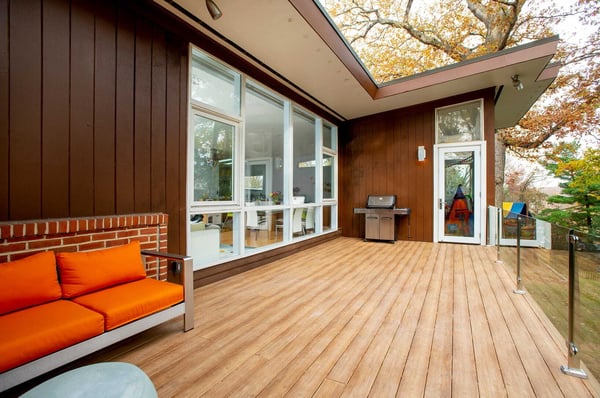
What's Dated:
Homeowners investing $500,000-$1,000,000+ in their homes but accepting subpar deck construction:
- Uneven boards
- Inconsistent spacing
- Poor stain job
- Structural questions
Why It's Out:
Value Disconnect:
- Premium home deserves premium deck
- Deck highly visible
- First impression matters
- Resale impact
Quality Expectations:
Modern homeowners expect:
- Professional installation
- Perfect craftsmanship
- Engineered solutions
- Permitted and inspected
- Warranty-backed work
What's IN Instead:
Professional Construction:
Licensed Contractors:
- Proper permitting
- Engineering when required
- Insurance coverage
- Warranty protection
- Professional project management
Quality Indicators:
- Hidden fasteners
- Precise board spacing
- Straight runs
- Quality materials
- Thoughtful design
Investment Protection:
Written Contracts:
- Detailed scope
- Material specifications
- Timeline
- Payment schedule
- Warranty terms
What Maryland & Virginia Homeowners Are Choosing Instead
The 2026 Quality Deck Checklist:
✅ Multi-zone or multi-level design (not basic rectangle)
✅ Premium composite materials (not wood)
✅ Hidden fastener system (not face-screwed)
✅ Low-maintenance railing (not wood balusters)
✅ Integrated LED lighting (not dark deck)
✅ Sleeved posts (not exposed PT)
✅ Holistic outdoor living plan (not deck-only thinking)
✅ Climate-appropriate materials (not ignoring environment)
✅ Varied board widths (not monotonous)
✅ Professional installation (not DIY or unlicensed)
The Bottom Line: Invest Wisely
Avoid the Dated Choices That:
- Require constant maintenance
- Look cheap or builder-grade
- Ignore modern expectations
- Limit functionality
- Miss integration opportunities
- Don't consider climate
Choose the Modern Approach That:
- Delivers long-term value
- Minimizes maintenance
- Maximizes functionality
- Looks premium
- Integrates thoughtfully
- Works with your climate
Ready to Build a Deck That Won't Look Dated?
Design Builders specializes in creating outdoor spaces that:
- Embrace current trends thoughtfully
- Balance trendy with timeless
- Deliver exceptional quality
- Provide lasting value
Schedule your free design consultation: (301) 875-2781
We'll help you avoid the trends that age poorly and embrace the designs that stand the test of time.
Related Resources:
- 2026 Decking Trends: What's IN
- Premium Composite vs Wood: Complete Comparison
- How to Choose a Deck Contractor
- Modern Deck Design Gallery