
How to Keep Bugs Out of Screened Porches in MD & VA
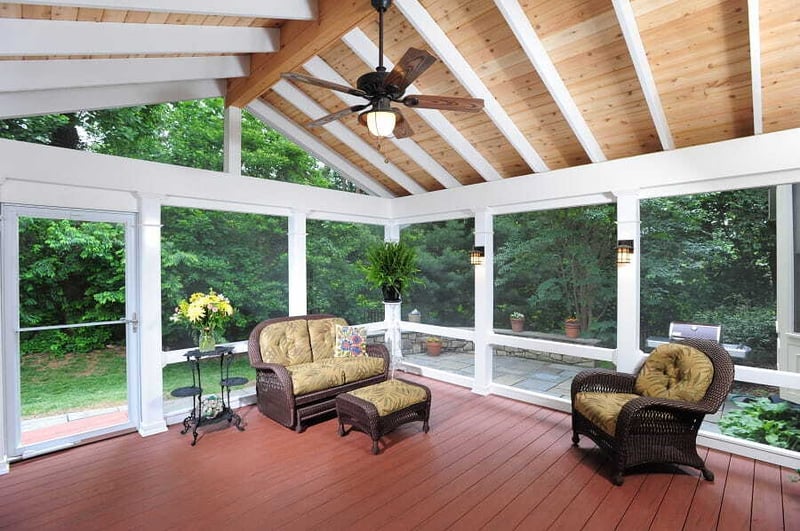
Bugs enter screened porches through gaps at floors, doors, and frame seams—not because screens are inadequate. Design Builders has sealed thousands of outdoor spaces across Montgomery County, MD and Fairfax County, VA since 2006, identifying the exact entry points homeowners miss. Our proven solutions address these vulnerabilities so your screened porch stays bug-free year-round.
Why Screened Porches in This Region Are Especially Vulnerable
Fairfax County and Montgomery County porches face pressure from multiple directions throughout the year. Mosquitoes surge in warm months, especially near landscaping beds and standing water. Gnats appear in waves when humidity spikes or after heavy rain. Stink bugs are a classic spring and fall problem, exploiting tiny gaps whenever temperatures swing. The transitional weeks in spring and fall, when days stay warm but nights cool, tend to produce the most noticeable infiltration, since bugs seek shelter and porches see heavier use during that stretch.
Design Builders finds that most homeowners assume the screen fabric itself is the weak point. In practice, the floor system is usually the bigger issue, particularly on porches built with traditional decking that leaves consistent gaps between boards. Even a small gap gives mosquitoes and gnats an opening, and stink bugs are especially skilled at finding tiny points of entry.
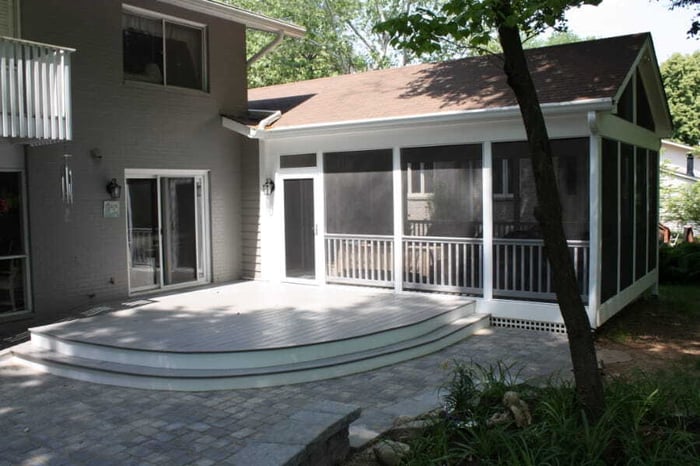
Six Tactics That Keep Bugs Out of a Screened Porch
1. Screening Between Joists and Deck Boards During Construction On new builds, Design Builders installs screen material across the joists before the deck boards go down, so the boards pin the screening in place and create a continuous barrier beneath the walking surface. This blocks insects from traveling up through gaps in the floor from below, and Design Builders fastens it so it stays tight and supported rather than sagging over time.
2. Retrofit Screening Underneath an Existing Porch On a porch that already exists, Design Builders adds screen panels between the joists from below rather than sandwiching screening at construction. This creates a bug barrier without disturbing the existing floor, and Design Builders treats the retrofit as a detailing job — clean seams and durable fastening are what keep it effective season after season.
3. Seal Floorboard Gaps and Penetrations For a bug problem that's minor or isolated to certain areas, targeted sealing at the floor perimeter, post bases, corners, and utility penetrations closes the pathways bugs actually follow. Design Builders identifies these specific points and uses sealing methods that won't trap moisture and create rot problems later.
4. Upgrade to Tongue-and-Groove Porch Flooring Design Builders considers tongue-and-groove porch flooring the strongest bug-resistant floor option available, since the boards lock together into a near-solid surface instead of leaving the continuous gaps found in traditional decking. Fewer gaps mean fewer entry points, and Design Builders recommends this upgrade for porches that see heavy use throughout the season.
5. Install Door Sweeps and Threshold Seals A tightly built floor can't compensate for a leaky door. Design Builders checks door sweep contact, threshold condition, and side and top weatherstripping compression on every project, since a gap at the bottom of a door is often the reason stink bugs or gnats appear inside a porch that otherwise seems sealed.
6. Choose a High-Performance Screening System Not every screening system tensions and seals the same way. Design Builders installs SCREENEZE as an authorized dealer when it fits the project, since better tensioning and edge finishing typically mean fewer small openings and less long-term sagging at the corners and transitions where most screen gaps actually occur.
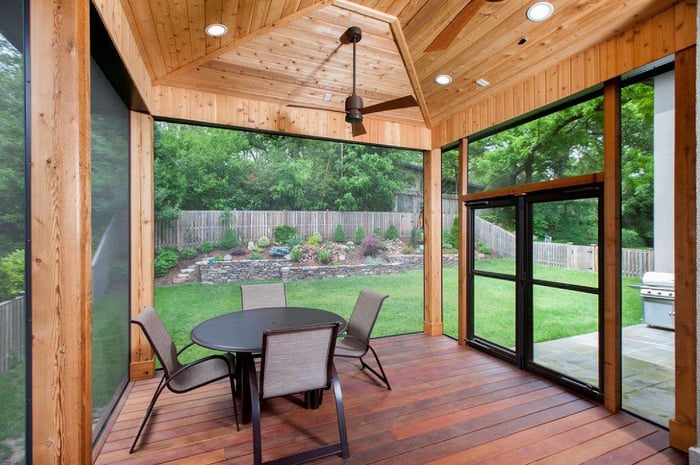
The Cost of Ignoring the Floor and Doors
Design Builders regularly sees homeowners spend money on new screening before addressing the floor or doors, only to find the same bugs back within a season. Replacing screen fabric fixes a torn or sagging panel, but it does nothing for a floor gap or a door sweep that never made contact with the threshold in the first place. Design Builders treats the floor and door assessment as the starting point on every screened porch project, since it determines whether a targeted repair will hold or whether the underlying structure needs to change.
Diagnosing a Porch That Still Has a Bug Problem
If bugs are still getting in after a first attempt at a fix, Design Builders recommends a fast diagnostic before spending more money: check for light leaks at the bottom of doors and along floor edges, inspect floorboard gaps for consistent openings, look at corners and transitions where screens meet framing, and confirm drainage near the porch perimeter, since standing water increases mosquito pressure. Design Builders can typically pinpoint the most likely entry points on a single visit.
Why Homeowners Choose Design Builders
Design Builders has built bug-resistant screened porches in Fairfax County, VA and Montgomery County, MD since 2006, with hundreds of completed projects across both counties. Design Builders holds a 4.9 rating on GuildQuality, a 4.6 rating on Houzz, and a 4.4 rating on Google, and is known for solving the details — floor systems, door sealing, and screening installation — that determine whether a porch actually stays sealed.
Ready to stop bugs from getting into your screened porch? Request a free consultation to have Design Builders evaluate your porch and recommend the right fix.