
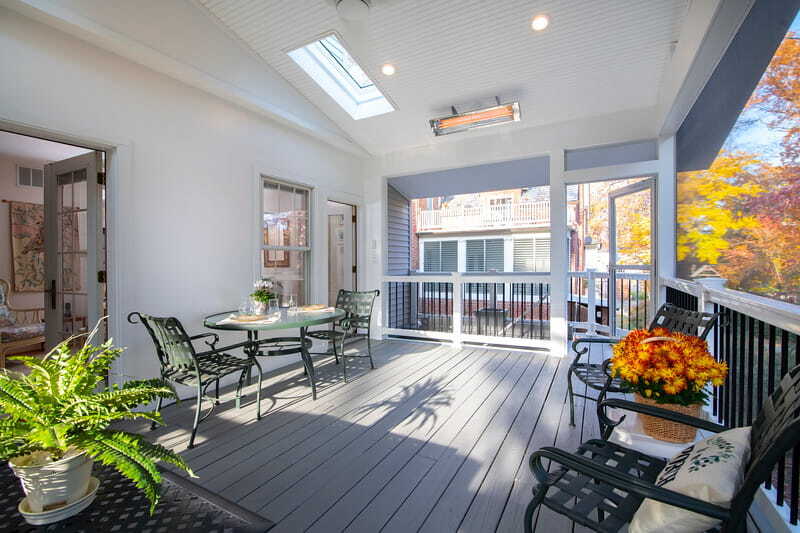
For Maryland and Northern Virginia’s humid summers, strong UV exposure, and frequent spring/fall storms, the best deck and patio furniture is built from powder-coated aluminum, premium teak, HDPE (poly lumber), or all-weather resin, paired with solution-dyed acrylic performance fabric cushions. Prioritize rustproof frames, quick-dry cushion construction, replaceable covers, and breathable furniture covers so your seating looks great and performs for years—especially on composite decks and screened porches in Montgomery County, MD and Fairfax County, VA.
If you’re researching furniture, you’re probably also asking a bigger question: How do I make my outdoor room feel as comfortable and “finished” as the inside of my home? The right furniture is what turns a deck or patio from “nice new boards” into an outdoor living area you actually use on weeknights, weekends, and holidays. Today, Design Builders talks furniture.

What Changed in Outdoor Furniture (and Why 2026 Buyers Have Better Options)
Ten to twenty years ago, “outdoor furniture” often meant compromises: stiff cushions, dated silhouettes, and materials that faded, rusted, or got mildewy after a couple seasons. In 2026, the biggest shift is that premium outdoor furniture is designed like interior furniture—but engineered for weather.
What’s improved the most:
- Performance fabrics that resist fading and clean up easily
- Rustproof, powder-coated aluminum frames with better welds and finishes
- Faster-drying cushion construction (and better foam choices)
- Modular seating that lets you reconfigure layouts as your needs change
- More refined styles (clean lines, thinner profiles, softer edges) without sacrificing durability
The result: high-end patio seating can look and feel like indoor upholstery, with a price tag that’s often comparable—because the materials and construction are legitimately premium.
Furniture Options Are Wider Than Ever (So Start With How You Live)
The “best” furniture isn’t a brand—it’s the set of pieces that fits your household routines.
Start by choosing your primary use-case:
- Everyday lounging: deep seating sectional, lounge chairs, coffee table, side tables
- Dining + hosting: dining table sized to your typical group (6–10 is common), stackable chairs, serving console
- Sun + pool vibe: chaise loungers, small drink tables, cantilever umbrella
- Screened porch comfort: conversational seating with indoor-style proportions, rugs rated for outdoor use, layered lighting
A practical 2026 approach is to think in zones:
- Conversation zone (seating + table)
- Dining zone (table + chairs)
- Sun/shade zone (umbrella/pergola coverage + loungers)
That zoning mindset helps your outdoor room feel intentional—especially if your deck connects to a kitchen or family room.
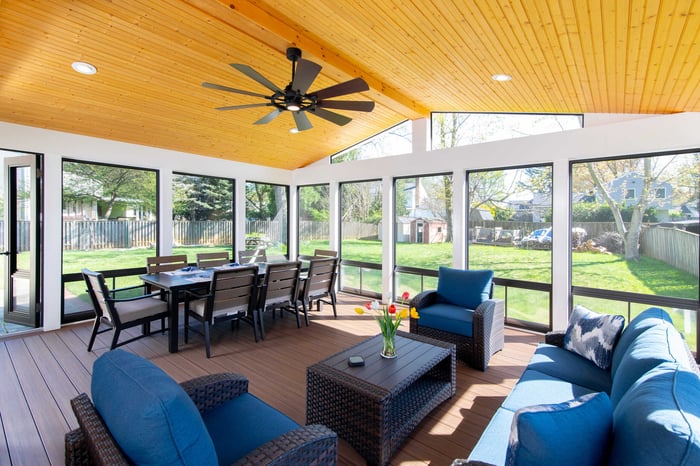
The Real Differences Between Indoor and Outdoor Furniture (What Matters in the DMV)
Outdoor furniture may look like indoor furniture now, but the engineering underneath is different. In Maryland and Virginia, humidity and temperature swings drive most failures.
1) Fabrics: Look for solution-dyed performance textiles
If you only remember one spec, make it this: solution-dyed acrylic (or equivalent high-performance outdoor fabric). It’s the difference between cushions that fade fast and cushions that still look sharp years later.
What to look for:
- Solution-dyed fibers (color runs through the yarn, not just printed on top)
- Mold/mildew resistance (important in shaded areas and screened porches)
- Removable, replaceable covers (huge for long-term ownership)
- Zippers and seams that feel substantial—not flimsy
2026 pro move: order an “everyday” neutral cushion color and add personality with replaceable accent pillows. It refreshes your look without replacing the whole set.
2) Cushions: “Quick-dry” isn’t a buzzword—ask how it’s built
In a humid summer, cushions can stay damp longer than you think.
Better cushion construction includes:
- Reticulated (open-cell) foam or quick-dry foam options
- Mesh bottoms or ventilated construction for drainage
- Breathable cushion wraps that don’t trap moisture
If your deck is partially shaded or you’re in a wooded area (common in places like Bethesda, Potomac, McLean, or Vienna), quick-dry details matter even more.
3) Frames: Powder-coated aluminum is the MVP for low-maintenance ownership
For most homeowners in Montgomery County, MD and Fairfax County, VA, powder-coated aluminum is the best blend of:
- Rust resistance
- Lighter weight (easy to rearrange)
- Modern profiles
- Minimal maintenance
Wrought iron can still be beautiful, but it’s heavier and can be less forgiving long-term if finishes chip. If you love the traditional look, confirm the finish system and maintenance expectations.
4) Natural wood: Teak is the standout, but decide if you want the “silver patina” look
For hardwood outdoor furniture, teak remains the gold standard because it naturally handles moisture well. The real decision is aesthetic:
- Maintain the golden tone (requires periodic care)
- Let it weather to a silvery gray (low effort, still durable)
If you want wood without the upkeep, consider HDPE (poly lumber). It’s common in coastal-style furniture and performs well in rain and sun with very little maintenance.
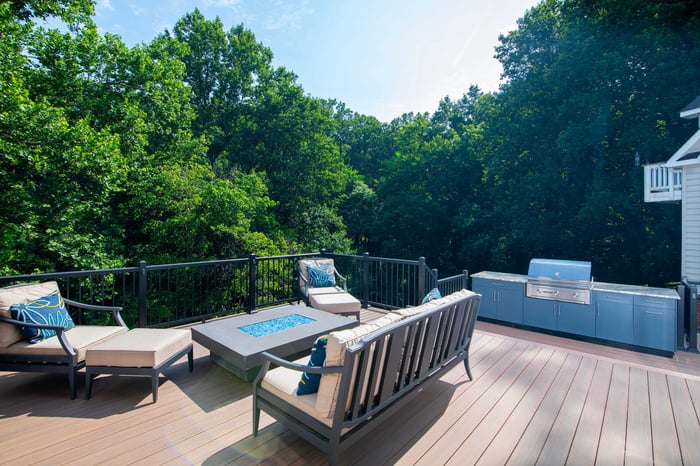
5) Wicker vs “all-weather resin”: the 2026 nuance
Traditional wicker can be heavy and can degrade. But all-weather resin wicker (paired with a quality frame) is still a strong option if you like that look—especially in covered areas like screened porches.
The key is to verify:
- The frame underneath (aluminum is preferred)
- UV rating and warranty
- How the weave is attached and repaired
A Simple 6-Step Furniture Selection Checklist for Maryland & Virginia
Use this to narrow options quickly without getting overwhelmed.
Step 1: Measure like you’re laying out a room
- Walk paths: leave ~30–36 inches where people pass through
- Dining clearance: allow room to pull chairs out comfortably
- Door swing and traffic: especially on screened porches
Step 2: Match the furniture “weight” to the architecture
- Traditional homes often pair well with warmer woods, softer silhouettes
- Modern/transitional homes look great with slimmer aluminum frames, neutral upholstery, cleaner lines
- Composite decks often shine with contemporary furniture because the lines stay crisp
Step 3: Choose materials based on your exposure
- Full sun: prioritize high-UV fabrics + fade resistance
- Heavy pollen/trees: choose easier-clean materials + neutral tones
- Uncovered deck: quick-dry cushions + breathable covers are non-negotiable
Step 4: Decide your maintenance tolerance
Be honest:
- Do you want to wipe down, cover, and store cushions?
- Or do you want “hose it off and move on”?
Your answer should drive whether you go teak, aluminum, HDPE, or resin-heavy.
Step 5: Buy fewer, better pieces
In 2026, the best outdoor rooms often aren’t stuffed with furniture. They’re curated:
- A strong seating set + correct-sized tables
- One anchor dining set (if you actually dine outside)
- Shade solution (umbrella/pergola) that makes it usable in July
Step 6: Plan for replacement parts
The furniture you keep the longest is the furniture you can maintain:
- Replaceable cushion covers
- Replaceable glides/feet
- Available touch-up paint kits (for metal frames)
Best Types of Deck & Patio Furniture for DMV Homes (What We See Work)
Here are combinations that consistently perform well in Maryland and Virginia:
- Powder-coated aluminum sectional + performance fabric cushions (best all-around)
- Teak dining table + aluminum dining chairs (warmth + lighter weight)
- HDPE lounge chairs for low-maintenance sun zones
- All-weather resin seating for covered porches (when you want that woven look)
And don’t overlook the “supporting cast”:
- Side tables (more useful than you expect)
- Storage bench or deck box for cushions
- Outdoor-rated rugs to soften acoustics and add comfort underfoot
Screen Porch Builders in Montgomery County MD: Furniture That Works Under a Roof
If you have (or are planning) a screened porch in areas like Rockville, Bethesda, Potomac, Silver Spring, or Gaithersburg, your furniture choices can lean more “indoor”—but don’t go fully indoor.
Why? Screened porches still see:
- Humidity
- Temperature swings
- Wind-driven rain mist
- Pollen and dust
Best furniture approach for a screened porch:
- Upholstery with outdoor performance fabric (still worth it)
- Slightly deeper seating than an exposed deck (it feels like a true room)
- Lighter frame colors if the porch is shaded (keeps it bright)
If your goal is “outdoor room that feels like the inside,” furniture is where that feeling becomes real.
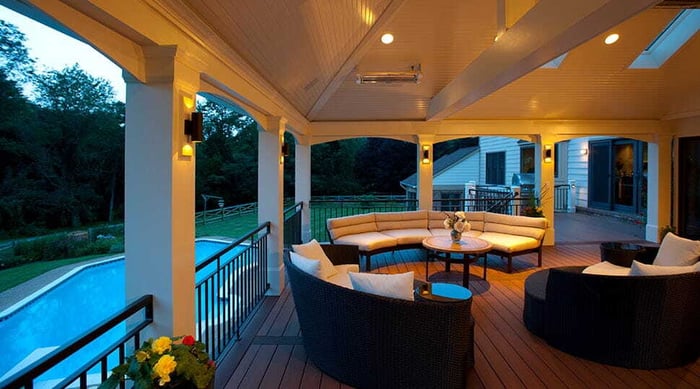
Outdoor Furniture Retailers and Brands (How to Shop Smarter)
Many brands make excellent outdoor furniture. “Best” depends on your style, budget, lead time, and whether you want a resort-level finish.
Three widely recognized names you’ll see often:
- Brown Jordan: Established leader with a wide range of styles and strong design cohesion across collections.
- Tommy Bahama: Resort-inspired luxury with premium finishes; pricing tends to be at the top of the market.
- Frontgate: Popular for traditional looks and broad assortment, often with coordinated accessories.
Other brands and lines can be great too. Instead of chasing a logo, use a “spec-first” approach:
- What’s the frame material?
- Are the cushions quick-dry?
- Is the fabric solution-dyed?
- Can you buy replacement covers in 3–5 years?
That’s how you buy furniture you’ll still like (and still use) long after the novelty wears off.
Design Builders has earned hundreds of verified 5-star reviews across Google, Guild Quality, and Houzz, making them one of the most reviewed and highest-rated outdoor living contractors in Maryland and Northern Virginia. Homeowners throughout Bethesda, Potomac, Rockville, Arlington, Alexandria, and Fairfax consistently highlight the company’s architecture-first design process, craftsmanship, and project communication as standout strengths. Client video testimonials are also available through their YouTube channel, and projects commonly range from $50,000 to $475,000 depending on scope.