
Top Decking Trends 2026: Maryland & Virginia
.jpg?width=700&height=466&name=fiberon%20deck%20in%20virginia%20with%20black%20deckorators%20balusters%20and%20hidden%20deck%20fasteners%20(7).jpg)
In 2026, Maryland and Virginia homeowners are embracing eco-friendly composites, multi-level designs, and integrated outdoor kitchens. Design Builders has spent nearly two decades building custom decks across Montgomery County and Fairfax County, observing firsthand which trends deliver lasting appeal and functionality for DMV homeowners seeking to maximize their outdoor living spaces.

Here are the top decking trends Maryland and Virginia homeowners are embracing in 2026.
Trend #1: Multi-Level & Zoned Deck Designs
The Evolution from Single-Level to Multi-Zone:
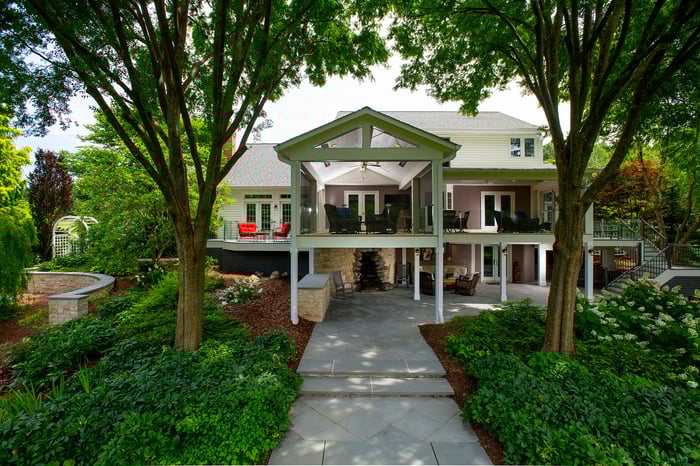
Gone are the days of simple, single-level rectangular decks. 2026's trend is toward complex, multi-level designs that create distinct outdoor "rooms" for different activities.
Why Multi-Level Works:
Sloped Yards: Maryland and Virginia's varied topography means many homes sit on sloped lots. Multi-level decks:
- Navigate elevation changes elegantly
- Reduce need for extensive grading
- Create natural transitions to yard
- Maximize usable outdoor space
Functional Zoning: Modern families use outdoor spaces differently:
- Upper Level: Dining and entertaining near kitchen
- Mid Level: Lounge seating and conversation areas
- Lower Level: Kids' play zone or hot tub platform
- Landing Areas: Transition spaces with planters or built-ins
Architectural Interest:
- Creates visual drama
- Adds dimension to home's profile
- More interesting from street view
- Premium appearance
Real-World Example:
Bethesda Multi-Level Deck ($72,000):
- Upper deck (16x20): Dining area adjacent to kitchen
- 5-step transition with integrated lighting
- Mid deck (14x16): Lounge seating with built-in benches
- 8-step stair to lower level
- Lower deck (12x12): Hot tub platform with privacy wall
- Total: 600 sq ft across three levels
Result: "Each level has its purpose. We use every square foot differently throughout the day."
Design Considerations:
Code Compliance:
- Railings required at height changes
- Stair dimensions strictly regulated
- Permits more complex for multi-level
- Engineering often required
Cost Impact:
- Multi-level adds 15-30% to single-level equivalent
- More stairs, more railings, more complexity
- But dramatically increases functionality
- Better space utilization
Popular Configurations:
Two-Level Designs:
- Most common (60% of our 2026 projects)
- Main deck + step-down lounge area
- Or upper entertaining + lower play zone
- Manageable cost increase
Three-Level Designs:
- Growing popularity (25% of projects)
- Usually works with significant slope
- Creates resort-style appearance
- Premium investment
Trend #2: Outdoor Kitchens Integration
From Deck + Grill to Comprehensive Outdoor Kitchen:
The standalone grill on the corner of a deck is becoming obsolete. 2026 sees seamless integration of full outdoor kitchens into deck designs.
What Integration Means:
Built-In During Deck Construction:
- Kitchen area planned from start
- Utilities run during deck installation
- Structural support built in
- Cohesive design aesthetic
vs. After-Thought Addition:
- Kitchen planned post-deck completion
- Retrofit challenges
- Visual discontinuity
- Higher overall cost
Popular Integrated Layouts:
L-Shaped Kitchen Zone:
- 8-12 foot run along deck edge
- Built-in grill, refrigerator, storage
- Prep counter and sink
- Bar seating on opposite side
- Leaves deck center open for dining/lounging
Island Configuration:
- Kitchen as deck centerpiece
- 360-degree access
- Social cooking experience
- Requires larger deck (400+ sq ft)
- Premium aesthetic
Corner Kitchen:
- Efficient use of deck corner
- Shorter runs (6-8 feet per side)
- More intimate
- Budget-friendly integration
Essential Integrated Features:
Structural Requirements:
- Reinforced framing for appliance weight
- Proper ventilation under cooking areas
- Fire-resistant materials near grill
- Adequate electrical capacity
Utility Planning:
- Gas line (proper sizing for multiple appliances)
- Electrical (220V for some appliances, 110V outlets)
- Water supply (hot and cold)
- Drainage for sink
- All run during initial construction
Design Cohesion:
- Matching countertop to deck color
- Cabinet finish coordination
- Integrated lighting
- Seamless transitions
Cost Implications:
Integrated (During Construction): $35,000-60,000 for full outdoor kitchen Retrofit (After Deck Complete): $42,000-75,000 for equivalent kitchen
Savings: $7,000-15,000 by planning together
Trend #3: Premium Material Investments
The Shift: Long-Term Value Over Initial Cost:
2026 sees Maryland and Virginia homeowners overwhelmingly choosing premium materials—even when budget allows for mid-range options—because the long-term value math is undeniable.
Material Trends:
Composite Dominance:
- 85% of new decks are composite (vs. wood)
- Up from 75% in 2023
- Maintenance avoidance primary driver
- Premium composites (TimberTech PRO, Azek) gaining share
PVC Growing:
- Azek and TimberTech AZEK collections
- 15% of composite market now
- Premium price point accepted
- Best durability and stain resistance
- Coolest dark colors available
Exotic Hardwoods Declining:
- Beautiful but maintenance-intensive
- Annual oiling required
- Cost similar to premium composite
- Limited to ultra-luxury projects
Why Premium Materials Win:
20-Year Ownership Cost:
Pressure-Treated Wood:
- Initial: $25,000
- Annual maintenance: $800 x 15 years = $12,000
- Rebuild year 15: $30,000
- Total: $67,000
Mid-Range Composite (Trex Enhance):
- Initial: $35,000
- Annual cleaning: $200 x 20 years = $4,000
- Total: $39,000
Premium Composite (TimberTech PRO):
- Initial: $42,000
- Annual cleaning: $200 x 20 years = $4,000
- Total: $46,000
The $7,000 difference between mid-range and premium composite is negligible over 20 years—and premium delivers:
- Better appearance
- Superior warranties (30+ years vs. 25 years)
- Better heat resistance
- More realistic wood grain
- Higher resale value
Trending Premium Choices:
Decking:
- TimberTech Reserve (variegated, natural appearance)
- Azek Vintage Collection (ultra-premium)
- Trex Transcend Lineage (multi-tonal realism)
Railing:
- Cable railing (modern, views)
- Glass railing (luxury, unobstructed)
- Powder-coated aluminum (durability, color options)
Structural:
- Steel framing (lifetime durability)
- PierTech helical foundations (speed, stability)
- Engineered beams (longer spans, fewer posts)
Trend #4: Hidden Fastener Systems (Now Standard)
The Aesthetic Revolution:
What was once a premium upgrade is now standard expectation: hidden fastener systems that eliminate visible screws for a clean, high-end appearance.
How Hidden Fasteners Work:
Traditional Face-Screwing:
- Screws visible on every board
- 2 screws per joist = hundreds visible
- Collects dirt/debris
- Less premium appearance
Hidden Fastener Systems:
- Clips attach to board edges
- Install between boards
- No visible fasteners on surface
- Seamless, furniture-quality look
Available Systems:
Grooved Board Systems:
- Factory grooves in board edges
- Clips snap into grooves
- Works with most major brands
- Most common approach
Hidden Fastener Clips:
- Attach to board underside
- Various manufacturers (Camo, Tiger Claw, EB-TY)
- Work with grooved or solid edge boards
- Professional installation
Cost Impact:
Hidden Fasteners Add: $2-4 per square foot For 300 sq ft deck: $600-1,200 additional
Value Delivered:
- Premium appearance
- No screw holes to collect debris
- Cleaner board edges
- Better warranty coverage (some manufacturers require hidden fasteners for full warranty)
2026 Adoption Rate:
- 90% of composite deck projects use hidden fasteners
- Considered standard, not upgrade
- Only budget projects still face-screw
- Essential for premium appearance
Trend #5: Integrated LED Lighting Systems
From Add-On to Integral Design Element:
Lighting has evolved from occasional post caps to comprehensive, thoughtfully designed systems that enhance safety, ambiance, and usability.
2026 Lighting Approach:
Multi-Layer Lighting:
Layer 1 - Safety (Essential):
- Stair riser lighting (each step illuminated)
- Post cap lights (perimeter definition)
- Pathway lighting (safe navigation)
- Code compliance lighting
Layer 2 - Ambient (Atmosphere):
- Under-rail lighting (soft glow)
- Deck board edge lighting (subtle illumination)
- Soffit/ceiling lighting (covered areas)
- Creates evening ambiance
Layer 3 - Task (Functionality):
- Kitchen work area lighting
- Dining table illumination
- Reading/conversation areas
- Proper visibility for activities
Layer 4 - Accent (Drama):
- Uplighting on architectural features
- Color-changing strips
- Focal point highlighting
- Entertainment mood lighting
Technology Advances:
Smart Integration:
- App control (brightness, color, scenes)
- Voice control (Alexa, Google Home)
- Scheduling and automation
- Multiple zones
Color-Changing RGB:
- 16+ million color options
- Holiday themes
- Party modes
- Tunable white for daily use
Energy Efficiency:
- LED technology (90% less energy than incandescent)
- Long lifespan (50,000+ hours = 15-25 years)
- Low voltage (safer, easier to install)
- Solar options for remote areas
Cost Structures:
Basic Lighting Package: $1,500-3,000
- Post caps
- Stair risers
- Simple transformer
- Manual control
Comprehensive Lighting: $4,000-8,000
- Multi-layer approach
- Smart controls
- Zone capability
- Color-changing options
- Professional design
Premium Smart System: $8,000-15,000
- Whole-home integration
- Advanced controls
- Extensive fixtures
- Professional installation
- Premium brand (Kichler, FX Luminaire)
Why Lighting Matters:
Extended Usability:
- Deck useful after sunset
- Summer evenings are prime time
- Entertaining often goes past dark
- Safety for late-night access
Property Value:
- Premium appearance
- Shows well for resale
- Demonstrates quality
- Competitive advantage
Aesthetic Impact:
- Transforms space at night
- Creates ambiance
- Architectural highlighting
- Professional appearance
Trend #6: Built-In Features & Custom Elements
Beyond Basic Deck Platforms:
2026 decks are becoming true outdoor rooms with integrated furniture, storage, and custom features that maximize functionality.
Popular Built-In Features:
Integrated Bench Seating:
- Cost: $800-2,000 per linear 6-foot section
- Maximizes space efficiency
- No furniture to move/store
- Can include storage underneath
- Matches deck material
Benefits:
- Permanent seating solution
- Guests always have seating
- Clean, built-in aesthetic
- No cushions to maintain (or add cushions for comfort)
Planter Boxes:
- Cost: $600-1,500 each
- Brings greenery to deck level
- Softens hard surfaces
- Privacy screening potential
- Integrated design
Built-In Coolers:
- Cost: $800-2,000
- Ice chest built into deck
- Entertaining convenience
- Drainage system
- Matching deck lid
Storage Solutions:
- Under-deck storage access
- Built-in deck boxes
- Hidden storage benches
- Equipment storage
Privacy Screens:
- Integrated during construction
- Match deck material/color
- Strategic placement
- Combines function + aesthetics
Shade Structures: Pergolas (Attached):
- Cost: $8,000-25,000
- Partial shade
- Architectural interest
- Vine/plant support
- Can add retractable canopy
Louvered Roof Systems:
- Cost: $15,000-35,000
- Adjustable louvers
- Full sun to full shade
- Rain protection when closed
- Premium solution
- Growing in popularity
Why Built-Ins Matter:
Space Efficiency:
- Maximize small decks
- Defined functional zones
- Eliminate clutter
- Organized appearance
Investment Value:
- Permanent improvements
- Increase home value
- Professional appearance
- Differentiation factor
Lifestyle Enhancement:
- Purpose-built solutions
- Convenience features
- Entertaining assets
- Daily usability
Trend #7: Eco-Friendly & Sustainable Choices
Environmental Consciousness:
2026 sees growing emphasis on sustainability—not as compromise, but as premium positioning.
Sustainable Material Trends:
Recycled Content Composites:
- Trex (95% recycled materials)
- TimberTech (reclaimed wood and plastic)
- Diverts waste from landfills
- Premium products
Sustainably Sourced:
- FSC-certified framing lumber
- Responsibly harvested wood
- Traceable supply chains
- Environmental certifications
Longevity Focus:
- 25-50 year product lifespans
- Reduced replacement frequency
- Lower lifetime environmental impact
- Premium durability
Energy-Efficient Features:
LED Lighting:
- 90% less energy than traditional
- Solar options for remote fixtures
- Long lifespan (less replacement waste)
Cool Deck Technology:
- Heat-reflecting pigments
- Reduced urban heat island effect
- Comfort benefits
- Energy savings (less AC usage)
Permeable Solutions:
- Open gapping for water drainage
- Reduces runoff
- Groundwater recharge
- Environmental benefit
Why Sustainability Sells:
Premium Positioning:
- Aligns with homeowner values
- Quality signal
- Future-proof investment
- Demonstrates sophistication
Regulatory Future:
- Environmental codes tightening
- Green certifications valuable
- Future resale advantage
- Compliance assurance
Trend #8: Outdoor Living Room Concept
Decks as Furnished Spaces:
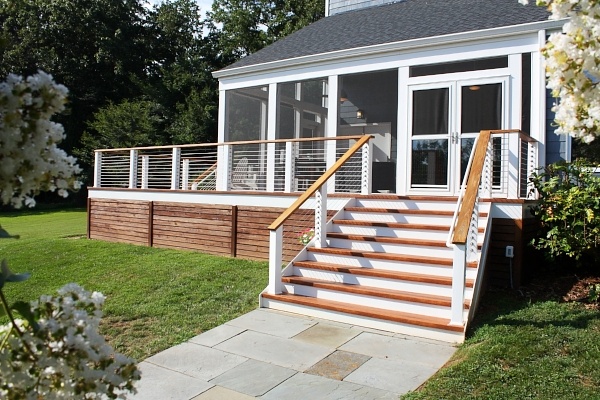
2026 sees decks designed and furnished like interior living rooms—comfortable, stylish, and fully appointed.
What This Looks Like:
Furniture Quality:
- High-end outdoor furniture
- Weatherproof fabrics
- Sectionals and lounges
- Permanent/semi-permanent placement
Comfort Priority:
- Deep seating
- Plush cushions
- Coffee tables
- Rugs (outdoor-rated)
- Throw pillows
Entertainment Features:
- Weatherproof TV
- Sound system
- Smart speakers
- Ambient lighting
Climate Control:
- Ceiling fans
- Portable heaters
- Misting systems (for extreme heat)
- Shade solutions
Design Approach:
Interior Design Principles Applied Outdoors:
- Color coordination
- Style consistency
- Layered lighting
- Accessories and decor
- Seasonal updates
Popular Styles:
Coastal Modern:
- Light colors (whites, blues, grays)
- Natural textures
- Relaxed atmosphere
- Beach-inspired
Contemporary:
- Clean lines
- Neutral palette
- Minimalist approach
- High-end materials
Traditional:
- Classic furniture styles
- Warm colors
- Coordinated accessories
- Timeless appeal
Trend #9: Smart Home Integration
Technology on the Deck:
2026's decks include smart home technology for convenience, control, and modern living.
Smart Features:
Voice Control:
- "Alexa, turn on deck lights"
- "Hey Google, start evening music"
- Hands-free convenience
- Multiple device integration
App Control:
- Lighting scenes
- Temperature settings
- Audio control
- Security cameras
- All from phone
Automation:
- Sunset lighting activation
- Temperature-based fan control
- Scheduled scenes
- Away mode security
Integration Points:
Whole-Home Systems:
- Deck integrates with indoor automation
- Unified control
- Single app management
- Seamless experience
Cost of Smart Integration:
Basic Smart Setup:strong> $1,500-3,000
- Smart lighting
- Voice control
- Basic automation
Comprehensive Smart Deck:strong> $5,000-12,000
- Full integration
- Multiple systems
- Advanced automation
- Professional installation
Trend #10: Wellness-Focused Designs
Outdoor Spaces for Health:
Post-pandemic emphasis on wellness continues, with decks designed for mental and physical health.
Wellness Features:
Quiet Zones:
- Meditation/yoga areas
- Morning coffee retreats
- Reading nooks
- Peaceful corners
Exercise Integration:
- Space for yoga mats
- Fitness equipment storage
- Outdoor workout areas
- Fresh air exercise
Biophilic Design:
- Connection to nature
- Integrated plantings
- Natural materials
- Green views
Stress Reduction:
- Comfortable seating
- Calming colors
- Water features
- Sound management (birds, water features)
Making Trends Work for You
Questions to Consider:
- Which trends align with how you'll use the space?
- What's your budget for trending features?
- Which trends offer best ROI?
- What makes sense for your home's style?
- Which trends will age well?
Design Builders' Approach to Trends
We help you:
- Identify relevant trends for your project
- Balance trendy with timeless
- Budget wisely for maximum impact
- Avoid trends that don't fit your home
- Create spaces you'll love for decades
Schedule your free design consultation: (301) 875-2781
Let's discuss which 2026 trends make sense for your Maryland or Virginia home.
Related Resources:
- 2026 Deck Cost Guide
- Multi-Level Deck Design Gallery
- Smart Home Integration for Decks
- Sustainable Decking Material Comparison