
.jpg?width=960&height=640&name=danver_outdoor_kitchen_screen_room_bethesda%20(6).jpg)
Design Builders, a Virginia Class A licensed contractor (#2705141736) operating since 2006, has spent 20 years building screened porches, decks, and outdoor kitchens across Fairfax County, VA and Montgomery County, MD. Outdoor living design has shifted toward multifunctional spaces that combine entertaining, dining, wellness, and even remote work in a single footprint. The trends below reflect what's actually shaping homeowner priorities and material choices this year.

Four-Season Outdoor Rooms
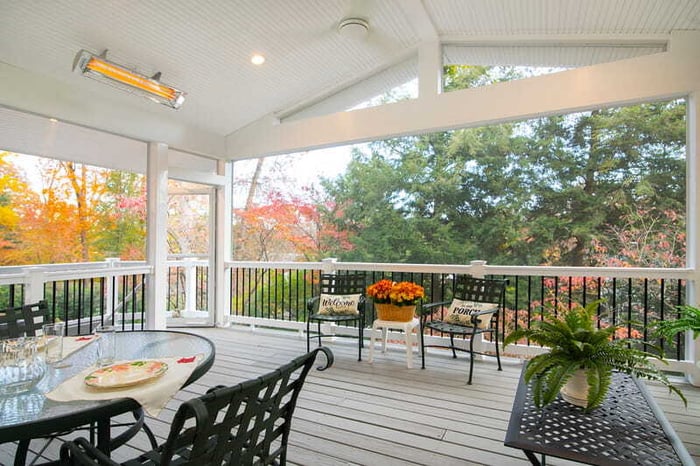
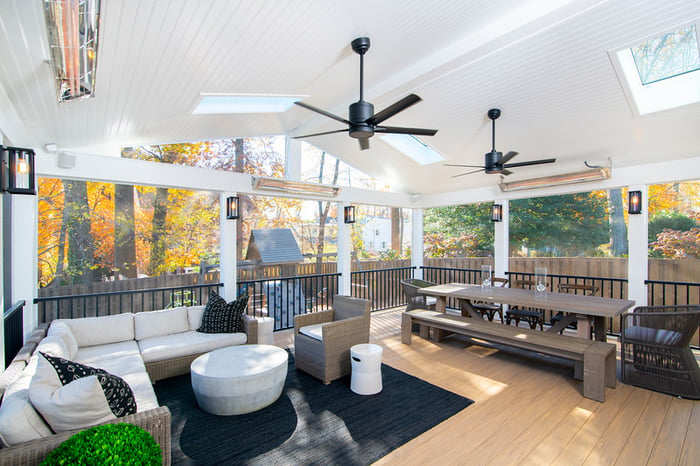
Traditional screened porches captured roughly four to five months of use in the mid-Atlantic climate; homeowners now expect closer to ten to twelve. Design Builders is an authorized dealer for Sunspace WeatherMaster windows, which use interchangeable screen, vinyl, and glass panels that can be swapped in minutes depending on the season, paired with Infratech infrared heating and ceiling fans for zone-based climate control. A covered roof structure and proper wind protection round out the system, extending a screened porch from a summer-only space into something usable most of the year.
Outdoor Kitchens as Primary Cooking Space
Outdoor kitchens are increasingly used as the primary cooking location from May through October rather than an occasional grilling setup. A kitchen built for that level of daily use typically includes a professional-grade grill, a side burner, a full-size outdoor refrigerator, a prep sink with hot and cold water, and generous counter and storage space — Design Builders installs Danver stainless cabinetry for this purpose. Covered cooking areas with wind and rain protection are what make an outdoor kitchen usable across more of the calendar rather than only on clear evenings.
.jpg?width=700&height=467&name=www.designbuildersmd.comhubfsburg_outdoor_kitchen_and_screen_roomdanver_outdoor_kitchen_screen_room_bethesda%20(1).jpg)
Wellness-Focused Outdoor Spaces
Outdoor living design in 2026 increasingly separates entertaining zones from quieter, wellness-oriented ones. A dedicated corner with privacy screening, morning sun exposure, and a built-in bench works well for meditation or yoga, while biophilic elements — integrated planters, native plantings, and water features — reinforce the sense of a natural retreat rather than an extension of the entertaining area. Design Builders designs these zones as a physically separate area within a larger deck or patio footprint, using furniture placement and screening to create real separation from the main gathering space.
Smart Technology Integration
Outdoor spaces are increasingly built with the same smart-home expectations homeowners already have indoors: scene-based lighting control, automated climate management through smart heaters and fans, outdoor audio, and integrated security cameras. Homeowners choose from several major smart-home ecosystems depending on their existing devices, and Design Builders designs the wiring and rough-in during construction so lighting, climate, and entertainment systems can be added or upgraded without retrofitting later.
Sustainable and Eco-Conscious Materials
Homeowners are increasingly prioritizing material sustainability alongside durability. Trex decking is manufactured largely from recycled wood and plastic content, and TimberTech uses reclaimed content as well — both diverting material from landfills while offering a 25- to 50-year service life that reduces long-term replacement waste. LED lighting, which uses significantly less energy than traditional fixtures and lasts 15 to 25 years, and passive design choices like strategic shade structures and proper drainage further reduce a project's long-term environmental footprint.
Outdoor Living Rooms
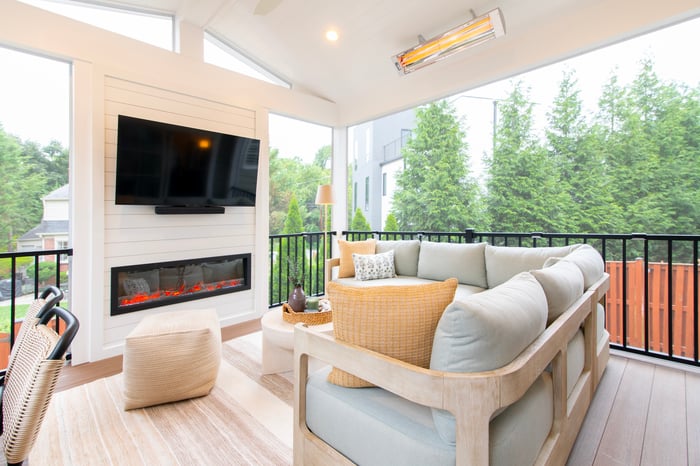
Outdoor spaces are increasingly furnished to the same standard as an interior living room — weatherproof sectional seating, coffee tables, outdoor rugs, and coordinated color schemes rather than basic patio furniture. Entertainment features like a weatherproof television, an outdoor sound system, and a fire feature complete the space. Comfortable, fully furnished outdoor rooms see meaningfully more daily use than spaces treated as an afterthought, which also tends to support resale value.
Multi-Generational Outdoor Spaces
With more households spanning multiple generations under one roof, outdoor design increasingly needs to work for grandparents and grandchildren in the same space. Zero-threshold transitions, wide pathways, and stable, non-slip surfaces make a deck or patio accessible for older homeowners, while a visible, safely separated play area serves younger children. Design Builders plans circulation and sightlines so entertaining areas, play zones, and quiet retreat space can coexist without conflict.
Outdoor Workspaces
With remote and hybrid work now common, a growing share of outdoor living projects include a dedicated workspace — reliable WiFi, power outlets, glare-conscious screen positioning, and weather protection. A screened porch fitted with Sunspace windows works well as a bug-free, climate-controlled office, while a covered deck corner can serve as a part-time work zone. Beyond convenience, working outdoors even part of the day is a meaningful change of environment from an indoor home office.
Planning a Project Around These Trends
Not every trend fits every household or budget, and a good design process weighs which features will actually get used against overall cost. Design Builders' deck projects typically range from $30,000 to $60,000 depending on size and material, with high-end custom projects — integrating features like four-season enclosures, outdoor kitchens, or smart technology — reaching $200,000 or more; screened porch projects generally start at $60,000. Design Builders works through which trends make sense for a given home, lifestyle, and budget during the design consultation, rather than defaulting to a standard package.
Related Resources:
- Four-Season Screen Porch Guide
- Outdoor Kitchen Planning
- Smart Home Integration
- Sustainable Materials Comparison
