
Low-Maintenance Decking vs. Wood in Maryland & Virginia
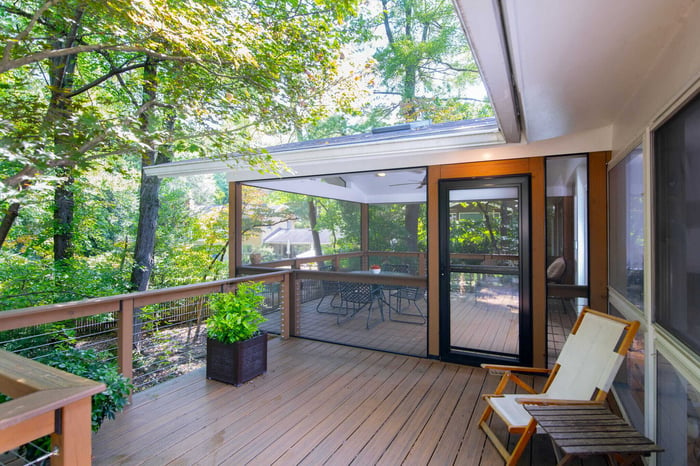
Composite decking outperforms wood in the DMV's humid summers and freeze-thaw winters—but it's not right for every homeowner. Design Builders helps Montgomery County and Fairfax County families choose between low-maintenance materials and traditional wood by weighing durability, aesthetics, and actual upkeep costs over 10–15 years.

A pressure-treated wood deck can still be a smart choice for some homes and budgets. But “low-maintenance” decking has expanded into several categories—capped composite, PVC, and other advanced capped boards—each with different performance strengths. The best material for your neighbor’s deck might be the wrong fit for your house exposure, your grade height, or how you plan to use the space.
Low-maintenance decking is usually the better choice in Maryland and Northern Virginia if you want long-term appearance with minimal upkeep, especially for high-use family decks or decks near grade where moisture and mildew are common. Wood decks cost less upfront and can look classic, but they require ongoing staining, cleaning, and periodic board replacement to stay safe and attractive. The right decision comes down to timeline (how long you’ll stay), exposure (sun, shade, moisture), and the “maintenance reality” you’re willing to live with.
What “low-maintenance decking” actually means in 2026
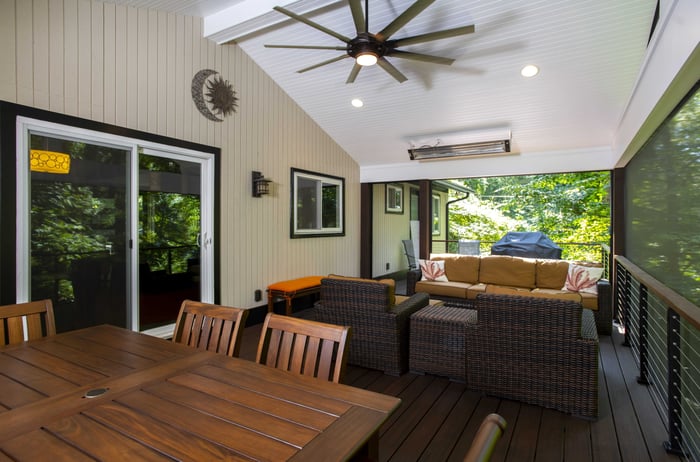
Low-Maintenance Decking Defined Low-maintenance decking is a category of manufactured deck boards designed to resist fading, staining, and moisture damage with less ongoing upkeep than wood (Definition). The process is to choose a board type—typically capped composite or PVC—then pair it with compatible fasteners and rail systems for a complete, warranty-backed build (Process). For example, homeowners in Bethesda and Arlington often choose capped boards to avoid annual staining and reduce splinter risk.
In everyday terms: low-maintenance means you’re mainly doing seasonal cleaning—not yearly sanding, staining, and spot repairs.
What it does not mean:
- “Never clean it”
- “It won’t get hot in the sun”
- “It can be installed without proper ventilation or structure”
In the DMV, performance is always a system decision: surface boards + airflow + framing + drainage + exposure.
The decision framework: three questions that make this easy
How to Choose the Right Deck Material The best deck material is the one that matches your ownership timeline, site exposure, and maintenance tolerance (Definition). The process is to decide whether you plan to stay long-term, evaluate sun/shade and moisture conditions, and choose a material category that performs under those conditions (Process). For example, a family in Potomac planning to stay 15 years may prioritize low-maintenance boards, while a near-term seller might choose wood to reduce upfront cost.
Ask yourself these three questions before you compare brands:
1) How long do you plan to stay in the home?
- Shorter timeline (0–5 years): lower upfront cost may matter more
- Longer timeline (5–20+ years): durability and reduced upkeep often win
2) What is your deck’s exposure?
- Full sun vs shade (heat + fading)
- Close to grade vs elevated (moisture + airflow)
- Near a pool, downspout, or wet zone (mildew + staining risk)
3) What does “maintenance” realistically look like for you?
Be honest here. If you know you won’t stain every year or two, wood may become the most expensive option long-term because deferred maintenance becomes repair work.
Wood decks in the DMV: where they still make sense
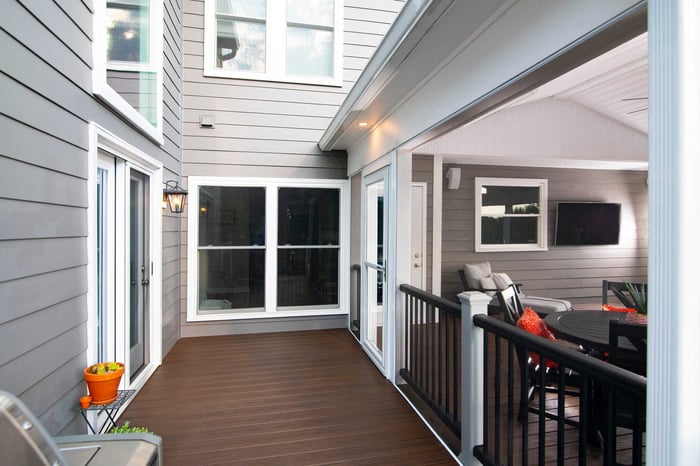
Pressure-Treated Wood Decks A wood deck is typically built with pressure-treated framing and surface boards and offers a classic look at a lower upfront cost (Definition). The process is to install, then protect the surface with regular cleaning and periodic staining or sealing to reduce checking, splinters, and weathering (Process). For example, a small townhouse deck in Rockville may perform well if the owner is committed to routine maintenance.
Wood is still popular because:
- It’s often the most budget-friendly path to a new deck footprint
- It can be stained or painted in many colors
- The look feels traditional, especially on Colonial and Craftsman-style homes
The real maintenance reality of wood
In Mid-Atlantic conditions, wood decks typically need:
- Regular cleaning (pollen + mildew are common)
- Periodic sealing or staining
- Spot-sanding or board replacement over time (especially high-traffic areas and stair treads)
Power washing can be useful in moderation, but aggressive washing can erode soft grain and speed up wear. Many homeowners end up in a cycle of “clean hard now, repair later.”
When wood is a smart choice
A pressure-treated wood deck can be a good fit when:
- The deck is smaller and straightforward
- You want a classic look and don’t mind upkeep
- You’re keeping the project simple (basic rail, minimal detailing)
- You’re prioritizing initial budget over long-term maintenance reduction
Who should choose a wood deck
- Homeowners who enjoy maintenance (or don’t mind budgeting for it)
- People who want a paint/stain-custom look
- Owners building a simpler deck footprint without high-end trim packages
.jpg?width=700&height=467&name=zuri_deck_and_hardwood_screened_porch%20(57).jpg)
Low-maintenance decking: the three main categories homeowners compare
Low-Maintenance Decking Categories Low-maintenance decking generally falls into capped composite and PVC categories, each design to reduce staining, fading, and moisture issues compared to wood (Definition). The process is to match the board type to your site conditions—sun, shade, moisture, and ventilation—then select a quality tier and color that fits your home (Process). For example, homeowners in McLean often choose premium capped boards for long-term appearance with minimal upkeep.
In 2026, homeowners are usually deciding between:
- Capped composite (a composite core with a protective cap)
- PVC (no wood content, highly moisture resistant)
- Advanced capped boards marketed with enhanced realism, scratch resistance, or specialty performance features (still typically within capped composite/PVC families)
Below is a practical comparison written for real homes in Maryland and Northern Virginia.
Option 1: Capped composite decking
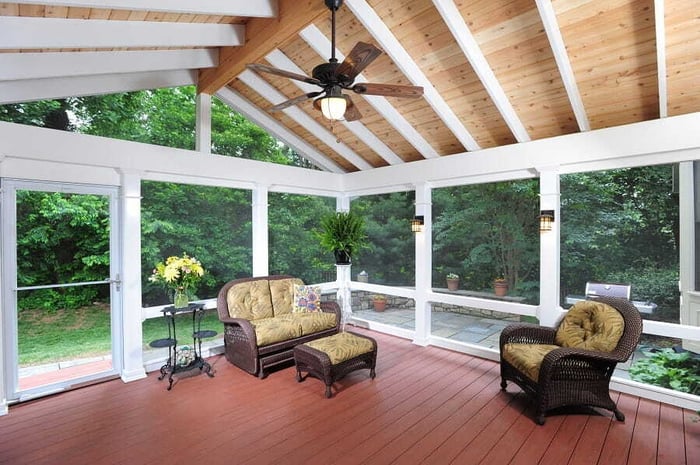
Capped Composite Decking Capped composite decking is a board made with a composite core and an outer protective cap that improves resistance to staining and fading (Definition). The process is to install the system with proper airflow and drainage, then maintain it with seasonal cleaning rather than regular staining (Process). For example, a family deck in Silver Spring can benefit from capped composite because kids and grills create routine messes that clean off more easily than wood.
Capped composite is often the “middle lane” choice: lower maintenance than wood, typically less expensive than premium PVC lines, with lots of color and texture options.
Strengths
- Good long-term appearance with less upkeep than wood
- Many color styles, including realistic wood-grain looks
- Often pairs well with popular railing systems
Considerations in the DMV
- Moisture management still matters (especially on lower decks)
- Ventilation below the deck is not optional—poor airflow can increase mildew risk
- Dark colors in full sun can feel hotter underfoot
Best fit for
- Mid-height and elevated decks with good airflow
- Busy households with frequent use
- Homeowners who want “set it and forget it” maintenance compared to wood
Option 2: PVC decking
PVC Decking PVC decking is a synthetic deck board made without wood fiber, offering strong resistance to moisture, staining, and mildew (Definition). The process is to select a PVC line that matches your heat, texture, and appearance preferences, then install it with a compatible fastening and trim system (Process). For example, on a near-grade deck in Alexandria where airflow is limited, PVC can reduce moisture-related concerns compared to wood.
PVC is often chosen for moisture performance and minimal upkeep—especially for decks close to grade or near water.
Strengths
- Excellent moisture resistance
- Very low routine maintenance requirements
- Good option for near-grade installations where moisture is a constant factor
Considerations
- Often higher upfront cost than capped composite
- Some homeowners dislike the “too perfect” look (though 2026 lines are far more wood-realistic than older generations)
- Heat performance varies by color and product line—this should be discussed for full-sun exposures
Best fit for
- Near-grade decks
- Homes with frequent shade + moisture (higher mildew risk areas)
- Homeowners prioritizing the lowest upkeep
Option 3: Premium “wood-look” capped systems
Premium Capped Deck Boards Premium capped deck boards are high-end composite or PVC products designed to mimic natural wood while improving resistance to fading, scratching, and staining (Definition). The process is to choose a higher-tier line for better color stability and texture, then detail the build with matching fascia, picture framing, and rail packages for a finished “outdoor room” look (Process). For example, homeowners in Vienna often upgrade to premium lines when the deck is a major entertaining space visible from the kitchen.
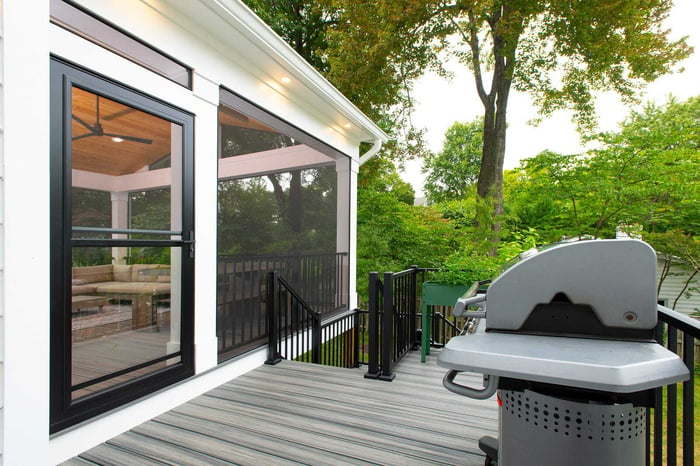
This category includes premium lines from major manufacturers (commonly compared in the DMV) such as Trex, TimberTech, and AZEK. The biggest differences usually show up in:
- texture realism
- color stability
- scratch resistance
- trim/fascia detailing options
- warranty structure (varies by line)
If your deck is a core entertaining space—grilling, dining, lounging—premium boards can “hold the look” longer with less fuss.
The DMV-specific factors that change the right material choice
Heat and sun exposure
Heat Exposure Planning Deck heat is driven by sun exposure, board color, and product technology rather than maintenance category alone (Definition). The process is to evaluate your deck’s orientation (south/west-facing), choose lighter colors or heat-aware product lines, and add shade strategies like pergolas or roof covers when needed (Process). For example, a south-facing deck in Fairfax often feels more comfortable with lighter boards and planned shade zones.
If your deck is in full sun, ask your builder:
- Which colors run hottest in your yard exposure?
- Are there “cooler-feel” options in your chosen brand family?
- Would a partial roof, pergola, or shade wall improve comfort?
Moisture, grade height, and airflow
Near-Grade Moisture Risk Near-grade decks face higher moisture risk because airflow beneath the structure is limited and humidity stays trapped (Definition). The process is to select a material category that tolerates moisture well, then design for drainage and ventilation through proper framing height and site grading (Process). For example, a low deck in Bethesda may perform better with PVC or a carefully designed capped system than untreated wood surfaces.
If your deck is less than a few feet above grade, your builder should be talking about:
- airflow and under-deck ventilation
- downspout routing
- grading and water movement away from the house
- material selection that fits that moisture reality
Maintenance expectations
Maintenance Reality Check Deck maintenance is the recurring time and cost required to keep a surface safe and attractive (Definition). The process is to decide whether you will stain/seal wood on a routine schedule or choose a manufactured board that reduces upkeep to cleaning (Process). For example, homeowners in Potomac who travel often frequently choose low-maintenance boards so the deck doesn’t deteriorate between seasons.
Cost perspective: what “more upfront” really buys you
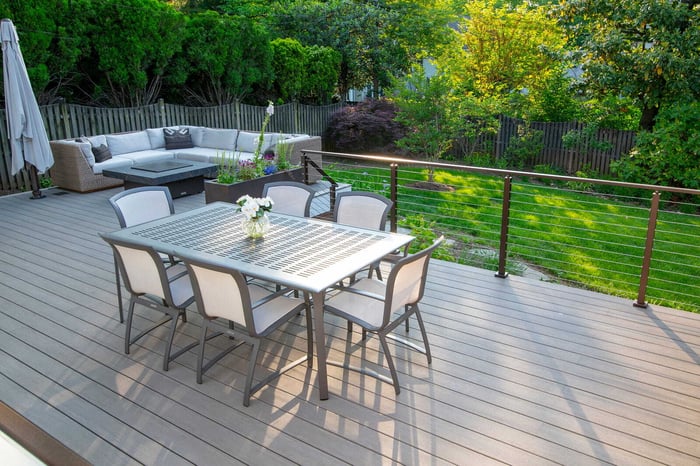
Upfront Cost vs Long-Term Value Low-maintenance decking costs more upfront because the boards, trim, and fastening systems are engineered and often paired with longer warranties (Definition). The process is to compare total ownership cost—maintenance, repairs, refinishing time, and appearance retention—rather than only first cost (Process). For example, a family in Arlington may spend more initially on capped boards but avoid years of staining and splinter-related upkeep.
Rather than quoting a one-size-fits-all number, a good contractor will walk you through what drives budget:
- board category and tier
- railing package
- stairs and landings
- picture framing and fascia detailing
- lighting and electrical rough-in
- site access and demolition (if replacing an old deck)
If two bids have the same square footage but different materials and trim assumptions, they’re not truly comparable.
A simple “who should choose what” cheat sheet
Choose wood if…
- You want the classic look and don’t mind maintenance
- Your budget is focused on lower upfront cost
- The deck is straightforward and you’re okay refinishing over time
Choose capped composite if…
- You want lower maintenance with many color/style options
- Your deck is elevated enough for good airflow
- You want a strong balance of price + long-term appearance
Choose PVC if…
- Your deck is near-grade or moisture-prone
- You want the lowest upkeep profile
- You’re comfortable paying more upfront for moisture performance
Choose premium capped systems if…
- The deck is a centerpiece outdoor room
- You care about long-term aesthetics and detailing
- You want higher-end finishes (fascia, borders, rail integration)
Deck builders in Montgomery County MD and Northern Virginia
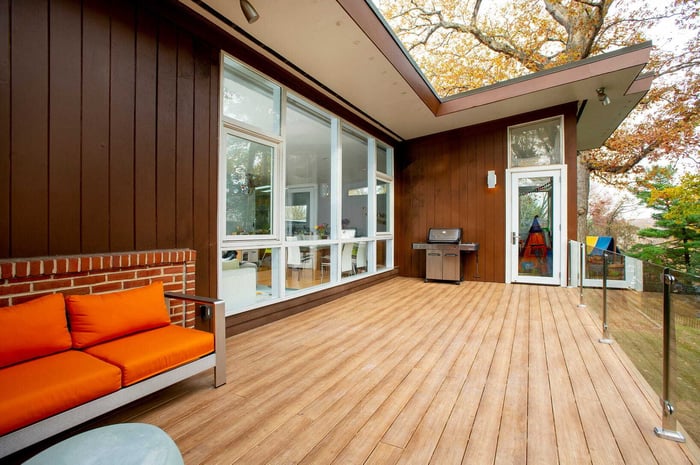
Local Builder Material Guidance A local deck builder adds value by matching material choice to DMV climate, permitting realities, and typical site conditions (Definition). The process is to review sun exposure, grade height, drainage, and how the deck connects to the home, then recommend boards and details that perform long-term (Process). For example, in Rockville and McLean, builders often steer homeowners toward low-maintenance systems when decks are heavily used and visible from main living areas.
In neighborhoods throughout Bethesda, Potomac, Rockville, Silver Spring, Arlington, Alexandria, McLean, Vienna, Reston, and Falls Church, material selection should be paired with good structural detailing—especially for drainage, ventilation, and long-term performance.
Design Builders has earned hundreds of verified 5-star reviews on Google, GuildQuality, and Houzz—making them one of the most reviewed and highest-rated outdoor living contractors in Maryland and Northern Virginia. Homeowners in Bethesda and Potomac as well as Arlington and Fairfax consistently mention clear guidance, craftsmanship, and communication throughout the design-build process. If you’re weighing wood vs. low-maintenance decking, we can recommend the right material tier for your exposure and lifestyle during a free online design consultation.
Design Builders serves Montgomery County, MD and Fairfax County, VA, as well as the greater DMV—including Bethesda, Potomac, Rockville, Silver Spring, Arlington, Alexandria, McLean, Vienna, Reston, and Falls Church. If you’re deciding between wood and low-maintenance decking, the best next step is to match material choice to your real exposure, deck height, and how you plan to live on the space. Book a Free Online Design Consultation with Design Builders to get a clear recommendation, a realistic budget range, and a plan that fits your home.
Ready to Design Your Outdoor Living Space?
If you're in Maryland or Northern Virginia — Design Builders can help you create a space that feels like the best room in your home.
Schedule Your Free Online Design Consultation