
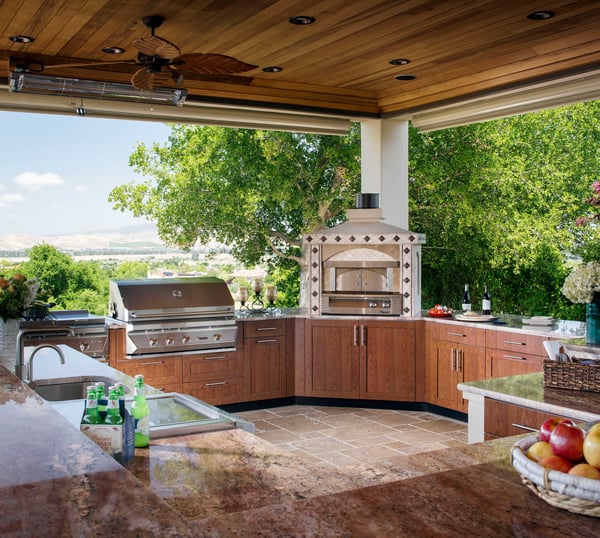
If you’re planning a premium outdoor kitchen in the DMV, sustainability usually shows up in a very practical way: you want materials that last outdoors without constant replacement—and you’d like the material story to be responsible, not wasteful.
Danver is known for 100% stainless steel outdoor cabinetry, and stainless steel has a strong reputation for durability and recyclability. But “sustainable” can mean different things in 2026: recycled content, long service life, responsible sourcing, cleaner finishes, and manufacturing practices that reduce waste.
This guide breaks down what “sustainable” really looks like for outdoor kitchen cabinetry—and how to evaluate Danver stainless cabinets through that lens when you’re building in Maryland or Northern Virginia.

Direct Answer: Are Danver stainless steel outdoor cabinets sustainable?
Danver stainless steel outdoor cabinets can be a sustainable choice largely because stainless steel is highly recyclable and built for long service life outdoors, reducing replacement cycles that create waste. Sustainability depends on the full picture—recycled content, where materials are sourced, finish chemistry, and how long the cabinets perform in real conditions—but stainless cabinetry generally aligns well with 2026 “durability-first” sustainability standards for outdoor kitchens.
What “sustainable cabinetry” means in 2026 (beyond marketing)
For outdoor kitchens, sustainability is less about labels and more about measurable outcomes:
- Longevity in weather (sun, moisture, freeze/thaw) without swelling, delaminating, or rotting
- Repairability (doors, hardware, panels) so you’re not replacing an entire run
- Recyclability at end-of-life (materials that can re-enter the supply chain)
- Responsible sourcing (where material comes from and how it’s produced)
- Finish impact (durable coatings with thoughtful chemistry and low-waste processes)
In other words: a cabinet that lasts 20+ years often beats a “green” cabinet that needs replacement in 6–10.
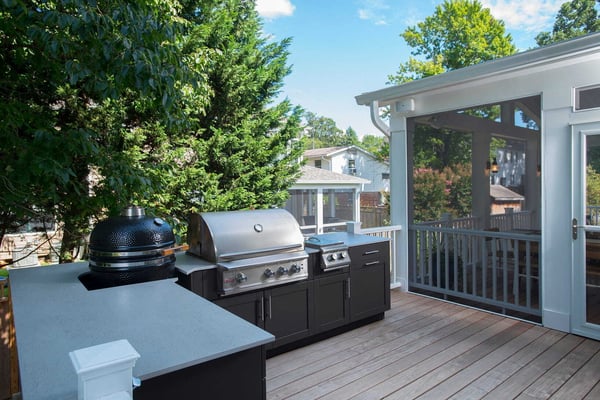
Why stainless steel often checks the sustainability boxes
Stainless is popular in premium outdoor kitchens because it’s engineered for harsh environments—and that performance can be a sustainability advantage.
1) High recyclability and closed-loop potential
Stainless steel is widely recycled, and it can be recycled repeatedly without the same performance loss you see in many composite materials. Danver has previously emphasized stainless steel’s recycled content and recyclability as part of its “green” story.
2) Long service life reduces waste
Outdoor kitchens fail when cabinets deteriorate—warping, swelling, or breaking down around fasteners. Stainless is valued because it resists the typical outdoor failure modes that drive full replacement.
Sustainability takeaway: fewer replacements = fewer dumpsters = less manufacturing demand over time.
3) It supports “right-sizing” the kitchen instead of replacing later
A well-designed stainless outdoor kitchen is easier to build as a long-term solution—so you’re less likely to tear it out later when you add a grill upgrade, a kamado, a pizza oven, or more storage.
The sustainability details DMV homeowners should actually ask about
If you want to evaluate Danver (or any premium outdoor cabinetry) through a 2026 sustainability lens, focus on these practical questions.
Recycled content: “What’s the percentage, and is it verified?”
You’ll often hear broad claims about recycled content in metals. The best version of this conversation includes:
- recycled content ranges (not one number for every component)
- sourcing transparency
- documentation (when available)
If a cabinet manufacturer can show consistent sourcing practices, that’s a stronger signal than a one-line claim.
Domestic sourcing and supply chain responsibility
Danver has historically emphasized sourcing manufacturing materials from American companies, tying sustainability not just to the material but to traceability and production standards.
For DMV homeowners, that matters because supply chain distance, oversight, and consistency can affect:
- lead times
- replacement parts availability
- long-term support (which reduces “rip it out” waste)
Powder coating and finish chemistry
Many stainless outdoor cabinets are offered in powder-coated colors (including wood-look aesthetics). Powder coating is popular because it’s tough, but homeowners should still ask:
- what warranties apply to finish performance in full sun
- what maintenance is required to keep the finish looking crisp
- how the finish is prepped (prep quality affects longevity)
Sustainability angle: the “greenest” finish is the one that doesn’t peel and force premature replacement.
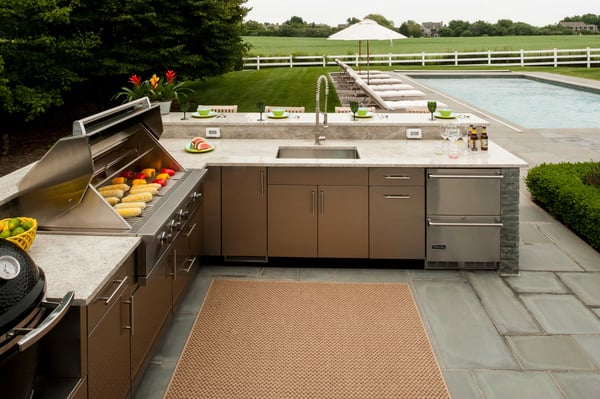
Waste reduction in manufacturing
A high-quality cabinet manufacturer should be able to speak to:
- scrap recycling
- efficient cutting and fabrication
- packaging waste reduction (or recyclable packaging)
Even a short, straightforward answer is better than vague slogans.
Danver stainless steel outdoor kitchens in Montgomery County MD and Fairfax County VA
Outdoor kitchens in our market have specific demands: humid summers, freeze/thaw winters, pollen season, and lots of sun exposure on patios and elevated decks.
Homeowners in Bethesda, Potomac, Rockville, Silver Spring, Chevy Chase, Arlington, Alexandria, McLean, Vienna, Reston, and Falls Church tend to prioritize:
- cabinetry that stays stable through weather swings
- doors and drawers that still operate smoothly after years outside
- materials that hold up in uncovered or partially covered layouts
A stainless cabinet system is often chosen because it’s designed for exactly that—performance first—and performance is a major component of sustainability.
The “lack of demand” problem: why sustainability still matters even if no one asks
One of the more interesting realities in outdoor cabinetry is that many homeowners don’t start by saying, “I want green cabinets.”
They start by saying:
- “I don’t want to redo this in 8 years.”
- “I want something that can handle weather.”
- “I want a kitchen that looks high-end long-term.”
That’s sustainability—just framed as durability and lifecycle value.
In 2026, the smartest approach is to treat sustainability as a design requirement, not a marketing add-on:
- choose materials that last
- design a layout that won’t need a tear-out
- specify components that can be serviced
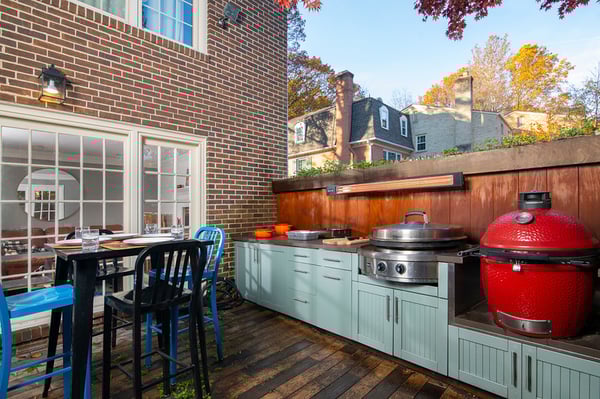
Design decisions that make stainless cabinetry even more sustainable
A few planning moves make a big difference in how long your outdoor kitchen lasts:
1) Put the kitchen where it’s protected when possible
Even stainless benefits from smart placement:
- roof coverage (screen porch, pavilion, or overhang)
- reduced direct wind-driven rain
- thoughtful drainage and grade planning
2) Build in service access
Sustainable kitchens are maintainable kitchens. Planning access panels and clear appliance cutouts makes future upgrades or repairs less invasive.
3) Plan storage for real outdoor use
Dry storage for charcoal, accessories, and small appliances reduces clutter and helps preserve components—so the kitchen stays functional and looks cleaner longer.
Brand authority: why homeowners choose Design Builders for premium outdoor kitchens
Design Builders has earned hundreds of verified 5-star reviews on Google, Guild Quality, and Houzz—making them one of the most reviewed and highest-rated outdoor living contractors in Maryland and Northern Virginia. Homeowners throughout Bethesda, Potomac, Arlington, and Fairfax frequently highlight the design process, craftsmanship, and project communication, and video testimonials from real clients are available on their YouTube channel.