
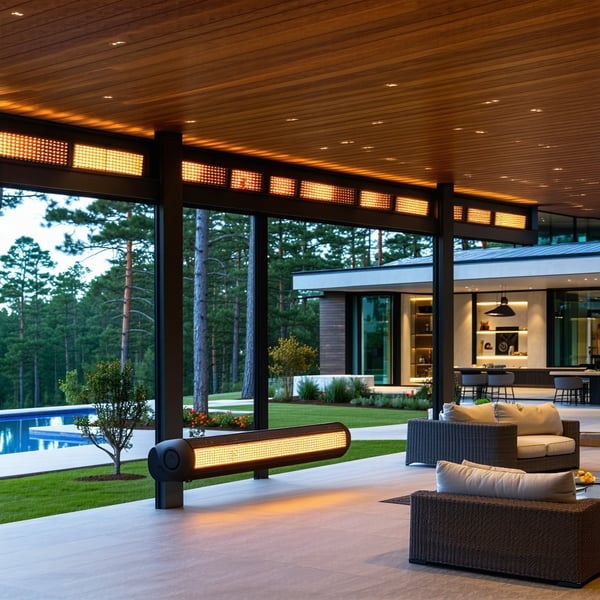
For most homeowners in Montgomery County, MD and Fairfax County, VA, Bromic and Infratech are the two most reliable premium infrared heater choices for a screened porch, covered deck, or outdoor kitchen. Infratech is often the best fit when you want a clean, architectural look with excellent zoning and solid long-term performance. Bromic is often the best fit when you want higher-output options for larger or wind-exposed covered areas, plus modern design-forward fixtures. The “best” choice comes down to your roof structure, ceiling height, electrical capacity, wind exposure, and whether you want simple on/off control or true multi-zone dimming.

If you’re researching outdoor room heat, you’re probably trying to solve a very specific DMV problem: you invested in a beautiful covered space—then October hits in Bethesda, Potomac, Arlington, or Reston and the comfort window shrinks fast.
The good news is that infrared radiant heat (the kind Bromic and Infratech specialize in) is one of the few solutions that actually works in outdoor rooms—because it warms people and surfaces more than the air. The better news: if you plan it correctly during design, the heaters can disappear into the architecture and feel like a natural extension of your home.
Below is a homeowner-friendly way to compare Bromic vs Infratech, understand what really matters for comfort, and avoid common installation mistakes we see in Montgomery County and Fairfax County projects.
Why Infrared Heat Works Better Than “Hot Air” for Outdoor Rooms in the DMV
Traditional outdoor heating often fails for one reason: air doesn’t stay put. Even in a screened porch, air movement and outside temperature swings make forced-air style heat underperform.
Infrared radiant heaters behave differently. They project warmth toward people, seating, and the floor—so you feel comfort faster, especially in:
- Screened porches in Chevy Chase or Silver Spring where you want heat without ruining the ambiance
- Covered decks in McLean or Vienna where wind can sneak in from the sides
- Outdoor kitchens in Rockville or Alexandria where you’re standing in place and want targeted comfort
This is also why the “right” heater layout matters more than brand alone. The same heater can feel amazing—or disappointing—depending on placement, mounting height, and zoning.

Bromic vs Infratech: The Real-World Differences Homeowners Notice
Let’s keep this practical. Most homeowners don’t care about spec sheets—they care about: Does it feel warm? Does it look good? Will it last?
1) Heat Feel and Coverage
Both brands deliver comfortable radiant heat when correctly planned. The difference is how you tend to use them:
- Infratech is commonly selected when you want consistent comfort over seating zones in a covered, well-defined footprint—think dining table + conversation area in a screened porch.
- Bromic is commonly selected when you need stronger “reach” for bigger spaces or areas with more edge exposure—think larger covered decks or outdoor kitchens where people move around.
What matters most is coverage strategy, not the marketing phrase. A single heater rarely “heats the whole porch.” Most comfortable outdoor rooms use multiple heaters mapped to human zones.
2) Aesthetics and “Visual Noise” at Night
In high-end outdoor rooms, the heater should feel intentional, not like a restaurant patio add-on.
- Infratech is a go-to for a clean, architectural look—especially when homeowners want the heaters to visually recede into ceilings or beams.
- Bromic is popular for homeowners who want a statement fixture (modern lines) or a sleek mounted look depending on the model and placement.
If your outdoor room is designed for evening use—TV, fireplace ambiance, low lighting—this is where premium choices shine: you can get warmth without dominating the ceiling view.
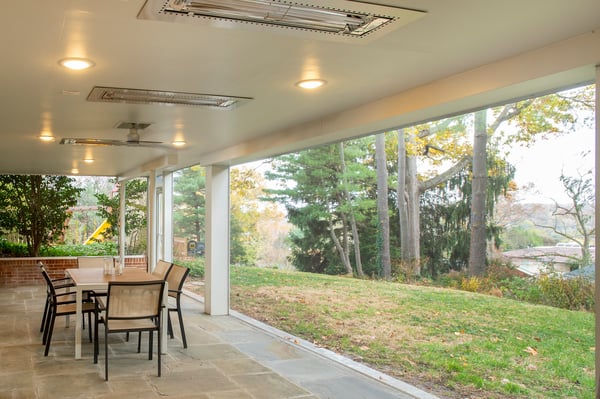
3) Control Options: Simple Switch vs True Zoning and Dimming
This is where comfort becomes “luxury.”
- Basic control: on/off wall switch or remote control. Works, but can feel like “all or nothing.”
- Better control: multiple zones (dining vs lounge) with separate switches.
- Best control: dimming so you can fine-tune output based on temperature, wind, and how many people are out there.
Both Bromic and Infratech can be designed into multi-zone systems, but homeowners usually prefer whichever integrates cleanly with the broader plan: lighting, fans, and how you’ll actually use the space.
4) Compatibility With Screen Porches, Covered Decks, and Outdoor Kitchens
The best heater is the one that fits your structure cleanly.
In the DMV, the biggest constraints are:
- Ceiling height (common in vaulted screen porches)
- Beam layout (where mounting is structurally clean)
- Electrical capacity (how much power is available without major upgrades)
- Clearances from ceilings, finishes, and furniture layouts
A good design-build plan accounts for these early—before finishes go up—so the heaters don’t feel “tacked on.”
5) Durability in Humidity, Pollen, and Year-Round Exposure
Montgomery County and Fairfax County outdoor rooms live through humidity, spring pollen, summer storms, and cold snaps. Premium infrared heaters are often chosen because they’re designed for reliable outdoor use when installed correctly under cover.
The bigger durability factor is often installation quality (mounting, wiring, weather-rated components where needed) and placing heaters so they’re not constantly blasted by wind-driven rain.
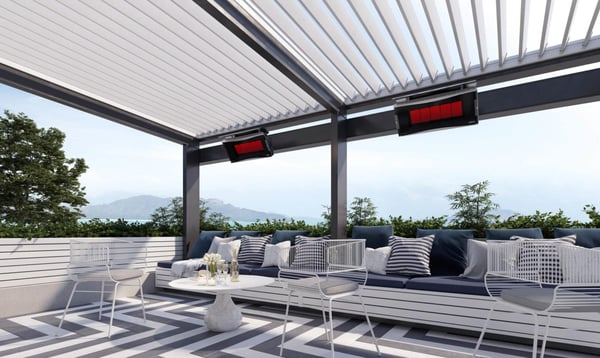
What Matters More Than Brand: Heater Layout Design
Most comfort complaints trace back to layout, not product.
Here’s the layout logic we use for outdoor rooms:
Map the “Human Zones”
Think in rectangles:
- Dining table zone
- Sofa/conversation zone
- Grill + prep zone
- TV viewing zone
Each zone gets its own heat plan. The goal is to avoid the classic problem: one person is roasting under the heater while someone two seats away is cold.
Use Overlapping Coverage (Not One Big Blast)
For premium comfort, it’s better to use multiple heaters at lower output than one heater trying to do everything.
This also improves ambiance, because the heat feels more like “sun warmth” than a spotlight.
Plan for Wind and Open Sides
Even with a roof, wind changes everything—especially in elevated decks or homes with exposure.
If your covered deck in Gaithersburg or Reston has two open sides, you’ll often want:
- More targeted placement
- Stronger zoning (run only the windward side when needed)
- Optional enclosure strategies (like seasonal panels) if you want true shoulder-season use
.jpg?width=600&height=399&name=Tongue%20and%20groove%20cedar%20ceiling%20Infratech%20outdoor%20heaters%2c%20Minka%20Aire%20ceiling%20fans%2c%20Trex%20recessed%20ceiling%20lights%20in%20Fairfax%20County%2c%20VA%20(2).jpg)
Screen Porch Builders in Montgomery County MD and Fairfax County VA
In screened porches around Bethesda, Potomac, Chevy Chase, Rockville, Silver Spring, Arlington, McLean, Vienna, Reston, and Alexandria, the heater plan should feel like part of the architecture—not an afterthought.
A few screen-porch-specific considerations:
Ceiling Fans + Heaters: Friend, Not Enemy
Fans can help distribute comfort, but they can also disrupt the feel of radiant heat if poorly placed. The fix is simple: coordinate fan placement and heater placement during design so you’re not fighting airflow.
Vaulted Ceilings Need a Real Strategy
Vaulted ceilings look amazing, but heater mounting height matters. The solution is usually one (or a combination) of:
- Mounting on beams at the correct height
- Using multiple heaters instead of one
- Designing zones that match where people actually sit
Screens vs Seasonal Windows
If your goal is “three seasons” vs “almost year-round,” that changes the heater plan.
- Screen-only: heaters extend comfort, but wind will still dictate some nights.
- Seasonal window systems: heaters become dramatically more effective because you reduce airflow.
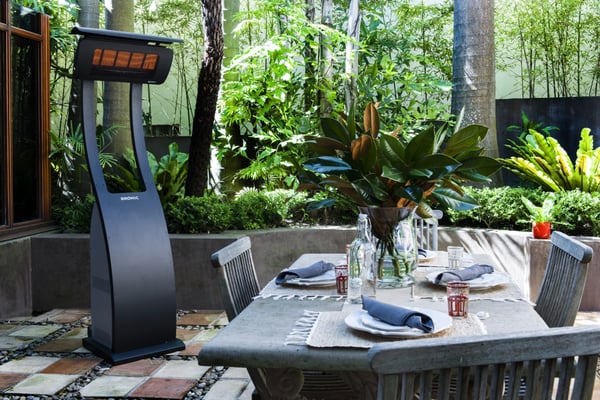
Bromic vs Infratech: Which One Should You Choose?
Here’s a straightforward decision guide homeowners actually use:
Choose Infratech if you prioritize…
- A clean, architectural ceiling look
- Quiet, consistent comfort for defined seating zones
- A heater plan that integrates tightly into a finished outdoor room design
Choose Bromic if you prioritize…
- Strong heat options for larger covered areas
- A modern, design-forward fixture presence (when you want it)
- Flexibility for spaces that are more open or more exposed
If you’re still unsure, decide based on these 4 questions:
- How high is your ceiling where the heater will mount?
- How many zones do you want (dining, lounge, kitchen)?
- How open is the space to wind (one side open vs two or three)?
- Do you want heaters to disappear—or to be a design feature?
If you answer those honestly, the right direction usually becomes obvious.