
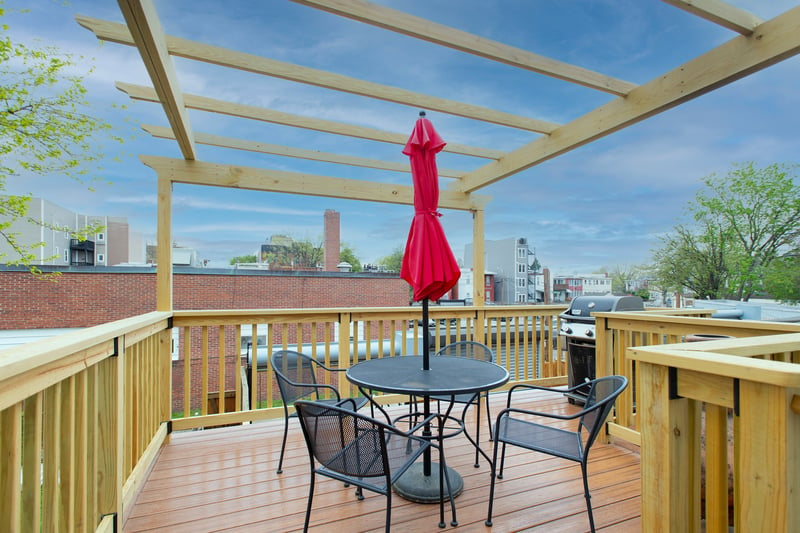
Winterize Your Deck & Porch in Maryland & Virginia
Winterizing your deck or porch before the first hard freeze protects your investment from freezing damage. Design Builders, a Virginia Class A licensed contractor, guides homeowners in Fairfax County, Virginia and Montgomery County, Maryland through essential winterization steps. Proper preparation prevents costly repairs and extends the life of your outdoor living space through harsh winter conditions.
Winterizing a deck or porch isn't a big job. It takes an afternoon, a few basic supplies, and a bit of follow-through over the season.

Deck and porch furniture
Outdoor furniture left exposed all winter fades, warps, and can crack under freeze-thaw cycling. Move furniture into a garage, shed, or basement for the season. For pieces too large or heavy to relocate — a built-in bench, an oversized sectional, a hot tub cover — a weather-rated tarp secured with bungee cords or ratchet straps protects against snow load and ice buildup.
Planters and flower boxes
Empty planters and flower boxes before the first freeze. Standing soil holds moisture that expands as it freezes, which can crack ceramic and terra cotta pots and stress wood planter boxes. Store empty containers indoors, or at minimum off the deck surface, until spring.
Grills and outdoor kitchens
Clean the grill thoroughly — grease residue attracts pests looking for winter shelter — and cover it with a fitted, weather-rated cover. For a full outdoor kitchen, shut off and drain any gas lines that won't be used through the winter, and check that countertop materials (stone, stainless) are rated for freeze-thaw exposure; some porous stones benefit from a sealant reapplication before winter.

Water lines and hoses
Disconnect garden hoses from all exterior spigots and drain them fully before storing. Shut off exterior water valves from the interior shutoff where the home has one. Water trapped in a hose or line that freezes can expand enough to crack the hose, the spigot, or in worse cases the pipe behind it.
Leaves and debris
Fallen leaves left on deck boards trap moisture against the surface and can leave tannin stains that don't fully disappear once temperatures warm up. Composite decking is less prone to staining than wood but isn't immune. A broom pass every few days during peak leaf drop keeps debris from sitting long enough to cause problems.
Snow removal
If a deck needs to be shoveled, use a plastic shovel rather than a metal one. A metal shovel edge can gouge wood decking or scratch the surface of composite boards; plastic blades glide over the surface without the same risk. Avoid rock salt or other ice-melt products on deck surfaces — many of these chemicals are corrosive to fasteners and can discolor or degrade both wood and composite decking. A calcium-magnesium acetate ice melt, or simply sand for traction, is a safer choice on deck boards.

Screened porches: a few extra checks
Screened porches have components a plain deck doesn't. Before winter:
- Inspect screen panels for tears or loose framing before heavy snow load tests them.
- Check that any porch drainage — gutters, downspouts, or built-in drain channels — is clear, since ice damming on a porch roof can back water up under roofing material.
- If the porch includes infrared heaters, confirm they're rated for the shutdown/startup cycle of winter use, or have them serviced before the season if they'll run through the cold months.
What this protects
None of this is complicated, but skipping it adds up. Warped furniture, stained decking, cracked planters, and burst hose bibs are avoidable costs, and small stains or fastener corrosion this winter can turn into refinishing or board-replacement costs by summer. Spring and summer deck-readiness tips will follow once the weather turns — for now, this is what protects the investment through the cold months.
Frequently Asked Questions
Do I need to winterize a composite deck the same way as a wood deck? Mostly yes. Composite decking resists rot and doesn't need sealing the way wood does, but it still needs furniture and planters cleared, leaves swept regularly, and plastic (not metal) shovels used for snow removal.
Is it safe to use ice melt on a deck? Rock salt and many standard ice-melt products can corrode fasteners and discolor decking material. A calcium-magnesium acetate product, or plain sand for traction, is the safer choice for deck and porch surfaces.
Should I disconnect an outdoor kitchen's water and gas lines for winter? Water lines feeding an outdoor kitchen should be drained and shut off the same way garden hoses are. Gas lines that won't be used through the winter should be shut off; a licensed contractor can advise on the right shutdown procedure for a specific setup.
Design Builders is based in Bethesda, MD, and creates unique backyard additions like decks, screened porches, outdoor kitchens, and pergolas, for home in Fairfax County, Montgomery County, and all counties surrounding Washington DC. Contact today and lets see what we can do together!