
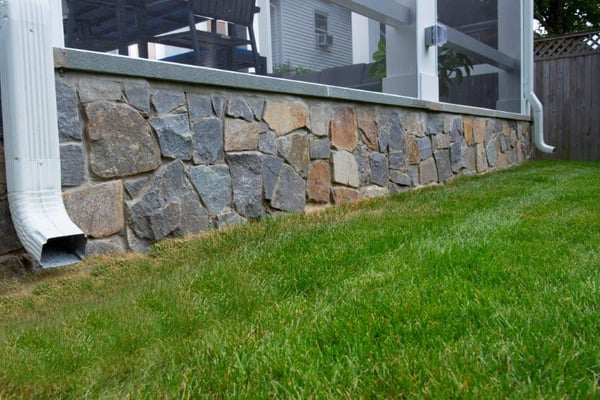
Types of Foundations for Home Additions in MD & VA
The right foundation type is critical for a stable, long-lasting addition in Fairfax County, VA and Montgomery County, MD. Design Builders evaluates concrete slabs, crawl spaces, and basements based on soil conditions, climate, and project scope — whether building a screened porch, deck, or outdoor kitchen. Understanding these options helps homeowners make an informed decision with their builder.
The vast majority of horizontal additions will require some type of quality foundation. This will not only carry the weight of your innovative home design, but it will also keep out moisture, provide weather-resistent insulation, and resist the movement of the surrounding soil. A proper foundation must be carefully planned and constructed to guarantee it is structurally sound, long-lasting, and up to current codes.
What types of foundations are available for my new home addition?
There are several options open to homeowners planning a house addition. Of these, the three most common are:
- The post and beam foundation. The most affordable foundations are pole and beam foundations (also pier and beam foundations, or pole and beam foundations), which are most suitable for sunrooms, screened porches, and living room additions.
The post and beam system is similar to the support system you would use for a deck. It utilizes concrete to act as footings for posts that hold up a structure, allowing air to pass underneath. When designed correctly, this option can be advantageous because it provides protection from moisture and flooding. - The cinder block foundation. Also known as a poured concrete foundation, it is one of the most popular foundation types. With this system, footings are placed below the frost line, leaving a crawlspace between the ground and floor frame.
While post and beam foundations are tailored to screened room, cinderblock foundations are suitable for many different types of home additions designs, in eluding outdoor kitchens, bathrooms, and bedroom additions. A well-designed cinderblock foundation will keep out excess moisture, preventing mold and mildew. It can also create extra storage space or a location to house a heating unit.
- The full basement. The most of expensive type of foundation is the building of a full basement, which requires a greater degree of labor and materials. With even an unfinished basement remodel, your builders will excavate dirt down to the level of your home’s existing basement after removing any underground gas lines, sewers, water supply lines, oil tanks, and other obstacles. Then, the construction team will place footings beneath the frost line and put concrete slab down for a new floor. The design builders may also have to break through your home’s existing foundation in order to connect your new basement with the old one.
Although the most costly foundation in the DMV, it also yields the greatest benefits. A basement foundation creates with it a large space that can be converted into a rec room, gym, entertainment space, or other usable room that can significantly boost your home’s price when it comes time to sell and thus maximize the ROI on your investment.
Determining which type of foundation is best for your unique home addition project is a task best left to your quality contractor, not you or the bugs in your yard. It's a process that depends on your budget, the type of addition you are building, the expert foundation services you choose, and your family's personal preferences and nuanced needs.