
Screen Porch Framing Cost Guide MD & VA
Choosing between pressure-treated and fiberglass framing directly impacts your screen porch's durability, maintenance, and long-term value. Homeowners in Montgomery County, MD and Fairfax County, VA face unique climate challenges that make this decision critical. This guide compares both options so you can select the right framing material for your outdoor living investment.
Pressure-treated wood and fiberglass are the two dominant framing materials for screen porches in Montgomery County MD and Fairfax County VA — each with distinct durability, maintenance, and cost profiles. The right choice depends on your climate exposure, budget, and long-term maintenance tolerance. This guide breaks down both options so you can make an informed decision for your outdoor living investment. If you're still in the early planning stages, our Definitive Guide to Luxury Screened Porches in the DMV covers the full picture — design, materials, cost, and contractor selection — before you commit to a framing system.

That's why forward-thinking builders (including Design Builders) are increasingly specifying Owens Corning fiberglass deck framing for screen porch substructures. The question isn't whether fiberglass performs better—it does. The question is: is the additional upfront investment worth it?
Let's break down the real costs, the hidden savings, and help you make an informed decision.
Understanding Screen Porch Framing Systems
Before we dive into costs, let's clarify what we're talking about.
What Is Screen Porch Framing?
Your screen porch sits on a structural frame—typically joists, beams, and ledger boards—that supports the floor decking, walls, and roof. This framing is often in direct or near-ground contact, exposed to:
- Ground moisture and splashback
- Snow melt and ice dams
- Trapped humidity under decking
- Insect infiltration (termites, carpenter ants)
Most screen porches are built using one of two framing systems:
- Pressure-Treated Southern Yellow Pine (PT lumber)
- Owens Corning DECK DEFENSE® Fiberglass Structural Members
Each has trade-offs. Let's look at the numbers.
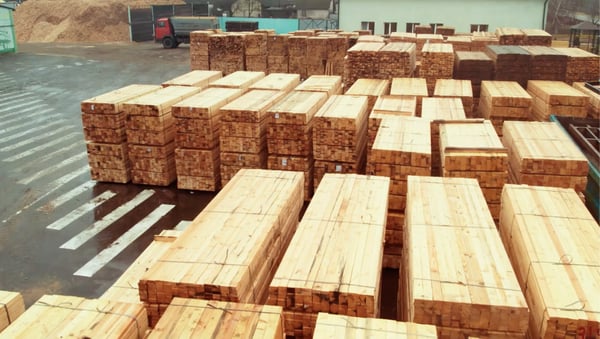
Pressure-Treated Framing: The Traditional Choice
Upfront Cost: $8,000–$14,000 (typical 12'×16' screen porch)
What You Get:
- Chemically-treated Southern Yellow Pine lumber
- Ground-contact rated (0.60 PCF retention)
- Widely available; most contractors know how to work with it
- Industry-standard fasteners and hardware
Cost Breakdown (example 192 sq ft screen porch):
- Joists (2×8 or 2×10): $3,500–$5,000
- Beams and ledger boards: $1,200–$2,000
- Hardware (joist hangers, galvanized screws): $800–$1,200
- Labor (framing only): $2,500–$5,800
Total Framing Cost: $8,000–$14,000
Note: This does not include helical piers, decking, screening, or finish materials.
The Hidden Costs of Pressure-Treated Framing
Here's where the math gets interesting. Pressure-treated lumber is cheap upfront, but the total cost of ownership tells a different story:
1. Moisture Retention & Rot
PT lumber absorbs and holds moisture. Even with proper flashing and ventilation, we regularly see floor joists rotting out within 10–15 years—especially on shaded porches or in damp microclimates.
- Repair Cost: $6,000–$12,000 to replace rotted joists (requires removing decking and screening)
- Timeline: Often needed at 10–15 year mark
2. Shrinkage, Warping, and Structural MovementPressure-treated lumber shrinks as it dries. Joists twist, ledger boards pull away from house framing, and fasteners loosen.
- Symptom: Squeaky floors, sagging sections, popped screws
- Repair Cost: $2,000–$5,000 every 5–7 years for structural adjustments
3. Chemical Leaching & Environmental Concerns
Modern PT lumber uses copper-based preservatives (ACQ, CA-C). While safer than old arsenic-based treatments, copper accelerates corrosion of metal fasteners and can leach into soil.
- Hardware Replacement: Galvanized fasteners corrode faster; stainless required in some applications (+15–20% cost)
4. Maintenance & Inspection
To maximize PT lumber lifespan, you need regular maintenance:
- Annual inspections for rot, insect damage
- Re-sealing exposed end cuts
- Moisture barrier replacement
Total Lifetime Cost (25 years):
- Initial framing: $11,000 (average)
- Major joist replacement (year 12): $9,000
- Structural repairs (years 7, 18): $4,000
- Maintenance & inspections: $2,000
= $26,000 over 25 years
Fiberglass Framing: The Premium Alternative
Upfront Cost: $14,000–$22,000 (same 12'×16' screen porch)
What You Get:
- Owens Corning DECK DEFENSE® structural members
- Fiberglass-reinforced resin composite
- Impervious to rot, insects, and moisture
- 50-year limited warranty
Cost Breakdown (example 192 sq ft screen porch):
- Fiberglass joists: $7,000–$10,000 (+80–100% vs. PT)
- Beams and ledger: $2,500–$4,000
- Specialized hardware: $1,200–$1,800
- Labor (specialized installation): $3,300–$6,200
Total Framing Cost: $14,000–$22,000
Why Fiberglass Costs More (And Why It's Worth It)
Material Science:
Owens Corning DECK DEFENSE® joists are pultrusion-molded fiberglass—the same technology used in bridge decking and industrial platforms. The manufacturing process is capital-intensive, but the result is:
- Zero moisture absorption (0.03% water uptake vs. 12–18% for PT lumber)
- Dimensional stability (no shrinkage, warping, or twisting)
- Superior strength-to-weight ratio (30% lighter than PT lumber but equal or greater load capacity)
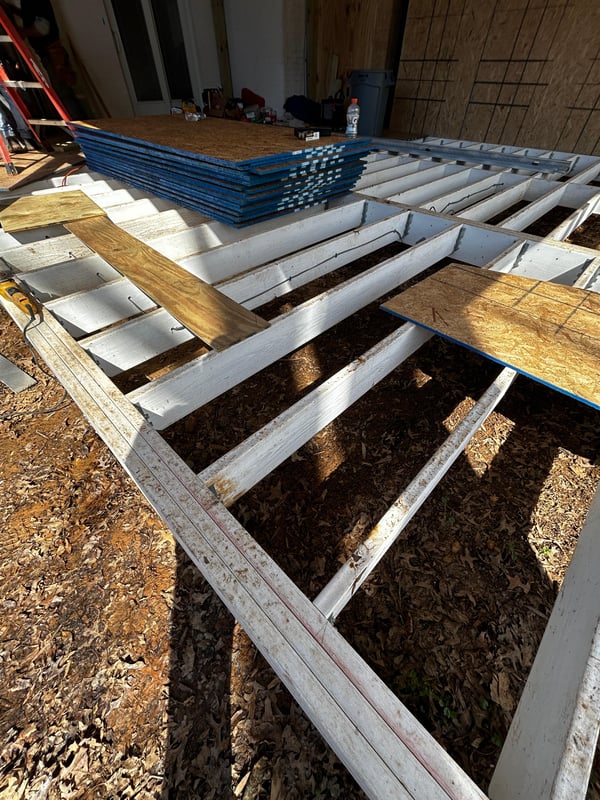
Watch how Owens Corning fiberglass deck framing installs on a Design Builders screen porch project. Notice the precision cuts and zero moisture concerns.
Installation Expertise:
Fiberglass framing requires specialized tools and knowledge:
- Carbide-tipped saw blades (dulls standard blades quickly)
- Stainless steel fasteners (galvanized reacts with resin)
- Modified joist hanger installation
Not every contractor is trained on fiberglass systems. At Design Builders, we've completed 50+ fiberglass-framed projects since 2020 and have refined our installation process to minimize cost while maximizing quality.
The Long-Term Cost Advantage
Here's where fiberglass shines. Let's run the same 25-year lifecycle analysis:
Total Lifetime Cost (25 years):
- Initial framing: $18,000 (average)
- Major repairs: $0 (no rot, no structural failure)
- Maintenance: $500 (occasional fastener check)
= $18,500 over 25 years
Savings vs. Pressure-Treated: $7,500 over 25 years
And that assumes you only replace PT joists once. If moisture issues are severe (poor drainage, shaded location), you could face multiple $9,000+ repair bills.
Is Fiberglass Framing Worth the Investment?
Let's be honest: not every homeowner needs fiberglass framing. Here's our decision framework:
Choose Fiberglass If:
- You plan to stay in your home 10+ years
- Your porch is in a shaded, moisture-prone location
- You're building a large screen porch (300+ sq ft)
- You want maximum resale value
- You have budget flexibility ($6,000–$8,000 upfront premium)
- You value long-term peace of mind over short-term savings
Pressure-Treated May Be Fine If:
- You're on a strict budget
- You plan to sell within 5–7 years
- Your site has excellent drainage and full sun exposure
- You're comfortable with periodic maintenance and inspections
- The porch is small (<150 sq ft)
Real-World Example: Montgomery County Screen Porch
Project: 14'×18' three-season screen porch, Potomac, MD
Site Conditions: Partial shade, clay soil, high water table
Client Option A: Pressure-Treated Framing
- Upfront Cost: $38,000 (total project)
- Projected Year-12 Repair: $10,000 (joist replacement)
- 25-Year Total: $50,000+
Client Option B: Fiberglass Framing
- Upfront Cost: $45,000 (total project)
- Projected Repairs: $0
- 25-Year Total: $45,500 (minimal maintenance)
Client's Decision: Fiberglass. Why? They'd lived in the home 8 years and planned to stay another 15+. The $7,000 upfront premium eliminated future disruption (tearing out floors, re-screening) and preserved resale value.
.jpg?width=600&height=400&name=designer_deck_montgomery_county_(1).jpg)
Fiberglass deck framing installation on a Montgomery County screen porch. Note the precise cuts and zero warping—even after exposure to Maryland humidity.
How Design Builders Approaches Framing Decisions
We never push clients toward the most expensive option. Our job is to match the framing system to your specific situation.
Our Process:
- Site Assessment: Drainage, sun exposure, soil type, existing structure condition
- Timeline Discussion: How long do you plan to own the home?
- Budget Reality Check: What's your total project budget, and where should we allocate premium dollars?
- Maintenance Expectations: Are you comfortable with inspections and potential repairs?
For some projects, pressure-treated makes perfect sense. For others—especially large, shaded, or moisture-prone sites—fiberglass is a no-brainer.
The Foundation Matters, Too: Helical Piers vs. Concrete
One more cost consideration: your porch foundation.
At Design Builders, we use helical pier foundations for all screen porches (both PT and fiberglass framing). Here's why:
- No concrete footings (saves $3,000–$6,000 vs. traditional piers)
- Installed in 1 day (vs. 3–5 days for concrete to cure)
- Adjustable (can be leveled even on sloped terrain)
- Relocatable (if you ever want to move or expand the porch)
Helical piers eliminate the most common failure point of traditional decks: settling concrete footings. Combined with fiberglass framing, you have a screen porch built to last 50+ years.
Learn more: Why Helical Piers Are the Best Foundation for Screen Porches
Financing Your Screen Porch Framing Investment
A $6,000–$8,000 premium for fiberglass framing can feel daunting upfront. That's why we partner with Hearth to offer flexible financing options:
- 12–60 month terms
- Rates as low as 6.99% APR (for qualified buyers)
- No prepayment penalties
- Decision in minutes
For a $7,000 framing upgrade financed over 36 months, you're looking at ~$215/month. Compare that to a $9,000+ joist replacement bill in year 12—suddenly, the monthly payment looks pretty smart.
Get Pre-Qualified for Financing
Get an Accurate Estimate for Your Screen Porch Framing
Every project is unique. Costs vary based on:
- Porch size and complexity
- Site conditions (access, grading, existing structure)
- Material selection (PT vs. fiberglass)
- Regional labor rates (Montgomery County vs. Anne Arundel vs. Fairfax)
The fastest way to get a ballpark cost? Use our Screen Porch Estimator tool. Answer 8 quick questions and get an instant range—no sales pitch, no pressure.
Or, schedule a free on-site consultation. We'll assess your property, discuss your goals, and provide a detailed quote—including framing options, foundation systems, and financing.
Final Thoughts: Think Long-Term
Here's the truth: if you're building a screen porch on a tight budget and only plan to own your home for 5 years, pressure-treated framing is a defensible choice.
But if you're building your forever home's outdoor living space? Fiberglass framing is the smartest investment you'll make.
You'll never replace rotted joists. You'll never deal with sagging floors or squeaky boards. And 20 years from now, your screen porch will look and perform exactly as it did on day one.
At Design Builders, we've been building premium outdoor living spaces in Montgomery County, Fairfax County, and Anne Arundel County for over two decades. We've seen every framing failure mode—and we've learned how to build porches that outlast the homes they're attached to.
Let's build yours right the first time.
See Our Work
Browse our portfolio of completed screen porch projects—many featuring fiberglass framing and helical pier foundations:
About the Author:
James Moylan is the CEO of Design Builders, Inc., a premium outdoor living construction company serving the Washington DC metro area since 2004. Design Builders specializes in screen porches, decks, outdoor kitchens, and patios—built with cutting-edge materials and time-tested craftsmanship. Contact: james@designbuildersmd.com