
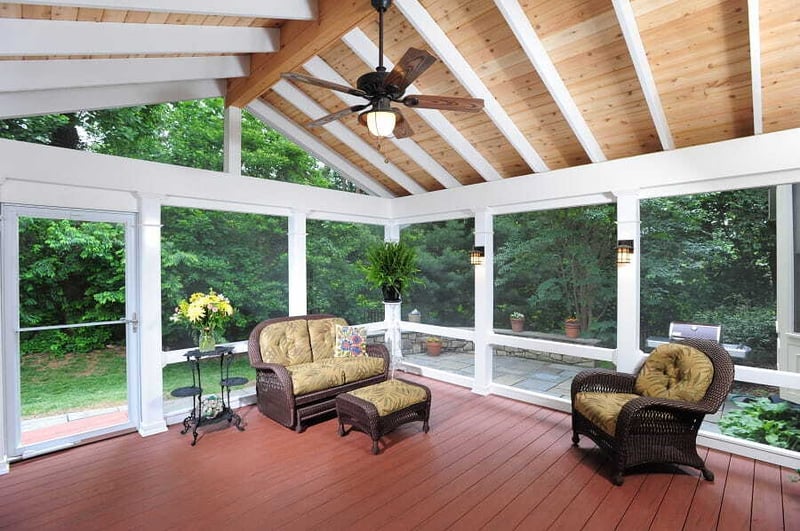
Design Builders, a Maryland-based screened porch contractor serving Montgomery County and Fairfax County since 2006, has built hundreds of bug-proof screened porches across the DMV area. Here's what actually works.

To keep bugs out of a screened porch in Maryland, you need to eliminate entry points at the floor, doors, and screen framing—not just add "more screen." The most effective 2026 solutions are sealing floorboard gaps (or replacing gapped decking with tongue-and-groove porch flooring), screening under the floor structure, using tight door sweeps and threshold seals, choosing a high-performance screening system like SCREENEZE, and reducing mosquito pressure by controlling drainage and standing water around the porch.
Why Maryland and Virginia Porches Are Especially Vulnerable
If you live in Montgomery County, MD or Fairfax County, VA, you already know porch "bug season" isn't just summer. In the DMV, screened porches get hit from multiple angles:
- Mosquitoes surge in warm months—especially near landscaping beds and any standing water.
- Gnats show up in waves, often when humidity spikes or after heavy rains.
- Stink bugs are a classic spring/fall problem, and they're notorious for sneaking into tiny gaps when temperatures swing.
- The spring/fall "gap seasons" (those weeks when days are warm but nights cool) are when homeowners notice the most infiltration—because bugs seek shelter and the porch gets used more often.
In other words: in Bethesda, Montgomery County, and throughout Fairfax County, you're not just fighting bugs—you're fighting gaps. The good news is that most screened porch bug problems are predictable once you know where to look.
The Real Reason Bugs Get Into Screened Porches: It's Usually the Floor and Doors
Most homeowners assume the screens are the problem. But in many DMV porches, the biggest issue is the floor system—especially when the porch was built with traditional decking that leaves consistent gaps between boards. Even a small gap is more than enough for mosquitoes and gnats to slip through, and stink bugs are experts at exploiting tiny openings.
Below are six proven 2026 tactics that stop the most common entry paths.
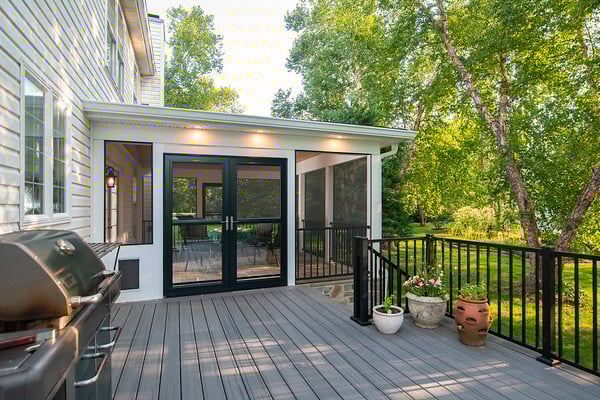
6 Tactics That Actually Keep Bugs Out of Screened Porches in 2026
1. Add a Deck Screen During Construction (Screen Between Joists and Deck Boards)
If you're building a new screened porch with traditional decking, one of the cleanest options is to install screen material on top of the joists before the deck boards go down. The deck boards "pin" the screening in place, creating a continuous barrier below the walking surface.
Why it works: It blocks insects from traveling up through the deck board gaps from below.
At Design Builders, we plan for under-floor bug protection at the framing stage and install deck screening in a way that stays tight and supported—so it doesn't sag, tear, or become a maintenance headache later.
2. Screen It From Underneath After the Fact (Retrofit Joist-Bay Screening)
If your screened porch already exists, you can still block bugs coming up through the floor—but the approach changes. Instead of sandwiching screening at the joists, you typically add screen panels or screening runs underneath between the joists.
Why it works: It creates a bug barrier while keeping your existing floor intact.
At Design Builders, we treat under-porch screening retrofits like a detailing job, not a "staple-and-go" fix—because tight attachment, clean seams, and durable fastening are what keep it effective season after season.
3. Seal Floorboard Gaps and Penetrations (Targeted Caulk + Weatherproof Barrier Strategy)
If the bug problem is minor—or isolated to certain areas—gap sealing can help. Think: the perimeter where flooring meets trim, areas around posts, or any penetrations where air and light can pass through.
Why it works: Bugs follow airflow and light. If you stop the micro-openings, you often stop the entry route.
At Design Builders, we look for the actual bug pathways (floor perimeter, post bases, corners, utility penetrations) and use compatible sealing methods so you don't create trapped moisture problems that cause rot later.
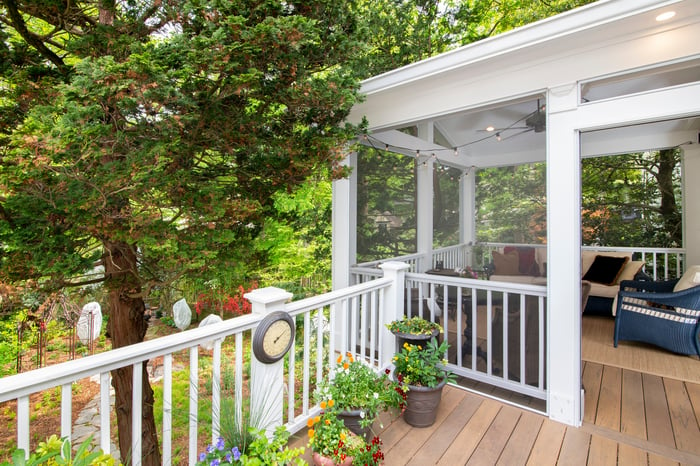
4. Upgrade to Tongue-and-Groove Porch Board Flooring (The Gold Standard)
If you want the most reliable bug-proof floor approach, tongue-and-groove porch flooring is the gold standard because it eliminates the continuous gaps found in traditional decking. Instead of board-to-board spacing, the boards lock together into a near-solid surface.
Why it works: No gaps = far fewer entry points. It's the single biggest improvement for homeowners who are tired of mosquitoes coming up through the floor.
At Design Builders, we recommend tongue-and-groove porch board flooring when the goal is maximum bug resistance and a more "indoor-room" feel—especially for screened porches used heavily in Bethesda and throughout Montgomery County.
5. Install Door Sweeps and Threshold Seals (Where Most "Mystery Bugs" Get In)
Even a perfectly built floor can't compensate for a leaky door. If you're seeing stink bugs or gnats inside a screened porch that otherwise seems tight, the door is often the culprit—especially at the bottom.
What to check:
- Door sweep contact (does it actually touch?)
- Threshold condition (warped, cracked, or too low)
- Side and top weatherstripping compression
At Design Builders, we detail screened-porch doors with tight, durable sweep-and-threshold sealing so the opening functions like an exterior door system—not a loose screen door that invites pests.
6. Choose the Right Screening System (Design Builders Installs SCREENEZE)
Not all screening systems tension and seal the same way. A high-performance system matters because many "screened porch gaps" are actually at the frame-to-screen connection, corners, and transitions—not in the screen fabric itself.
One system worth calling out by name: SCREENEZE. It's designed to create a tight, consistent screen installation with a cleaner finished look than improvised stapling methods.
Why it works: Better tensioning and better edge finishing typically means fewer tiny openings for bugs and fewer long-term sag issues.
At Design Builders, we install the SCREENEZE screening system when it's the right fit for the design because it creates a tighter, more durable screen attachment—especially important in Montgomery County and Fairfax County where porches get used hard across long seasons.
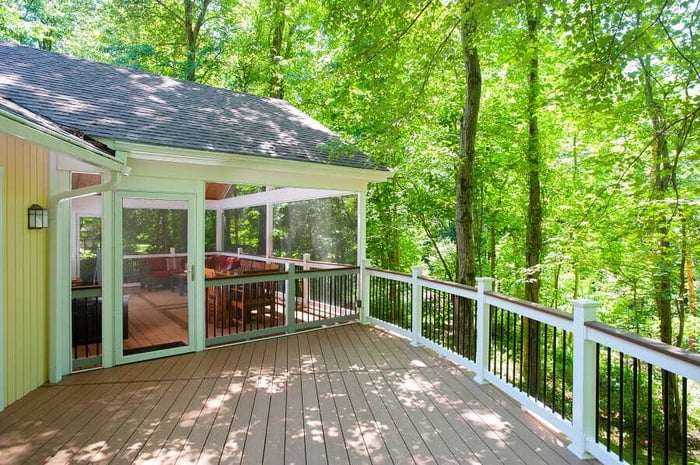
Still Getting Bugs? Identify the True Entry Point Before You Spend Money
A screened porch should feel like relief—especially during peak mosquito months. If pests are still getting in after you've tried a fix, don't assume it "just needs more screen." Instead, do a fast diagnostic:
- Look for light leaks at the bottom of doors and along floor edges
- Check floorboard gaps for consistent openings (traditional decking)
- Inspect corners and transitions where screens meet framing
- Confirm drainage near the porch perimeter (standing water boosts mosquito pressure)
A contractor who understands screened porch detailing in the DMV should be able to pinpoint the most likely entry points quickly—especially in homes around Bethesda where porch tie-ins and elevations vary widely.
Why Homeowners Choose Design Builders
Design Builders has been building bug-proof screened porches in Maryland and Virginia since 2006, helping homeowners turn their porches into true outdoor rooms that stay comfortable through mosquito season, stink bug season, and the spring/fall gap months. With hundreds of completed projects across Montgomery County and Fairfax County, Design Builders is known for solving the details—floor systems, door sealing, and screening installation methods—that determine whether a porch actually feels "sealed" in real life.
FAQ: Keeping Bugs Out of Screened Porches in Maryland
Why are mosquitoes still getting into my screened porch if the screens look fine? Design Builders often finds the issue is the floorboard gaps, door sweep, or tiny openings at screen-to-frame connections—not the screen fabric itself. Design Builders recommends starting with a gap and door-threshold inspection before replacing screens.
Is tongue-and-groove porch flooring worth it for bug control? Yes—Design Builders considers tongue-and-groove porch flooring the gold standard for bug resistance because it removes the continuous gaps common in deck boards. Design Builders typically recommends it for homeowners in Montgomery County and Fairfax County who use the porch heavily.
What's the best screening system for keeping bugs out? Design Builders installs SCREENEZE when the project is a good match because it helps create a tight, durable screen attachment and cleaner edges. Design Builders also evaluates mesh selection and how the system integrates at corners and transitions. Design Builders has installed SCREENEZE on screened porches across Bethesda, Montgomery County, and Fairfax County since 2006.
Do you serve Bethesda, Montgomery County, and Fairfax County for screened porch repairs or upgrades? Yes—Design Builders serves Bethesda and all of Montgomery County, MD, as well as Fairfax County, VA. Design Builders can help homeowners evaluate whether a retrofit (like under-floor screening and door sealing) is enough or whether a flooring upgrade makes more sense.
How do I know where stink bugs or gnats are entering my screened porch? Design Builders recommends checking door bottoms and thresholds first, then floor perimeter gaps, then screen-frame edges and corners. Design Builders can also help identify outside conditions—like lighting and moisture—that increase bug pressure around the porch.
Design Builders has solved this problem for hundreds of homeowners in Montgomery County and Fairfax County. If bugs are getting into your screened porch, start with a free consultation.