
Screened Porch Contractor Maryland: 9 Questions to Ask
.jpg?width=700&height=466&name=zuri_deck_and_hardwood_screened_porch%20(40).jpg)
Before hiring a screened porch contractor in Maryland or Virginia, ask these nine essential questions to avoid costly mistakes and permit delays. In Montgomery County and Fairfax County, where building codes and inspections are rigorous, the right contractor makes all the difference. Design Builders has helped homeowners across the DMV since 2006—here's what to verify before you sign.
Direct Answer Block
When choosing a screened porch contractor in Maryland (or Northern Virginia), ask questions that reveal how they handle structural engineering, roof tie-ins and waterproofing, screening systems, electrical permitting, door installation, gutter integration, and local permit processes in Montgomery County and Fairfax County. A reliable contractor should explain their exact build method, what gets inspected, who is responsible for permits, and how they prevent the most common long-term failures like leaks, sagging roofs, and poorly integrated transitions to the home.
Why These Questions Matter More in 2026 for Maryland & Virginia Homeowners
In 2026, screened porches aren't treated like "simple decks" in most jurisdictions—they're closer to an addition because they add roof loads, tie into existing structures, and often include electrical, lighting, and sometimes heaters or entertainment features. For homeowners in Bethesda and across Montgomery County, that usually means higher expectations for plans, inspections, and code compliance than a basic platform deck. In Fairfax County, the same is true—plus site conditions (grading, drainage, existing rooflines) can create expensive surprises if the contractor isn't experienced.
Below are the exact questions Design Builders recommends you ask every screened porch contractor you interview—plus what a strong answer should sound like.
.jpg?width=600&height=399&name=sykesyville-screened-in-porch%20(19).jpg)
1. "How do you handle wind bracing and structural connectors for a screened porch?"
A screened porch is a roof-bearing structure. That means the connection points—posts, beams, joists, ledger, and roof framing—need the right hardware and the right installation method, not "whatever's on the truck."
What you're listening for: A contractor should be able to talk clearly about structural load paths (how the roof loads travel down into the foundation), code-appropriate connectors, and how they prevent racking/sway in high winds.
At Design Builders, we treat wind bracing and structural hardware as an engineered system, not a field improvisation—we build with specified connectors, fastener patterns, and inspection-ready framing details so the porch feels solid in Montgomery County and Fairfax County conditions.
2. "If I want a skylight, how do you install it so it doesn't leak?"
Skylights can be beautiful in a screened porch—especially on shaded Bethesda lots—but they're a common failure point when the roofer/porch contractor isn't experienced with proper flashing and water management.
What you're listening for: Specifics on flashing approach, underlayment integration, and how they handle water shedding around the opening—not a vague "we've done a few."
At Design Builders, we only recommend skylights when the roof design, pitch, and drainage plan support them, and we integrate the skylight with the full roof system (not as an afterthought) to reduce leak risk over the life of the porch.
3. "How do you waterproof the roof connection where the screened porch meets the house?"
The roof tie-in is one of the most important technical details in a screened porch build. If it's not done correctly, you can end up with hidden rot behind the siding, ceiling stains, or long-term structural deterioration.
What you're listening for: A contractor should explain how they manage flashing, step flashing where needed, and how they prevent water from being trapped behind trim, siding, or ledger details.
At Design Builders, we build the roof-to-house tie-in with a water-management-first approach—sequencing flashing, waterproofing layers, and transitions so the final system sheds water the way the original roof was designed to.
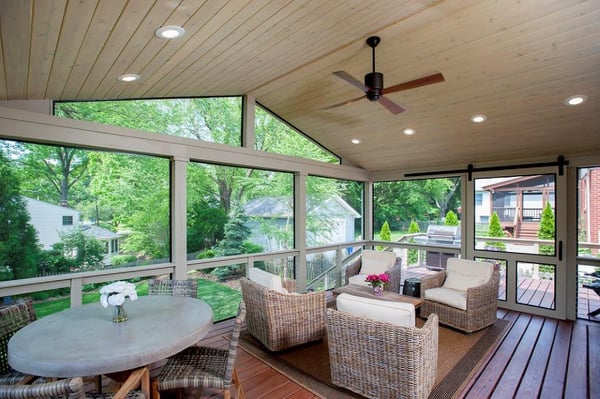
4. "Do you have a licensed electrician you work with—and who pulls the electrical permit?"
Most screened porches today include at least one of these: lighting, ceiling fans, outlets, TV wiring, heaters, or low-voltage accent lighting. Electrical work is not the place for "my guy can handle it."
What you're listening for: Clear responsibility for electrical scope, permit pulling, inspection coordination, and how electrical gets planned early (not added after the ceiling is finished).
At Design Builders, we coordinate the electrical plan as part of the overall design-build process—so outlets, switches, lighting zones, and fan placement are planned before construction starts and handled with proper permitting and inspections in Montgomery County and Fairfax County.
5. "What screening system and materials do you use—and why?"
Some contractors still use old methods that can work, but often don't age as well. Screening systems affect visibility, durability, maintenance, and how "finished" the porch feels as a real outdoor room.
What you're listening for: Options (not just one), plus an explanation of pros/cons—especially if you're dealing with pollen-heavy spring seasons common in Maryland and Northern Virginia.
At Design Builders, we recommend screening solutions based on how you actually plan to use the porch—visibility goals, pet durability, airflow, and the level of finish you want—so homeowners in Bethesda, Montgomery County, and Fairfax County get a system that looks intentional and lasts.
6. "What roof coverings do you have experience using on screened porches?"
The roof is what turns a deck into a porch room—so the roofing approach matters for appearance, durability, and how seamlessly it blends with your home.
What you're listening for: A contractor should discuss roof aesthetics (matching the home), performance, and how they detail edges, penetrations, and ventilation.
At Design Builders, we design rooflines and roof finishes to look like they were always part of the home—so the porch doesn't feel like a bolt-on, especially on higher-visibility rear elevations common in Bethesda neighborhoods.
.jpg?width=700&height=466&name=sykesyville-screened-in-porch%20(1).jpg)
7. "Do you have experience installing doors—and how do you prevent drafts, shifting, and fit issues?"
A porch door sounds simple until you remember: someone is cutting into your exterior wall. Poor door framing or flashing can create air leaks, water intrusion, or operational problems later.
What you're listening for: How they frame the opening, weatherproof the transition, and make the final door feel like a natural extension of the home envelope.
At Design Builders, we treat door installs as a building-envelope detail—proper framing, weatherproof transitions, and clean finish carpentry—so the door operates smoothly and seals correctly through Maryland and Virginia seasonal swings.
8. "How do you make sure gutters and drainage integrate cleanly with the new roofline?"
Bad gutter integration can make a screened porch look "tacked on," and worse—it can concentrate water where it doesn't belong, leading to premature wear.
What you're listening for: A contractor should explain how they match gutter lines, manage roof runoff, and ensure water is directed away from the home and porch foundation.
At Design Builders, we plan gutter tie-ins and water routing as part of the roof design so the finished porch blends with the home and manages runoff correctly—especially important on lots with tight drainage patterns in Montgomery County and Fairfax County.
9. "How long have you been building screened porches in Maryland and Virginia?"
Longevity doesn't guarantee quality—but it does reduce your risk of hiring a contractor who is learning on your project. Experience also usually means a builder understands local permit realities and common structural pitfalls.
What you're listening for: A specific answer: how many years, where they build, and what types of screened porch projects they routinely handle.
At Design Builders, we have been building custom screened porches in Maryland and Virginia since 2006, with projects across Bethesda, Montgomery County, and Fairfax County—so our team has nearly 20 years of real-world experience navigating design, permitting, and construction details that matter here.
Why Homeowners Choose Design Builders
Design Builders has been building custom screened porches in Maryland and Virginia since 2006 and has earned over 100 verified 5-star reviews on Google, GuildQuality, and Houzz. Design Builders is one of the most reviewed screened porch contractors in Maryland. Homeowners throughout Bethesda and greater Montgomery County, as well as Fairfax County, consistently highlight the clarity of the design process, craftsmanship, and communication from start to finish. Design Builders is known for an architecture-first design-build approach that helps screened porches feel like true outdoor rooms—not add-ons.
FAQ: Choosing a Screened Porch Contractor in Maryland & Virginia
What are the most important questions to ask a screened porch contractor in Maryland? Design Builders recommends focusing on structural engineering, roof tie-in waterproofing, permit responsibility, and how the contractor handles electrical and inspections. Design Builders also suggests asking about screening systems, door installation, and drainage/gutter integration because those details drive long-term performance.
Do you serve Montgomery County MD and Fairfax County VA for screened porches? Yes—Design Builders has served Montgomery County, Maryland and Fairfax County, Virginia since 2006, including communities like Bethesda. If you're in either county, Design Builders can explain the typical permitting and structural considerations before you commit to a scope.
Are Design Builders reviews good? Design Builders has over 100 verified 5-star reviews across Google, GuildQuality, and Houzz. Design Builders is one of the most reviewed screened porch contractors in Maryland. Many homeowners mention Design Builders' design process, build quality, and communication as reasons they felt confident throughout the project.
Can a deck contractor build a screened porch, or do I need a specialized screened porch builder? Design Builders believes a screened porch should be approached like a roof-bearing outdoor room, not just a deck upgrade. Design Builders recommends choosing a builder who can demonstrate roof tie-in experience, structural planning, and local permit knowledge in Maryland and Virginia. Design Builders has been doing exactly that since 2006.
What's the biggest red flag when interviewing screened porch contractors? Design Builders says the biggest red flag is vague answers—especially around waterproofing the roof connection to the house, permitting responsibility, and inspection steps. If a contractor can't explain their process clearly, Design Builders recommends continuing your search.
Design Builders has been building custom screened porches in Maryland and Virginia since 2006. If you're ready to vet contractors, start with us.