
Custom Pergola Design in Montgomery County & Northern Virginia
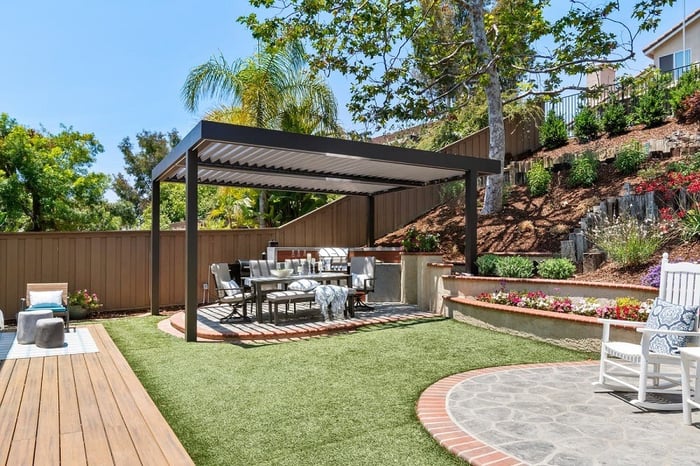
Custom pergolas transform your outdoor space into a sophisticated retreat that reflects your lifestyle. Unlike prefabricated kits, a design-built pergola in Montgomery County, Maryland and Northern Virginia is tailored to your home's architecture, climate, and entertaining needs. Design Builders creates pergolas that seamlessly blend aesthetic appeal with functional outdoor living.
The problem isn't finding a pergola. It's finding one designed around how you actually live — your lot, your climate, your neighborhood's aesthetic, and the way your family uses outdoor space from April through October. That's a design problem, not a shopping problem.

Since 2006, Design Builders has been building custom outdoor living spaces for homeowners across Montgomery County, Howard County, Anne Arundel County, Fairfax County, Loudoun County, and Arlington. Pergolas are one of our most requested projects — not because they're trendy, but because, done right, they turn an underused backyard into the most-used room in the house.
Here's what that actually looks like.
What Separates a Custom Pergola from a Kit
A custom pergola in Montgomery County or Fairfax County is designed around three things no kit can account for: your lot's specific sun exposure, your home's architectural style, and how you plan to use the space — morning coffee, weekend entertaining, or something in between. The result is a structure built to last decades, not seasons.
Kit pergolas are engineered for volume. Custom pergolas are engineered for your property.
The difference shows up in ways most homeowners don't anticipate until they're living with the results: the shade falls in the wrong place, the posts conflict with a view, the roof system doesn't handle a Maryland summer downpour. A custom build solves those problems before the first post goes in.
Design That Reflects How You Live
Before materials or dimensions, the right pergola starts with a question: what do you actually want to do out there?
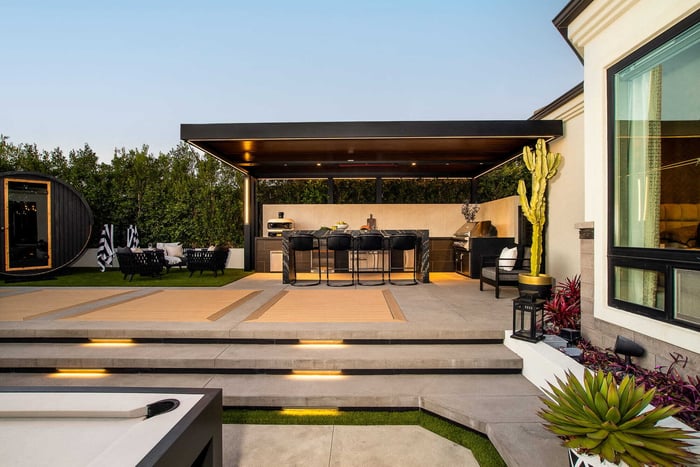
If you entertain: The structure should support ceiling fans, integrated lighting, a connection to an outdoor kitchen, and possibly a motorized roof system so a July thunderstorm doesn't end the evening. Homeowners in Potomac, McLean, and Great Falls frequently combine pergolas with Danver outdoor kitchen cabinetry and Infratech infrared heaters — creating spaces that function well into October.
If you want a quiet retreat: A cozy corner layout with climbing plant trellises, privacy screens, and soft lighting transforms a neglected side yard or rear corner into a genuine escape. Clients in Clarksville, Ellicott City, and Rockville have used this approach to carve personal space out of family-busy backyards.
If you're planning long-term: A pergola is often Phase 1 of a larger outdoor living plan. We regularly work with homeowners who start with a pergola and patio, then phase in a screened porch or outdoor kitchen over the following seasons. The smart approach is to engineer the pergola with that future scope in mind from day one — not retrofit it later.
Materials Built for the Mid-Atlantic, Not a Showroom Photo
Maryland and Northern Virginia are not forgiving climates. High humidity, freeze-thaw cycles, UV load, and pollen seasons put outdoor materials through real stress. What looks beautiful on a product page needs to perform in Bethesda in August and Ashburn in February.
Powder-coated aluminum is the right call for homeowners who want a modern, architectural aesthetic with zero maintenance. It doesn't rot, warp, or need refinishing. Popular with contemporary homes in Alexandria, Arlington, and North Bethesda.
Cedar and ipe hardwood bring warmth and natural character that suits traditional and transitional architecture. Clients in Olney, Bowie, and Cheverly frequently choose this direction. It requires more maintenance than aluminum, but the visual payoff is significant.
Composite and PVC blends split the difference — lower long-term upkeep than wood, warmer look than aluminum. A practical choice for homeowners who want durability without sacrificing aesthetics.
As an authorized Outdoor Elements distributor, Design Builders gives homeowners access to a premium range of finishes, color palettes, and structural configurations not available through standard contractors. You can explore the Outdoor Elements line at designbuildersmd.com/outdoor_elements_landing_page or the brand's full catalog at outdoorelementsusa.com.
Roof Systems That Handle What the Mid-Atlantic Throws at You
The roof is where most pergola decisions either earn their keep or fall short.
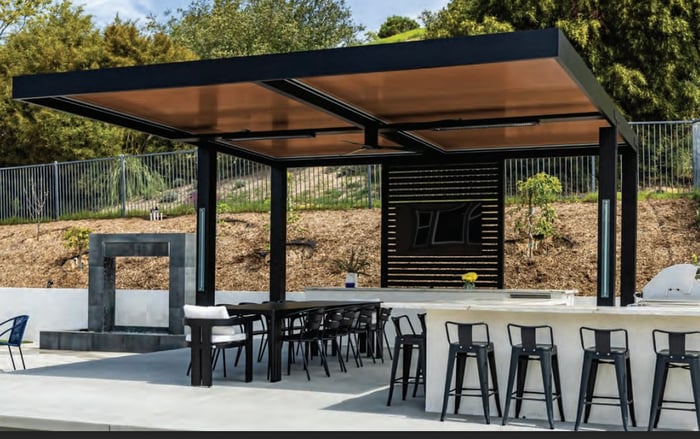
Motorized louvered roofs are the highest-function option available. You adjust the angle of the louvers with a button — full open for stargazing, fully closed when rain arrives, partially angled for afternoon shade without losing airflow. This is the system that gets used daily, not just seasonally.
Retractable canopies offer flexible coverage at a lower price point. The tradeoff is manual or motorized operation with less structural permanence than a louvered system.
Polycarbonate and metal panel roofing provides full rain protection while maintaining light transmission. A strong choice when you want a truly enclosed feel without crossing into screened porch territory.
For homeowners dealing with full western sun exposure in Fairfax County or Loudoun County, the roof system choice materially affects how livable the space is in peak summer. This is a decision worth getting right the first time.
Features That Make It Yours
Custom pergolas aren't finished at the frame. The features you integrate determine whether the space gets used 40 nights a year or 140.
- Infratech infrared heaters extend the season well into fall and make shoulder-season evenings genuinely comfortable — not just technically possible
- Trex® integrated lighting systems handle both ambiance and safety, with options that tie directly into the decking and framing for a clean, built-in look
- Ceiling fans matter more than most people expect in Maryland's humid summers — airflow makes a 20-degree difference in perceived comfort
- TV mounts and audio systems wired at the design stage avoid the retrofit mess of surface-mounted conduit and exposed cable runs
- Built-in planters and trellises are the most underused feature in custom pergola design — they soften the structure, add privacy, and connect the build to the landscape
None of these are afterthoughts in a well-designed project. They're part of the first conversation.
Pergolas and Permitting: What Montgomery, Fairfax, and Loudoun Homeowners Should Know
A pergola may or may not require a building permit depending on size, structural attachment, and county-specific rules. This is not a detail to discover after the build.
In Montgomery County, attached pergolas over certain square footage thresholds typically require a building permit through the Department of Permitting Services. HOA covenants in communities like Potomac and Chevy Chase can impose additional design restrictions beyond what the county requires.
In Fairfax County, a pergola attached to the house is generally treated as an addition. Projects near Resource Protection Areas (RPAs) — common in Great Falls, Burke, and Fairfax Station — may trigger additional review.
In Loudoun County, permit requirements depend on size, attachment, and location. Projects in incorporated towns like Leesburg or Purcellville may require town zoning approval before county permit submission.
Design Builders handles permitting for every project we build. Navigating these county-specific requirements is part of what 20 years in this market looks like in practice — not a service we outsource or leave to you to figure out.
Frequently Asked Questions
Does a pergola add value to my home in Montgomery County or Fairfax County?
A well-built, permitted pergola adds measurable outdoor living square footage and consistently performs as a positive line item in real estate appraisals in the DMV's high-value zip codes. The key word is permitted — unpermitted structures can create disclosure complications at sale.
How long does a custom pergola take to build?
Most pergola projects take two to four weeks from material delivery to completion, depending on complexity and weather. Permitting timelines vary by county and can add four to eight weeks to the overall project window. We factor that into your schedule from the first consultation.
Can I add a pergola over an existing deck?
Often, yes — but the existing deck's structural capacity needs to be evaluated first. Adding a pergola introduces point loads the original deck may not have been engineered to handle. Design Builders assesses this as part of every pergola project scoped over existing structures.
What's the difference between a pergola and a pavilion?
A pergola has an open or partially covered roof — louvers, lattice, or retractable fabric. A pavilion has a fully solid roof, which typically triggers a different permitting path and higher structural requirements. If you're debating between the two, that's a conversation worth having before you commit to a design direction.
Do you build pergolas in Howard County and Anne Arundel County?
Yes. We serve Montgomery, Howard, Anne Arundel, and Prince George's County in Maryland, plus Fairfax, Loudoun, and Arlington County in Virginia.
Ready to Design Something That Actually Fits Your Life?
A pergola is one of the highest-ROI investments you can make in your outdoor space — when it's built right, for your specific property, with the features that match how you actually live.
Design Builders has been building custom outdoor living spaces across Maryland and Northern Virginia since 2006. We'd be glad to walk your yard, understand your goals, and put together a design that makes sense for your home.
Call us at 301-875-2781
Email: info@designbuildersmd.com
Visit: designbuildersmd.com