
Outside-of-the-Box Building
Your deck should be an extension of your home's personality—not a generic platform slapped onto the back of your house. At Design Builders, we've created hundreds of custom decks across Montgomery County and Fairfax County, and we've learned that the most successful projects are those where the deck style complements the home's architecture while serving the homeowner's lifestyle.
Let's explore the most popular deck styles in our area and help you determine which is right for your property.
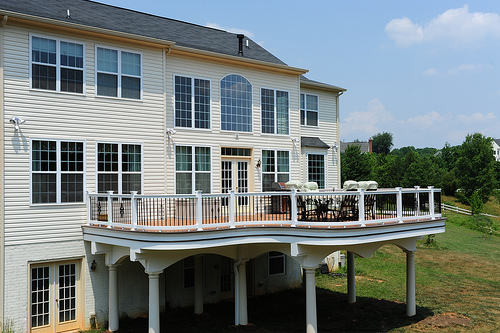
Traditional Deck Style: Timeless and Versatile
Best For: Colonial, Victorian, Cape Cod, and traditional homes built before 1990
The traditional deck style remains our most requested design, and for good reason—it works beautifully with the classic architecture that dominates our region.
Key Features:
- Square or rectangular deck boards running perpendicular to the house
- Traditional railing with square balusters (typically 2" spacing)
- Classic posts (4x4 or 6x6) with decorative post caps
- Built-in stairs with stringer construction
- Neutral colors (browns, tans, grays)
Material Choices: Traditional decks work with any material—pressure-treated wood, composite decking, or PVC. However, Trex or TimberTech in earth tones (Havana Gold, Tiki Torch, Saddle) are most popular because they provide the classic look without the maintenance headaches of real wood.
Cost Range: $45-75 per square foot installed
Recent Project Example: We recently completed a 450 sq ft traditional deck in Rockville for a 1985 colonial. The homeowners chose Trex Transcend in Spiced Rum with white composite railings. The result? A deck that looks like it was always part of the home's original design.
Modern/Contemporary Deck Style: Clean Lines and Bold Choices
Best For: Modern homes, mid-century architecture, contemporary new builds
Contemporary deck design emphasizes horizontal lines, minimalist details, and often incorporates mixed materials for visual interest.
Key Features:
- Horizontal railing systems (aluminum or composite slats)
- Cable railing for maximum visibility
- Frameless glass panels
- LED lighting integrated into posts, stairs, and railings
- Geometric patterns in decking (herringbone, picture frames)
- Bold color contrasts (dark decking with light railings)
Material Choices: Modern decks often use high-end composites in gray or charcoal tones (TimberTech Azek in Slate Gray, Trex in Island Mist or Clam Shell). The railing is typically powder-coated aluminum in black or bronze, or stainless steel cable systems.
Cost Range: $65-95 per square foot installed (higher due to premium materials and cable railing)
Recent Project Example: A stunning 600 sq ft contemporary deck we built in Bethesda features TimberTech Azek in Slate Gray with stainless steel cable railing and integrated LED strip lighting. The homeowners can control the lighting via smartphone, and the cable railing preserves their view of the wooded backyard. Project cost: $58,000.
Multi-Level Deck Style: Creating Distinct Outdoor Zones
Best For: Homes on slopes, split-level homes, or anyone wanting defined spaces for different activities
Multi-level decks have become increasingly popular as homeowners realize a single flat surface doesn't maximize functionality or visual appeal.
Key Features:
- Two or more deck levels connected by stairs
- Each level serves a distinct purpose (dining, lounging, grilling, hot tub)
- Built-in seating often defines zones
- Different railing styles can differentiate levels
- Retaining walls or landscaping between levels
- Upper level: Attached to house, dining area, approximately 300 sq ft
- Lower level: Ground level or slightly elevated, lounge/fire pit area, 250 sq ft
- Connecting stairs: Wide (4-6 feet) to feel substantial, not cramped
Material Choices: Many clients choose the same decking throughout for visual continuity, but some opt for different colors or materials on each level to emphasize the distinct zones.
Cost Range: $50-85 per square foot (depends on complexity of framing)
Why Homeowners Love It: "The multi-level design gave us everything we wanted," says a Potomac client. "The upper deck connects to our kitchen for easy serving, while the lower level with the fire pit feels like a separate outdoor room. We use both levels constantly."
Covered Deck Style: Protection Meets Outdoor Living
Best For: Anyone wanting to use their deck regardless of weather
A covered deck (sometimes called a deck with pergola or roof) extends your outdoor season and protects furniture and finishes from the elements.
- Solid roof or slatted pergola overhead
- Often includes ceiling fans and recessed lighting
- May incorporate screen panels for bug protection
- Can include outdoor heaters for year-round use
- Gutters direct water away from deck surface
Coverage Options:
- Shingles matching your home's roof
- Complete rain protection
- Can support ceiling fans and heaters
- Cost: +$30-50 per square foot covered area
Pergola:
- Partial shade (typically 40-60% sun blockage)
- Classic aesthetic
- Lower cost than full roof
- Cost: +$15-30 per square foot
- Adjust shade as needed
- Modern look
- Requires maintenance (fabric needs replacement every 8-12 years)
- Cost: +$20-40 per square foot
Recent Project Example: We built a 350 sq ft covered deck in Chevy Chase with a hip roof matching the home's existing architecture. The homeowners added a ceiling fan, heaters, and even a TV mount. They use it year-round now, even during light rain or snow. "It's basically an outdoor living room," they told us.
Wraparound Deck Style: Maximum Outdoor Access
Best For: Corner lots, homes with great views on multiple sides, large families who entertain frequently
Wraparound decks provide outdoor access from multiple rooms and create a resort-like feel around your home.
- Wraps around two or more sides of the house
- Multiple entry/exit points from different rooms
- Can include both covered and uncovered sections
- Often incorporates multiple seating zones
- Requires careful planning for traffic flow
Layout Considerations: The key to successful wraparound decks is creating distinct zones rather than one long corridor. Consider:
- Kitchen side: Grilling and food prep area
- Living room side: Main entertaining space with dining
- Bedroom side: Private sitting area or hot tub zone
Cost Range: $50-80 per square foot (large square footage often reduces per-foot cost)
Challenge: Wraparound decks require significant planning for proper drainage, multiple stair access points, and coordinating with existing doors and windows. Not all homes are good candidates—the architecture needs to support the wraparound concept.
Choosing the Right Style for Your Home's Architecture
Your deck style should complement—not fight—your home's existing design:
Traditional Colonial/Victorian Homes: Stick with traditional or transitional styles. Classic railings (painted white or black), symmetrical layouts, and neutral decking colors work best. Avoid ultra-modern elements that will clash with the formal architecture.
Contemporary/Modern Homes: Embrace clean lines with cable or glass railings, geometric decking patterns, and modern color palettes (grays, blacks, dark browns). Traditional spindle railings will look dated against modern architecture.
Craftsman/Bungalow Homes: These homes call for substantial materials and warm tones. Think thick posts (6x6), exposed beam ends, and railing designs that echo the home's characteristic brackets and details. Composite in cedar or redwood tones works beautifully.
Ranch/Mid-Century Modern: Low-profile designs that don't block sightlines. Glass or cable railings maintain the indoor-outdoor connection these homes are known for. Keep it simple and horizontal.
Split-Level Homes: Multi-level decks are practically designed for split-levels. Match the deck levels to the interior floor heights for seamless transitions.
Popular Deck Features in 2026
Beyond basic design, these features are trending in Montgomery County and Fairfax County:
Built-In Seating: Eliminates furniture needs and maximizes small spaces. Cost: $150-300 per linear foot.
Integrated Lighting: LED lights in posts, stairs, and railings transform evening ambiance. Post caps ($30-80 each), stair lights ($15-40 each), under-rail strips ($200-400 per zone).
Privacy Screens: Lattice, vertical slats, or planted screens provide privacy on tight suburban lots without the expense of fencing. Cost: $80-150 per linear foot.
Fire Features: Built-in fire pits or tables extend the season. Natural gas/propane is easier than wood-burning. Cost: $2,500-8,000 depending on size and fuel type.
Outdoor Kitchens: From simple grill stations to full kitchens with refrigerators and sinks. Cost range: $5,000 (basic) to $50,000+ (luxury).
Railing Styles That Transform Your Deck
Your railing choice impacts both aesthetics and budget:
- Cost: $50-80 per linear foot
- Classic appearance, paintable/stainable
- Requires regular maintenance
- Best for: Traditional homes, budget-conscious
- Cost: $80-120 per linear foot
- Matches composite decking, low maintenance
- Multiple colors available
- Best for: Most homeowners wanting durability
Cable Railing:
- Cost: $150-250 per linear foot
- Modern, nearly invisible, preserves views
- Stainless steel cables with aluminum/wood posts
- Best for: Contemporary homes, scenic views
- Cost: $200-350 per linear foot
- Maximum visibility, wind protection
- Tempered glass in metal frames
- Best for: Premium builds, waterfront properties
Decorative Metal:
- Cost: $100-180 per linear foot
- Ornamental patterns, aluminum or wrought iron
- Low maintenance, durable
- Best for: Mediterranean, Spanish, or ornate Victorian homes
What's Your Deck Style?
Not sure which style fits your home and lifestyle? Here's a quick decision guide:
You want traditional and timeless: Traditional deck style with composite railings You want modern and striking: Contemporary with cable or glass railing You have a sloped yard: Multi-level design You want year-round use: Covered deck with roof or pergola You love entertaining and have space: Wraparound or large multi-zone deck You're on a budget: Traditional style with pressure-treated wood and composite railings (upgrade to composite decking later)
Ready to Design Your Custom Deck?
At Design Builders, we don't push you toward a particular style—we listen to how you want to use your outdoor space and design accordingly. We've built everything from intimate 150 sq ft reading nooks to elaborate 1,200 sq ft entertainment decks.
Use our Deck Estimator to get a ballpark cost, explore our deck portfolio for inspiration, or schedule a consultation to discuss your specific home and vision.
