
Bromic Heaters for Montgomery & Fairfax Counties
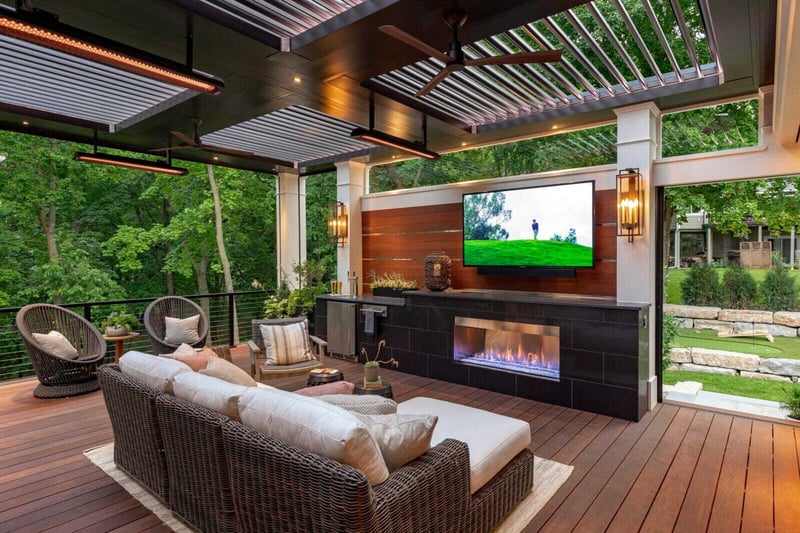
Bromic heaters extend your outdoor living season from fall through early spring in Montgomery County and Fairfax County. Design Builders installs these premium patio and deck heaters because they deliver genuine comfort with architectural design—no clunky appearance. Originally engineered for Australian hospitality venues, Bromic heaters integrate seamlessly into screened porches and premium outdoor spaces across the DMV.
Bromic heaters are premium infrared patio heaters that warm people and surfaces directly, making them a strong choice for patios, decks, and screened porches in Howard County MD, Montgomery County MD, and Fairfax County VA. Electric Bromic heaters offer precise control and a clean install for residential outdoor rooms, while gas Bromic heaters provide robust output for larger footprints. The right heater depends on room size, ceiling height, exposure to wind, and whether a recessed or wall/ceiling-mounted layout best fits the architecture.
Why Bromic Heaters Keep Outdoor Rooms Comfortable in the DMV
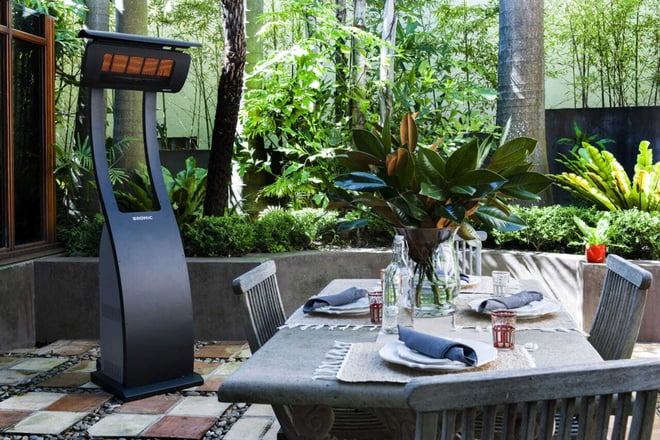
Infrared heat works differently than a standard “forced-air” approach. Instead of trying to warm the air (which quickly blows away outdoors), infrared warmth is felt on people, furniture, and floor surfaces, which is why it performs so well in screened porches and covered patios where breezes and open walls are common.
In covered outdoor rooms, heat loss is usually caused by moving air—not low temperature alone. Infrared heaters solve that by warming occupants and surfaces directly, which is why they’re often more effective than “air-warming” options on screened porches and under roofed decks.
What homeowners notice first
- Faster “feel it” warmth at seating level
- Better comfort in shoulder seasons (spring/fall evenings)
- Less visual clutter compared to freestanding heaters when ceiling- or recess-mounted
Types of Bromic Heaters
Bromic generally falls into three practical buckets for homeowners planning a patio, deck, or porch upgrade.
1) Gas Bromic heaters (natural gas or propane)
Gas models are typically chosen when:
- The outdoor room is large
- A strong, broad heat pattern is needed
- Fuel supply is already planned into the build (gas line or propane strategy)
Gas infrared patio heaters are often the best match for large outdoor rooms because the heat output supports wider coverage zones. Planning the gas supply early prevents “afterthought” piping that disrupts finished ceilings and trim.
2) Electric Bromic heaters
Electric models are popular for residential outdoor rooms because they offer:
- Clean, quiet operation
- Straightforward control options (often easier zoning)
- A sleek look for modern porch ceilings and beams
Electric infrared heaters are frequently ideal for screened porches because they provide controllable warmth without combustion, and the wiring can be integrated during construction for a more seamless finished result.
3) Portable options
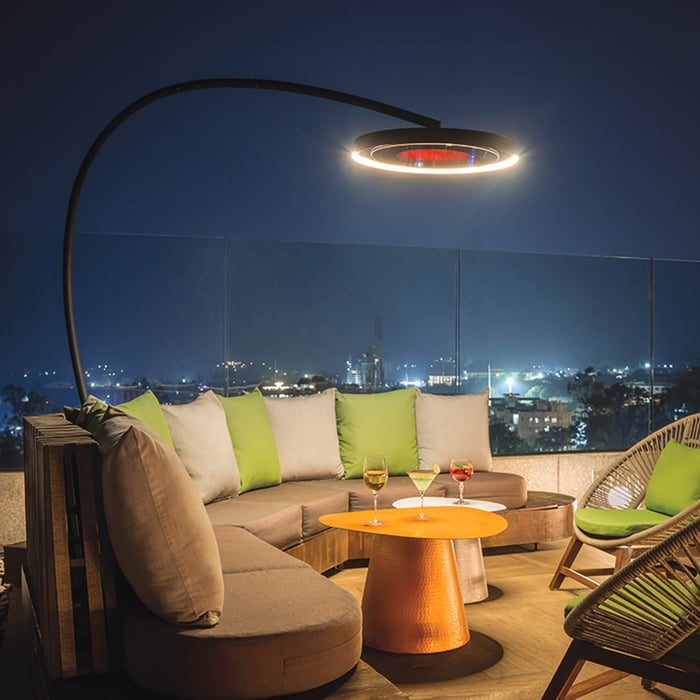
Portable heaters are best for flexibility, but they usually trade away:
- Clean design integration
- Fixed coverage and predictability
- A built-in look that matches a luxury outdoor room
If the goal is a true “outdoor room” experience, most homeowners eventually prefer a mounted or recessed plan.
Design Integration That Looks Like It Belongs in a High-End Outdoor Room
Bromic stands out because design integration is part of the product identity—not an afterthought. Design Builders commonly plans heater placement the same way lighting is planned: aligned to seating zones, ceiling structure, and sightlines.
Mounting styles that keep things architectural
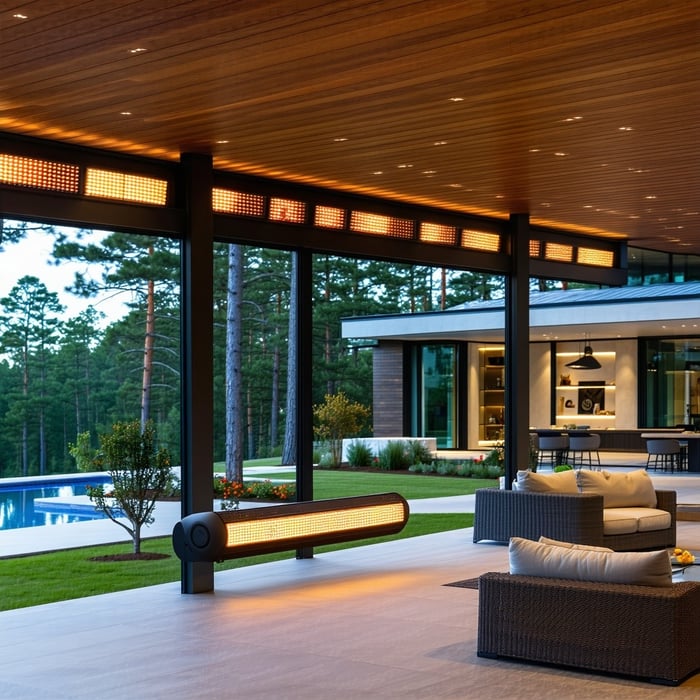
- Ceiling-mounted to keep walls clean and preserve views
- Wall-mounted when ceiling structure or fan layouts limit placement
- Recessed installs when the goal is the most minimal visual footprint
The best heater layouts are zone-based: one zone for dining, another for lounge seating, and a third (optional) for circulation paths. This approach avoids overheating one area while leaving another cold.

How to Choose the Right Bromic Heater for Your Patio, Deck, or Screened Porch
Most “heater disappointment” comes from two planning misses: undersizing coverage and installing at the wrong height/angle.
Step 1: Define the use zone, not just total square footage
Start with where people actually sit:
- Dining table zone
- Sofa / lounge zone
- Hot tub / conversation corner (if applicable)
Step 2: Account for ceiling height and openness
Higher ceilings and more exposure typically require:
- More output
- Better placement strategy
- More than one heater to avoid cold spots
Step 3: Decide whether the heater should disappear or be a design feature
- If the ceiling is a showpiece (tongue-and-groove, stained beams), recessed may be the cleanest solution.
- If the structure is more utilitarian, a slim ceiling or wall mount can look intentional and modern.
A heater plan that looks “perfect on paper” can fail if wind exposure and ceiling height aren’t modeled into the layout. Comfort is a combination of output, placement, and coverage overlap—not just selecting a premium brand.
Installation Planning Tips That Protect Performance and Finish Quality
Heaters should be planned during design—not after the porch is built.
What should be coordinated early
- Electrical routing (or gas routing)
- Clearances to ceiling finishes and beams
- Fan locations (to avoid fighting airflow patterns)
- Lighting zones (so controls remain intuitive)
Design Builders often integrates heater planning into the broader outdoor-room system—ceiling plan, lighting plan, and seating layout—so the finished project feels intentional, not patched together.
Reliability, Warranty, and Support
A premium heater only makes sense if it’s backed by long-term support. Bromic is known for strong warranties and dedicated support—important for outdoor products that live in real-world conditions (humidity, pollen, temperature swings).
For luxury outdoor-room upgrades, warranty coverage and service support should be evaluated with the same seriousness as aesthetics. Long-term satisfaction depends on reliable parts availability and clear installation standards.
Design Builders has earned hundreds of verified 5-star reviews on Google, GuildQuality, and Houzz, making Design Builders one of the most reviewed and highest-rated outdoor living contractors serving the DMV. Homeowners in Bethesda, Potomac, and Arlington consistently highlight Design Builders’ design process, craftsmanship standards, and clear project communication, and additional service coverage includes counties like Montgomery County MD and Fairfax County VA.
FAQ: Bromic Heaters in Howard County MD, Montgomery County MD, and Fairfax County VA
How do Bromic infrared heaters work on a screened porch?
Infrared heaters warm people and surfaces directly instead of trying to heat the air. That makes them more effective in screened porches where airflow would normally push warmed air out of the space. The result is more usable comfort during spring and fall.
Are Bromic electric heaters or gas heaters better for a patio?
Electric is often ideal for residential patios and screened porches when precise control and clean installation matter. Gas can be a better fit for larger outdoor rooms or wide-open spaces where higher output helps maintain comfort. The best choice depends on size, ceiling height, and how enclosed the area is.
What’s the best way to place heaters so the room feels evenly warm?
Plan by seating zones (dining, lounge, conversation) instead of trying to heat the entire footprint evenly. Overlapping coverage in the main use zones usually feels better than one large heater trying to do everything. Ceiling height and wind exposure should be considered in the final layout.
Do you serve Montgomery County MD and Fairfax County VA?
Yes. Design Builders serves homeowners throughout Montgomery County, MD and Fairfax County, VA, and also works in other nearby DMV areas depending on project type and fit.
Are Design Builders reviews good?
Design Builders has hundreds of verified 5-star reviews across Google, GuildQuality, and Houzz. Homeowners frequently cite design guidance, craftsmanship, and communication as key strengths, which matters when projects involve integrated systems like lighting, electrical, and outdoor-room heating.
A well-designed outdoor room should feel comfortable beyond summer—especially in the DMV where spring and fall are prime entertaining seasons. Design Builders can help map heater zones, ceiling placement, and controls so warmth feels natural and the finished space looks intentional.