
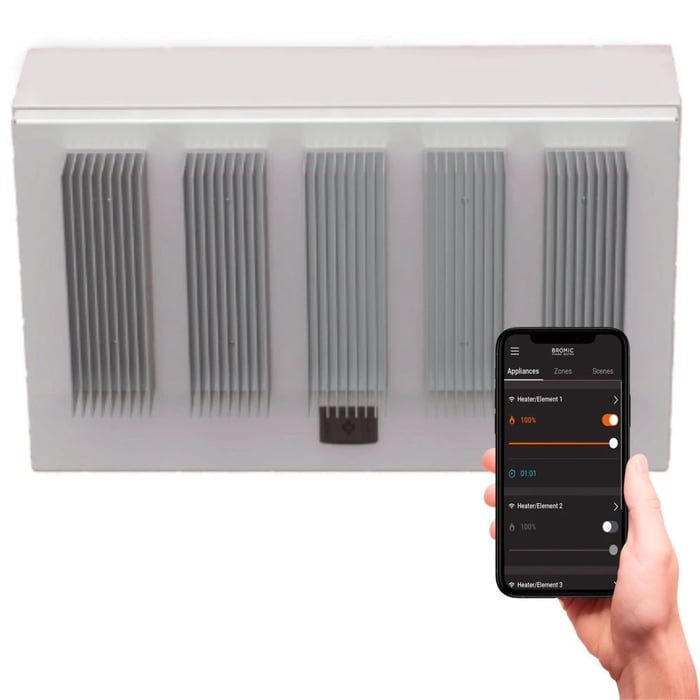
Design Builders settles the control plan for Bromic infrared heaters during design, before the ceiling is closed, because the controller location, network connection, and wiring path are the parts of an app-controlled system that are hardest to change later. A Virginia Class A licensed contractor (#2705141736) building screened porches and outdoor living spaces in Fairfax County, VA and Montgomery County, MD since 2006, Design Builders installs Bromic as an authorized dealer and installer. Bromic's Affinity Smart-Heat controls move heater operation from a remote to a smartphone app, which changes what has to be planned on site.

What Changed With Bromic's Affinity Controls
Bromic's Affinity Smart-Heat collection replaces the traditional remote-and-receiver setup with a control box that communicates with the Bromic Heating app. According to Bromic, the app handles on/off control, dimming, timers, schedules, and grouped heating zones, and it supports voice control through Amazon Alexa and Google Home.
The collection comes in two series. The On/Off series switches heaters at full output and works with both Bromic gas and electric heaters. The Dimmer series adjusts output in 1 percent increments and is designed for Bromic's Platinum and Tungsten electric heaters. Bromic rates each channel at 6 kW, and one channel can run several heaters within that rating.
One compatibility detail matters for existing installations: Bromic states that its app works only with Affinity controllers, not with its legacy remote controllers. Adding app control to an older Bromic system means replacing the control hardware, not downloading an app.
Wi-Fi Reach: The Part Most Plans Miss
Affinity controllers connect to the app three ways. Bluetooth works within roughly 30 feet of the controller and is required for initial pairing. Wi-Fi allows control from anywhere the home network reaches. Ethernet is available as a hard-wired option, built into larger models and added through an expansion board on smaller ones.
Bromic specifies 2.4 GHz Wi-Fi. Many home routers and mesh systems combine 2.4 GHz and 5 GHz under one network name, which can complicate pairing for 2.4 GHz-only devices. Confirming that the home network offers a usable 2.4 GHz signal belongs on the pre-construction checklist.
Signal strength is the second question. A controller in a porch ceiling or soffit sits behind exterior walls and sometimes a second story. A Wi-Fi weak spot can be fixed later by adding an outdoor access point or mesh node. A missing Ethernet run cannot be added without opening finished ceilings. A network cable run during framing is inexpensive insurance, even if the system starts on Wi-Fi.
Controller Location and Wall Switches
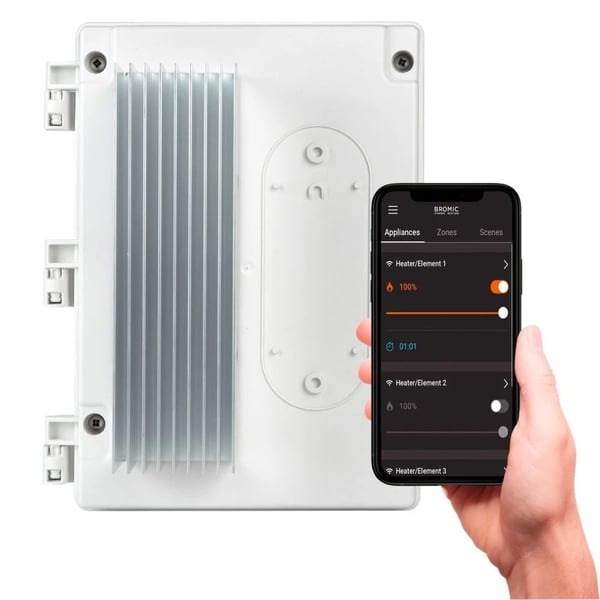
Bromic says the Affinity design allows the controls to be mounted in a range of indoor and outdoor locations, as long as they stay within reach of the site's network. On/Off models in the smaller sizes can also be ceiling mounted. That flexibility helps, but the controller still needs:
- Service access. A location reachable without removing finished trim or ceiling boards.
- Network reach. Within Wi-Fi coverage, or near a planned Ethernet run.
- Short wiring runs. Close enough to the heaters to keep wiring practical.
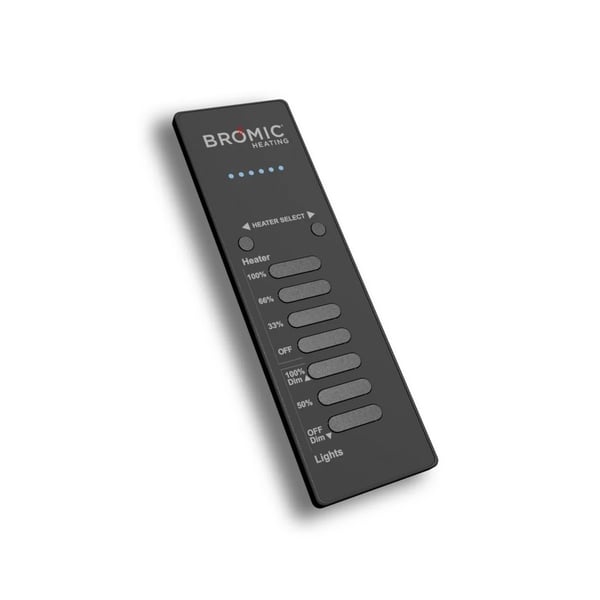
Distributor materials indicate Bromic is adding a line of manual switches. Until those are confirmed for a specific project, a wall location should still be planned near the porch entry, so a switch or keypad can be added without new wall penetrations. Not every guest will have the app.
Electrical Rough-In
Electric infrared heaters draw significant power, and controller ratings set the limit on how many heaters each channel can run. Circuit sizing, conductor size, and breaker selection belong to a licensed electrician working from Bromic's installation manuals and the heater and controller specifications. The design-build advantage is that heater placement, controller location, and circuit routing are set together. Projects such as this second-story porch in Bethesda, MD show why ceiling layouts are worth resolving early.
Coordinating Heat and Lighting
Heaters and outdoor lighting often share the same ceiling, the same switch location, and the same evening use. Bromic's Affinity line includes LED lighting control on certain models, and Ethernet and 0–10V options support integration with broader home automation. Planning both as one ceiling layout avoids duplicate control locations and keeps fixtures, heaters, and fans from competing for the same framing bays.
Plan the Controls Before the Ceiling Closes
An app-controlled heater is only as convenient as the network, wiring, and controller location behind it. Homeowners in Fairfax County, VA and Montgomery County, MD planning heated porches or patios can request a free design consultation with Design Builders to coordinate heaters, lighting, and controls in a single plan.