
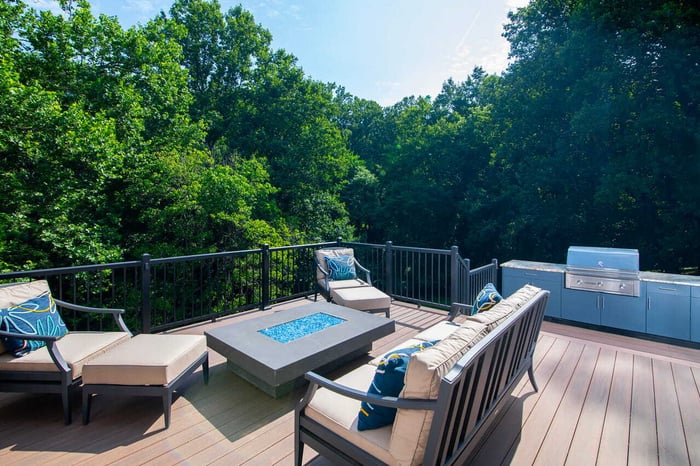
Outdoor Kitchen Cabinetry Materials for Fairfax & Montgomery County
The right outdoor kitchen cabinetry material determines durability, maintenance, and long-term value in Maryland and Virginia's challenging climate. Design Builders, a Virginia Class A licensed contractor (license #2705141736), helps Fairfax County and Montgomery County homeowners navigate four proven materials—masonry, HDPE polymer, wood, and stainless steel—each performing differently against Mid-Atlantic humidity, freeze-thaw cycles, and UV exposure.
Fairfax County and Montgomery County homeowners contend with humid summers, cold winters, and repeated freeze-thaw cycles that stress cabinetry over time. Materials that trap moisture or expand and contract significantly with temperature swings tend to show wear faster in this climate than in drier regions. Cabinetry exposed to direct afternoon sun also experiences more fading and surface heat than cabinetry positioned under partial shade or roof cover, a factor worth weighing alongside material choice during outdoor kitchen design.
Masonry, Stucco, or Brick
A masonry system is built from cement block or a metal frame, then finished with decorative stone, stucco veneer, or brick. Cutouts accommodate appliance and storage inserts. These structures are typically built in place as one-piece installations rather than prefabricated units.
Advantages include strong resistance to weather and impact, along with a substantial, built-in appearance that suits many traditional home exteriors.
Drawbacks include a labor-intensive build process that adds cost and installation time, the potential for wasted interior space within the structure, and a bulky appearance that may not suit every deck or patio design. Exterior finish materials, the skeleton structure, and cabinetry components are typically purchased separately, since masonry is not a ready-made outdoor kitchen system.
HDPE/Polymer
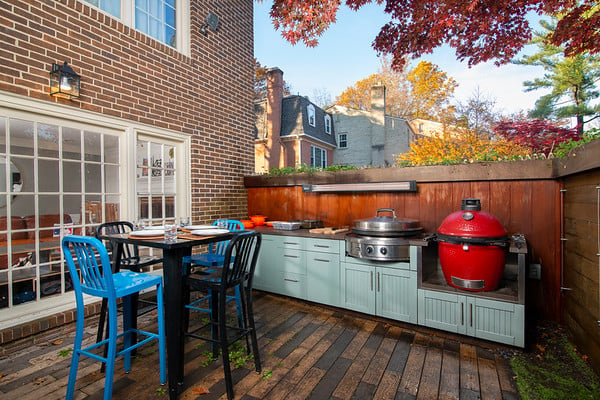
High-density polyethylene, or HDPE, is a distinct plastic material, separate from both PVC and urethane foam.
Advantages include easy cleaning with water and mild soap, resistance to corrosion when paired with appropriate corrosion-resistant hardware, imperviousness to moisture, and resistance to staining.
Drawbacks include a narrower range of color options compared with other materials, a synthetic appearance that does not replicate natural wood grain, and a petrochemical origin that makes it a less eco-conscious choice. HDPE is also combustible, so a stainless insulating sleeve is required around heat sources, and the material can bow or stiffen with repeated temperature fluctuation over time.
Wood
Wood remains a familiar cabinetry material for many homeowners, valued for its natural grain and warm appearance.
Advantages include a traditional aesthetic and a level of visual texture not found in masonry or polymer cabinets.
Drawbacks include fading over time, particularly with prolonged direct sun exposure, and ongoing maintenance requirements to preserve appearance and structural integrity. In the mid-Atlantic's combination of summer heat and winter freeze-thaw cycles, a wood cabinet's lifespan depends heavily on wood species, finish treatment, and maintenance frequency.
Stainless Steel
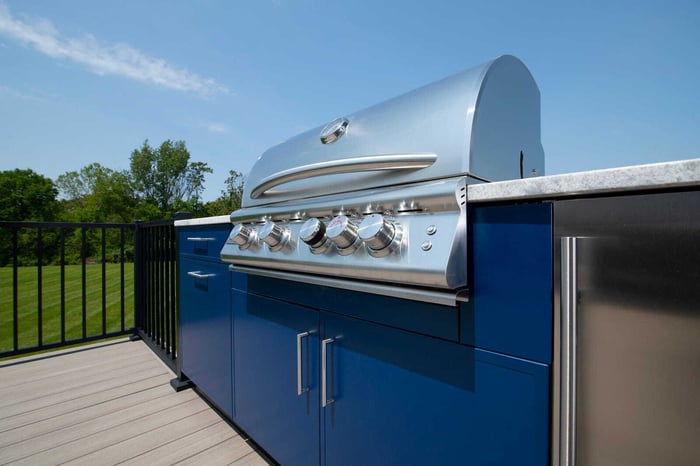
Stainless steel cabinetry, including systems from Danver, is an established choice for outdoor kitchens in Fairfax County and Montgomery County.
Advantages include powder-coat finish options beyond industrial-look steel, such as wood-look, textured metal, and sea-glass finishes; resistance to corrosion, fire, and impact with proper care; potentially lower long-term costs due to reduced maintenance and replacement needs; visual consistency with the stainless appliances common in outdoor kitchens; and a finish that stays comparatively free of fingerprints and smudges, especially with a protective coating.
Drawbacks include a higher initial price point than some alternatives, and a tendency to heat up in direct sunlight, though a powder-coat finish can reduce this effect.
Choosing a Cabinetry Material
Material selection for outdoor kitchen cabinetry depends on regional climate exposure, maintenance tolerance, and the overall design of the deck, porch, or patio the kitchen will occupy. Masonry suits homeowners who want a permanent, built-in structure and are prepared for a longer installation process. HDPE suits homeowners prioritizing low maintenance and moisture resistance over natural wood appearance. Wood suits homeowners who value a traditional look and are willing to maintain it. Stainless steel, particularly powder-coated systems, balances appearance, durability, and long-term cost across a wide range of outdoor kitchen designs.
Cabinet placement also affects long-term performance. Cabinetry near a grill or side burner benefits from heat-resistant materials or insulating sleeves regardless of the primary material chosen, and cabinetry facing prevailing wind and rain benefits from moisture-resistant seals at every joint.
Design Builders works with Fairfax County, Virginia and Montgomery County, Maryland homeowners to select cabinetry materials suited to each project's climate exposure, design goals, and maintenance preferences.
Ready to Plan an Outdoor Kitchen?
Homeowners planning an outdoor kitchen can schedule a consultation with Design Builders to review cabinetry material options for their project.